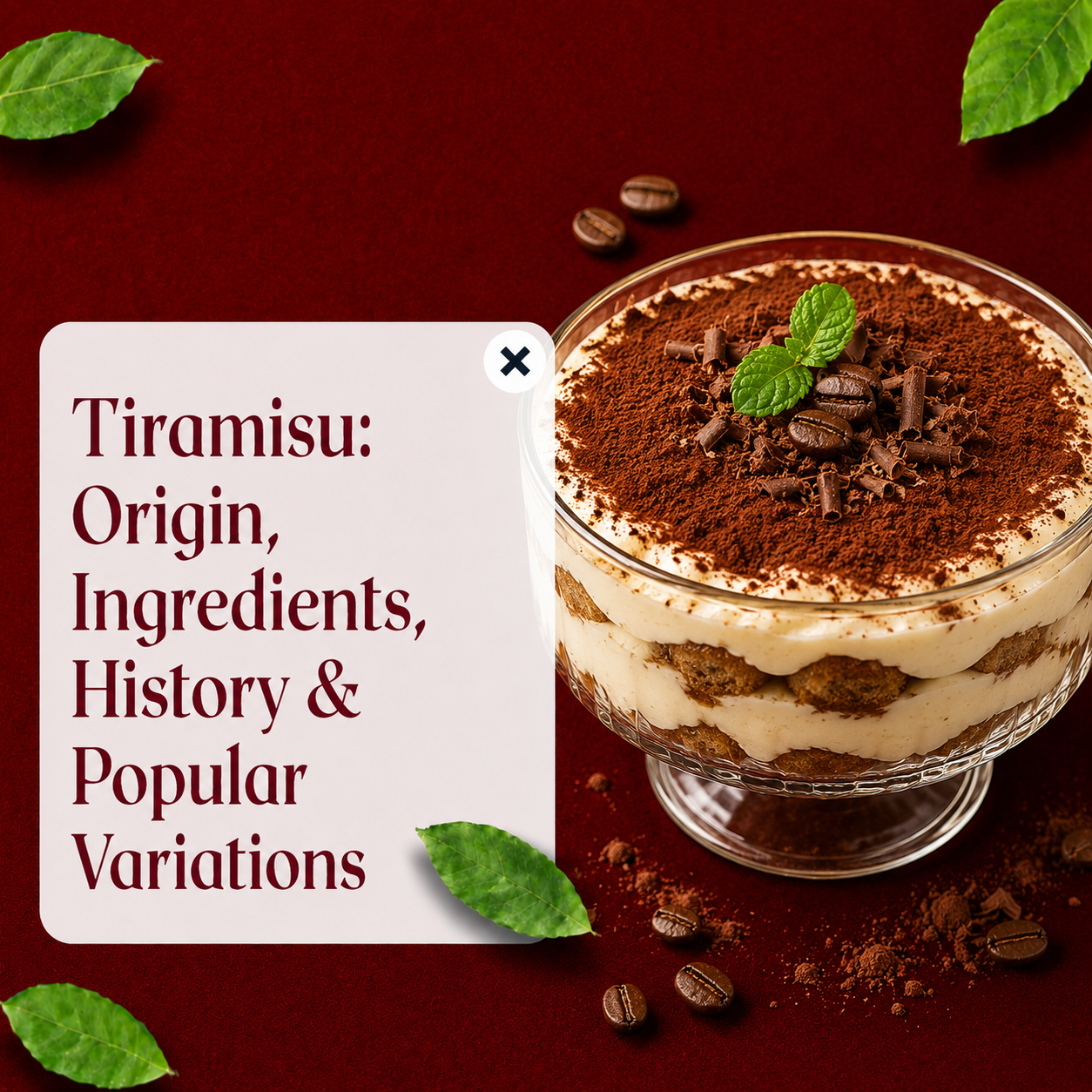
Tiramisu is one of the most famous Italian desserts in the world. It combines soft coffee-soaked ladyfingers, creamy mascarpone, and a light layer of cocoa powder.
Although tiramisu looks elegant and luxurious, it uses only a few main ingredients. This simplicity helped the dessert spread far beyond Italy. Today, people enjoy tiramisu in restaurants, cafés, pastry shops, and homes around the world.
The Origin of Tiramisu
Tiramisu is relatively modern compared with many traditional Italian desserts.
Several stories describe how and where it first appeared. However, one of the best-known accounts connects tiramisu with Treviso, a city in the Veneto region of northeastern Italy.
The historic restaurant Le Beccherie is closely linked to this story.
According to the restaurant, Alba Campeol and pastry chef Roberto Linguanotto developed the dessert after a period of experimentation. The name Tiramesù appeared on the restaurant’s dessert menu in 1972.
However, other stories connect early versions of tiramisu with different areas of northeastern Italy. Therefore, its exact origin remains a subject of debate.
Even so, Treviso has become one of the places most strongly associated with the classic tiramisu known today.
What Does the Name Tiramisu Mean?
The Italian name Tiramisù roughly means:
“Pick me up,” “lift me up,” or “cheer me up.”
The meaning fits the character of the dessert well. Coffee provides energy and a strong aroma, while sugar adds sweetness.
In addition, the form Tiramesù is associated with the Treviso dialect. This was also the spelling that appeared on the menu at Le Beccherie during the early 1970s.
The Basic Ingredients of Tiramisu
Classic tiramisu uses a small group of ingredients:
Savoiardi biscuits, coffee, mascarpone cheese, eggs, sugar, and cocoa powder.
Together, these ingredients create the dessert’s famous layers.
The ladyfingers absorb the coffee, while the mascarpone mixture creates a rich and creamy texture. Finally, cocoa powder adds a slightly bitter chocolate note.
Because every ingredient has a clear role, tiramisu achieves a rich flavor without requiring a long list of ingredients.
Savoiardi Biscuits
Savoiardi, also known as ladyfingers, play an important role in traditional tiramisu.
These Italian sponge biscuits have a light and relatively dry texture. As a result, they can absorb coffee while still keeping their shape.
This balance is important.
If the biscuits absorb too much liquid, they can become overly soft. However, when they absorb the right amount, they create the moist and delicate layers associated with tiramisu.
Mascarpone: The Secret Behind the Creamy Texture
Mascarpone gives tiramisu much of its distinctive creamy character.
This Italian dairy product has a rich, smooth texture and a mild flavor. When combined with sugar and eggs, it creates the soft cream between the layers of ladyfingers.
Mascarpone also differs from standard cream cheese.
Cream cheese usually has a firmer texture and a more noticeable tang. Mascarpone, on the other hand, tastes milder and feels richer.
For this reason, mascarpone remains closely connected with the authentic character of traditional Italian tiramisu.
Coffee in Tiramisu
Coffee is another essential part of tiramisu.
Traditionally, people use espresso or another strong coffee. The coffee brings aroma and a gentle bitterness to the dessert.
More importantly, it balances the sweetness of the sugar and the richness of mascarpone.
Therefore, tiramisu does not depend on sweetness alone.
Instead, its flavor comes from the balance between sweet, bitter, creamy, and aromatic elements.
Cocoa Powder on Top
A thin layer of unsweetened cocoa powder usually finishes classic tiramisu.
The cocoa gives the dessert its familiar brown surface. At the same time, it adds a light chocolate flavor and a slight bitterness.
That bitterness works especially well with coffee and mascarpone.
Some pastry makers add the cocoa shortly before serving. This helps the surface remain dry and visually attractive.
Why Does Tiramisu Not Need Baking?
Tiramisu is generally a chilled dessert.
The ladyfingers are already baked, so the assembled dessert does not require additional baking.
After assembly, tiramisu rests in the refrigerator for several hours.
During this period, the ladyfingers absorb moisture and coffee. Meanwhile, the cream and biscuit layers begin to settle together.
As a result, the dessert develops its characteristic soft texture.
The Importance of Chilling
Refrigeration does more than keep tiramisu cold.
It also helps develop the dessert’s final texture and flavor.
While tiramisu rests, the coffee flavor blends more closely with the mascarpone cream. At the same time, the ladyfingers gradually soften.
However, they should still keep enough structure to create clear layers.
Therefore, chilling is an important part of achieving the classic tiramisu texture.
Eggs in Traditional Tiramisu
Traditional tiramisu often contains eggs.
Egg yolks can add richness to the mascarpone mixture. Some versions also use whipped egg whites to create a lighter texture.
Modern versions sometimes include whipped cream instead.
In addition, some people use pasteurized eggs when the egg mixture will not be cooked. This provides an additional food-safety measure.
Because recipes vary, the exact cream mixture can differ from one tiramisu to another.
Does Tiramisu Contain Alcohol?
Some tiramisu versions contain alcohol, but it is not essential.
For example, certain recipes include Marsala wine, rum, or coffee liqueur.
However, many alcohol-free versions are also popular.
This is especially common in Arab countries and in homemade versions that focus on coffee, vanilla, mascarpone, and cocoa.
Therefore, tiramisu can easily appear in both alcoholic and alcohol-free forms while keeping its basic layered identity.
Tiramisu vs. Cheesecake
Tiramisu and cheesecake may look similar because both contain rich dairy ingredients. However, they are very different desserts.
Cheesecake usually contains cream cheese and a crust made from crushed biscuits. Depending on the style, it may be baked or chilled.
Tiramisu, by contrast, uses layers of coffee-soaked ladyfingers and mascarpone cream.
Coffee and cocoa also play a central role in traditional tiramisu.
Therefore, the two desserts differ in ingredients, structure, texture, and flavor.
Tiramisu vs. Cake
Despite its appearance, tiramisu is not technically a traditional cake.
A typical cake starts with a batter that goes into the oven. Tiramisu does not use this type of baked cake base.
Instead, it combines biscuits and cream in layers.
For this reason, tiramisu has a softer and more moist texture than many cakes. It is also almost always served chilled.
Classic Tiramisu
Classic tiramisu focuses on several simple flavors:
Coffee, mascarpone, sugar, savoiardi, and cocoa.
Traditionally, the dessert does not depend on fruit, colorful decorations, or heavy chocolate sauces.
Its simplicity is part of its appeal.
Each ingredient contributes something important. Coffee adds bitterness, mascarpone adds richness, sugar provides sweetness, and cocoa gives a delicate chocolate finish.
Together, these flavors create the identity of classic tiramisu.
Chocolate Tiramisu
As tiramisu became popular around the world, new versions began to appear.
Chocolate tiramisu is one of the richer modern variations.
Some versions mix chocolate with mascarpone cream. Others add chocolate between the layers.
Chocolate shavings may also appear on top of the dessert alongside cocoa powder.
As a result, this variation offers a stronger chocolate flavor while keeping the familiar layered structure.
Pistachio Tiramisu
Pistachio tiramisu has become another popular modern variation.
In this version, pistachio cream or paste may be combined with mascarpone. Ground pistachios can also decorate the surface.
The pistachio gives the dessert a distinctive nutty flavor and a recognizable green color.
However, the basic concept remains similar to traditional tiramisu. The dessert still relies on layers of biscuits and cream.
Strawberry Tiramisu
Fruit-based variations have also become popular.
Strawberry tiramisu, for example, moves away from the traditional coffee flavor.
Instead of coffee, strawberry juice or sauce may provide moisture and flavor. Fresh strawberries can also appear between the creamy layers.
As a result, strawberry tiramisu tastes fresher and fruitier than the classic version.
However, it is best understood as a modern adaptation rather than a traditional Italian tiramisu.
Tiramisu in Individual Cups
Traditional tiramisu often comes in a large dish and is cut into individual portions.
Today, however, cafés and restaurants frequently serve it in individual cups.
This presentation has several advantages.
First, the transparent sides of the cup can show the layers clearly. In addition, individual portions are easier to serve.
They also work well for parties, buffets, restaurants, and special occasions.
For these reasons, tiramisu cups have become a popular modern presentation style.
Tiramisu in Restaurants and Cafés
As Italian cuisine spread around the world, tiramisu followed.
Restaurants throughout Europe, the Americas, Asia, and the Middle East began adding it to their dessert menus.
It soon became one of the most recognizable desserts served after classic Italian dishes such as pizza and pasta.
Cafés also embraced tiramisu.
The connection with coffee makes it especially suitable alongside espresso, cappuccino, and other coffee drinks.
As a result, tiramisu has become strongly associated with both restaurants and café culture.
From Italy to the World
Modern tiramisu developed during the second half of the twentieth century.
Despite its relatively recent history, the dessert spread internationally within only a few decades.
Its simple ingredients helped make that possible.
In addition, tiramisu does not require complicated decoration. Its layered structure also makes it easy to adapt into different flavors and presentations.
Today, people can find traditional tiramisu as well as chocolate, pistachio, strawberry, and many other variations.
However, the combination of coffee, mascarpone, savoiardi, and cocoa remains the foundation of the classic version.
Why Did Tiramisu Become So Popular?
The popularity of tiramisu comes largely from balance.
Coffee provides bitterness and aroma. Mascarpone adds creaminess, while sugar contributes sweetness. Cocoa then adds a delicate chocolate note.
Meanwhile, the ladyfingers absorb the surrounding flavors and bring the layers together.
Therefore, no single ingredient completely dominates the dessert.
Another reason for its popularity is its elegant appearance.
Tiramisu can look impressive without complicated decoration. Its visible layers, creamy texture, and cocoa-covered surface already create an attractive presentation.
A Modern Italian Dessert That Became a Classic
Tiramisu does not have a history stretching back hundreds of years. Nevertheless, it became one of the world’s most recognizable Italian desserts within only a few decades.
From Treviso to restaurants and cafés around the world, its distinctive combination of coffee, savoiardi, mascarpone, and cocoa has become internationally familiar.
Its success comes from simplicity, balance, and adaptability.
For that reason, tiramisu remains a perfect example of how a small number of carefully combined ingredients can create an unforgettable dessert.
Today, it stands not only as a popular Italian sweet but also as one of the most elegant and recognizable desserts in the world.