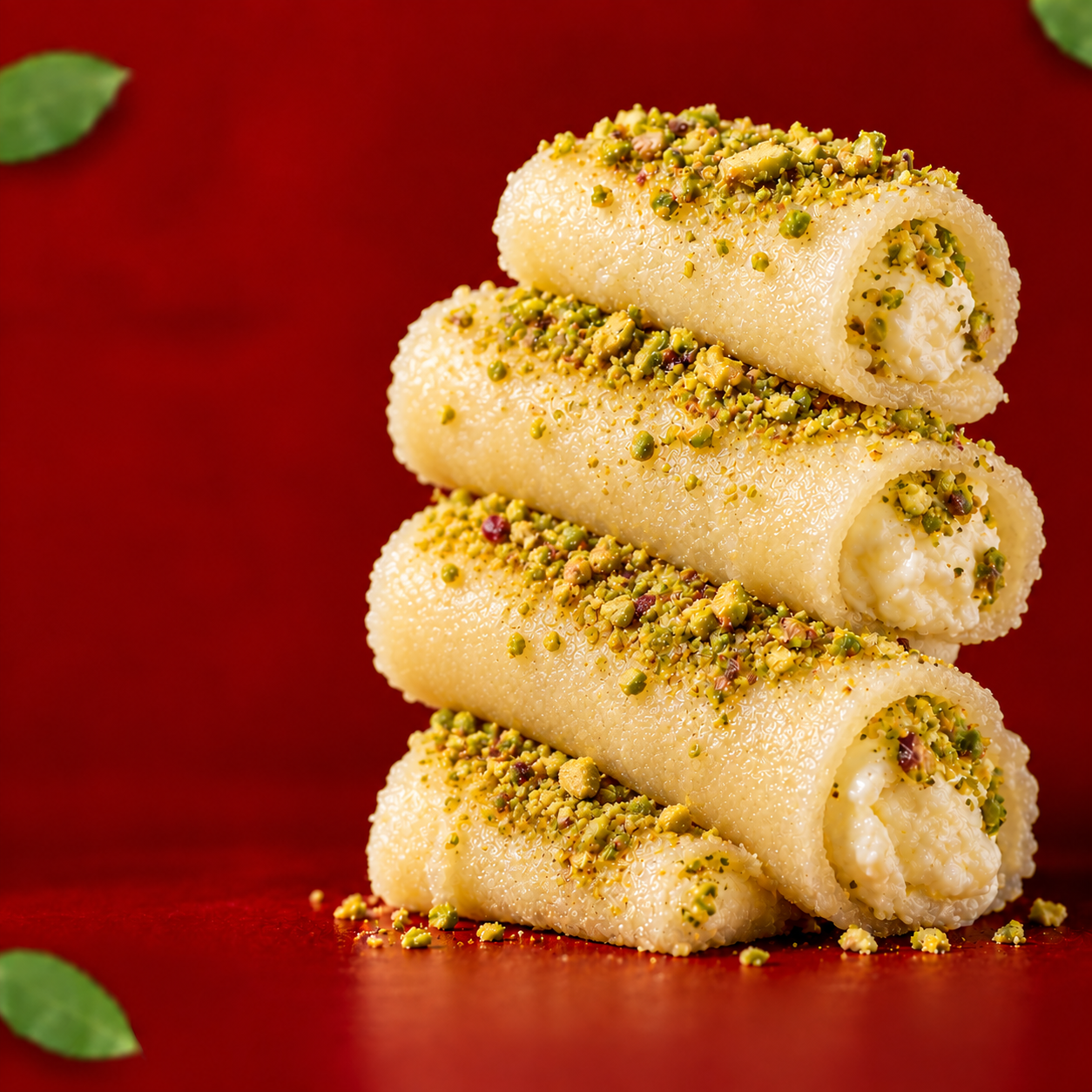
This halawet el jibn recipe makes the famous Syrian “sweet of cheese”: a soft, stretchy dough of melted cheese and semolina, rolled around cold ashta cream and finished with syrup, pistachios and rose petals. It looks impressive, but it needs only a pan, a spoon and a little patience.
Halawet el jibn is especially popular in Hama and Homs, and it is a favorite during Ramadan. After the recipe, you will also find fixes for dough that sticks, tears, or turns rubbery.
Halawet El Jibn Recipe at a Glance
- Prep time: 30 minutes
- Cook time: 15 minutes
- Chill time: 1 hour
- Makes: about 20 rolls
Ingredients
For the dough
- 250 g (9 oz) mozzarella or desalted Akkawi cheese, grated
- 150 g (¾ cup) fine semolina
- 150 ml (⅔ cup) water
- 100 g (½ cup) sugar
- 1 tablespoon rose water
For the filling and syrup
- 400 g (1¾ cups) ashta cream, cold
- 300 g (1½ cups) sugar and 200 ml (¾ cup) water, for the syrup
- 1 teaspoon lemon juice
- 1 tablespoon orange blossom water
- 3 tablespoons ground pistachios and dried rose petals, to garnish
How to Make This Halawet El Jibn Recipe
- Make the syrup. First, boil the sugar and water for 8 minutes, add the lemon juice, and stir in the orange blossom water. Then let it cool.
- Cook the semolina. Next, bring the water, sugar and rose water to a boil in a non-stick pan. Stir in the semolina and cook for 1 minute until it forms a thick paste.
- Melt in the cheese. Then lower the heat, add the cheese, and stir hard with a wooden spoon for 3–5 minutes, until the cheese melts completely and the dough turns smooth and stretchy.
- Roll the dough. Brush two sheets of baking paper with a little syrup. After that, place the hot dough between them and roll it out about 3 mm (⅛ inch) thick.
- Cut. Peel off the top sheet and cut the dough into rectangles about 8 × 10 cm (3 × 4 inches).
- Fill and roll. Place a spoonful of cold ashta along one edge of each piece and roll it up into a cylinder.
- Finish. Finally, dip the ends in ground pistachios, chill for 1 hour, and drizzle with syrup before serving.
Halawet El Jibn Recipe: Common Problems and How to Fix Them
Why is my dough too sticky to roll?
Cause: This usually happens because the baking paper was dry, or you did not cook the dough long enough.
Fix: Brush the paper and the rolling pin with syrup or a little oil. Also, keep stirring until the dough pulls away from the pan in one smooth piece.
Why does my dough tear?
Cause: The dough cooled before rolling, or the cheese was dry and salty.
Fix: Roll the dough while it is still hot, because it stiffens as it cools. In addition, use a fresh, moist cheese such as mozzarella.
Why is halawet el jibn rubbery?
Cause: The cheese was overcooked, or the rolls sat in the fridge too long.
Fix: Stop stirring as soon as the cheese melts and the dough is smooth. Also, serve the rolls on the same day, since they firm up as they chill.
Why is the filling runny?
Cause: The ashta was warm or too thin.
Fix: Chill the ashta well before filling. For a thick, sliceable cream, use our homemade ashta recipe.
Tips for Success With This Halawet El Jibn Recipe
- Use a non-stick pan and a strong wooden spoon, because the dough is thick and heavy.
- Work quickly as soon as the dough is ready. If possible, ask someone to help you roll and cut, so the dough stays warm.
- For a softer dough, add 2–3 tablespoons of extra water with the semolina.
Halawet El Jibn Recipe Variations
- Layered tray: spread the dough in a tray, top with ashta, and cut into squares instead of rolls.
- With pistachio filling: mix ground pistachios into the ashta for a nutty center.
- Mastic flavor: add a pinch of ground mastic to the dough with the rose water.
Storage Tips
Keep halawet el jibn covered in the fridge for up to 2 days, since the cream spoils quickly. However, it tastes best on the day you make it. Drizzle the syrup just before serving, so the rolls do not turn soggy.
A Bit of History
Halawet el jibn comes from the Syrian cities of Hama and Homs, which are known for their sweets made with fresh cheese and cream. Over time, it spread to Lebanon and the wider Levant, and today you will find it in sweet shops across the Arab world. You can read more about halawet el jibn on Wikipedia.
Halawet El Jibn Recipe FAQ
What cheese is best for halawet el jibn?
Mozzarella works well and needs no soaking. However, traditional versions use Akkawi or a fresh unsalted white cheese.
Can I use coarse semolina?
Fine semolina gives the smoothest dough. In contrast, coarse semolina makes the dough grainy and more likely to tear.
Can I make it without ashta?
Yes. Instead, fill the rolls with whipped cream mixed with a little mascarpone.
Looking for more ideas? If you enjoyed this halawet el jibn recipe, our digital cookbook also includes 31 Eastern and Western dessert recipes with exact measurements and step-by-step instructions.