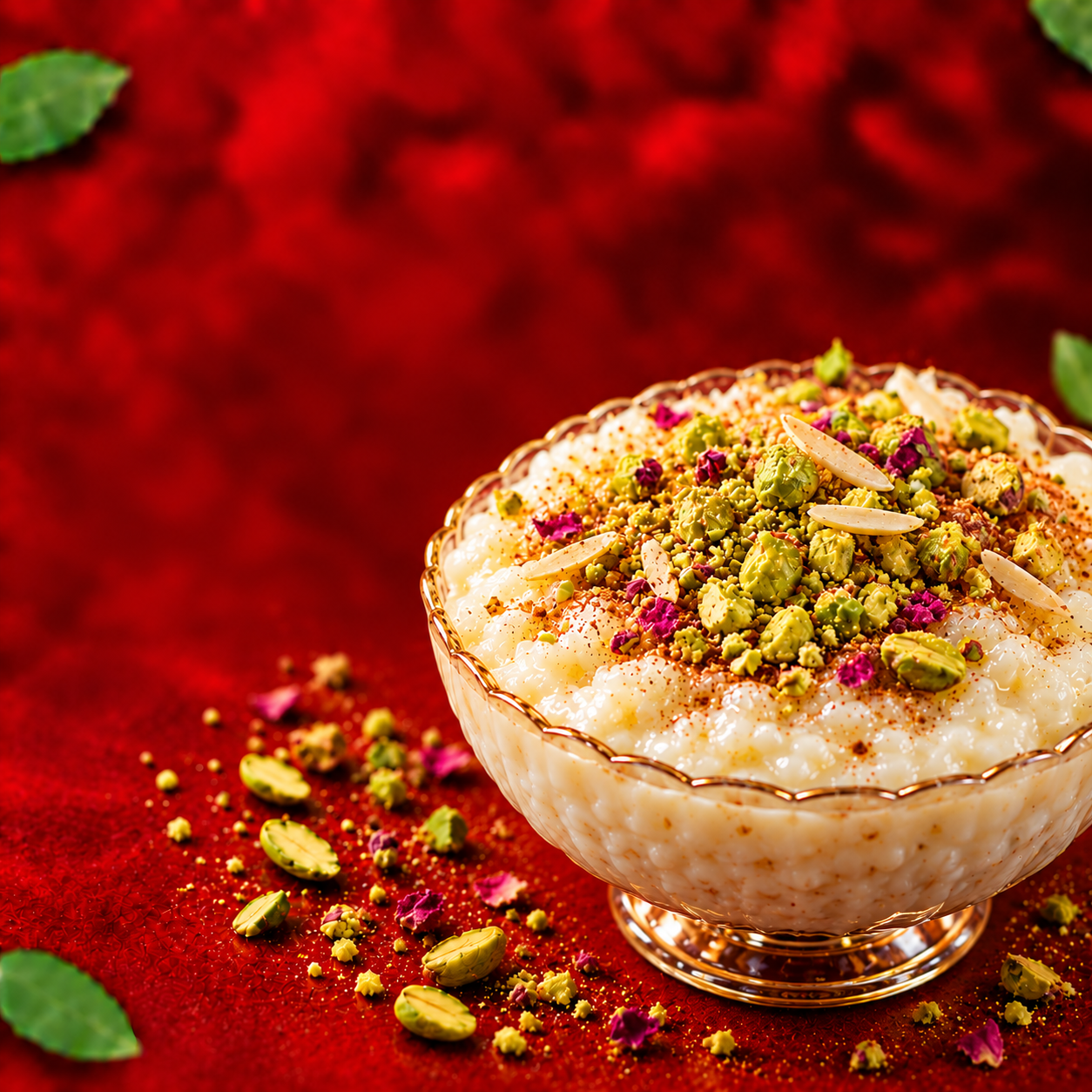
This Middle Eastern rice pudding, known in Arabic as roz bel laban, is creamy, gently sweet, and fragrant with rose or orange blossom water. It is made with short-grain rice cooked slowly in milk until the grains are soft and the milk turns thick and silky.
It is one of the most loved desserts in Egypt and the Levant, especially during Ramadan. After the recipe, you will also find fixes for the most common problems: pudding that stays runny, turns gluey, or catches on the bottom of the pan.
Middle Eastern Rice Pudding at a Glance
- Prep time: 10 minutes
- Cook time: about 45 minutes
- Chill time: 2 hours (or serve warm)
- Serves: 6
Ingredients
- 100 g (½ cup) short-grain or Egyptian rice
- 250 ml (1 cup) water
- 1 liter (4 cups) whole milk
- 100 g (½ cup) sugar
- 1 tablespoon cornstarch mixed with 60 ml (¼ cup) cold milk (optional, for a thicker pudding)
- 1 tablespoon rose water or orange blossom water
- ½ teaspoon vanilla extract (optional)
- Pinch of salt
- Crushed pistachios, cinnamon, or toasted coconut, to serve
How to Make This Middle Eastern Rice Pudding
- Rinse the rice lightly. First, rinse the rice once in cold water and drain. Do not rinse it until the water is clear, because the surface starch helps make the pudding creamy.
- Cook the rice in water. Put the rice and water in a heavy saucepan. Bring to a boil, then simmer over low heat for about 10 minutes, until almost all the water is absorbed.
- Add the milk. Then pour in the milk and add the salt. Bring to a gentle simmer over medium heat, stirring often.
- Simmer slowly. After that, lower the heat and simmer for 30–35 minutes, stirring every few minutes and scraping the bottom, until the rice is very soft and the pudding has thickened.
- Sweeten. Next, stir in the sugar and cook for 2–3 minutes until dissolved. We add the sugar late because it slows the softening of the rice.
- Thicken (optional). Then for a thicker pudding, stir in the cornstarch mixture and cook for 2 minutes, stirring constantly.
- Flavor. After that, remove from the heat and stir in the rose or orange blossom water and the vanilla.
- Serve. Finally, pour into bowls. Then serve warm, or cover the surface with plastic wrap and chill for 2 hours. Top with pistachios, cinnamon, or coconut.
Middle Eastern Rice Pudding: Common Problems and How to Fix Them
Why is my rice pudding runny?
Cause: It was not cooked long enough, or the rice was rinsed too much and lost its starch.
Fix: Keep simmering until the pudding coats the back of a spoon. Also, remember that it thickens a lot as it cools. If you are short on time, add the cornstarch mixture from the recipe.
Why is my rice pudding thick and gluey?
Cause: It was cooked down too far, or it set too firmly in the fridge.
Fix: Stir in warm milk, a few spoonfuls at a time, until it is creamy again. Next time, take it off the heat while it still looks slightly looser than you want.
Why is the rice still hard?
Cause: The sugar went in too early, The sugar went in too early, or you used the wrong rice. Long-grain rice such as basmati stays firm.
Fix: Use short-grain or Egyptian rice, and add the sugar only once the rice is completely soft. If the grains are still firm, add a little more milk and keep simmering.
Why did it burn on the bottom?
Cause: The heat was too high or the pudding was not stirred often enough.
Fix: Use a heavy-bottomed pot and low heat, and scrape the bottom every few minutes. If it catches, pour the pudding into a clean pan without scraping the burnt layer.
Why does it have a skin on top?
Cause: Milk proteins dry out on the surface as the pudding cools.
Fix: Press plastic wrap directly onto the surface while it is still warm.
Tips for Success With This Middle Eastern Rice Pudding
- Cooking the rice in water first softens the grains faster and reduces the risk of the milk scorching.
- Also, for an extra-rich version, replace 250 ml of the milk with cream.
- Add flower water off the heat so its aroma stays fresh.
Middle Eastern Rice Pudding Variations
- Baked rice pudding (Egyptian style): pour into oven-safe dishes and place under a hot grill for a few minutes until the top is golden.
- With mastic: grind 2 small pieces of mastic with a little sugar and stir in at the end.
- Turkish sütlaç: bake in clay dishes until browned on top and serve cold.
- Indian kheer: flavor with cardamom and saffron and add almonds and raisins.
Storage Tips
Once cooled, keep rice pudding covered in the fridge for up to 4 days. It thickens as it sits, so stir in a little milk before serving. Avoid freezing it, because the rice turns grainy.
Origins
Rice cooked in milk is one of the oldest desserts in the world, with versions from India to Europe. In the Middle East it has long been a home dessert for Ramadan, celebrations, and the arrival of a new baby, often flavored with rose water, orange blossom, or mastic. Saveur has a good overview of rice puddings from around the world.
Middle Eastern Rice Pudding FAQ
What rice is best for Middle Eastern rice pudding?
Short-grain or Egyptian rice. Because it releases starch as it cooks, it makes the pudding creamy. Arborio rice also works well.
Can I make rice pudding with leftover cooked rice?
Yes. Use about 300 g of cooked rice, simmer it in the milk for 20 minutes, and continue from the sugar step.
Is roz bel laban served hot or cold?
Both. In Egypt it is often served cold from the fridge, while many families enjoy it warm in winter.
What is the difference between rice pudding and muhallabia?
However, rice pudding contains whole grains of rice. Muhallabia is completely smooth because it is thickened with starch. Try our muhallabia recipe for the smooth version.
One more thing: If you enjoyed this Middle Eastern rice pudding, our digital cookbook collects 31 of our favorite desserts, from knafeh to cheesecake, in one easy download.