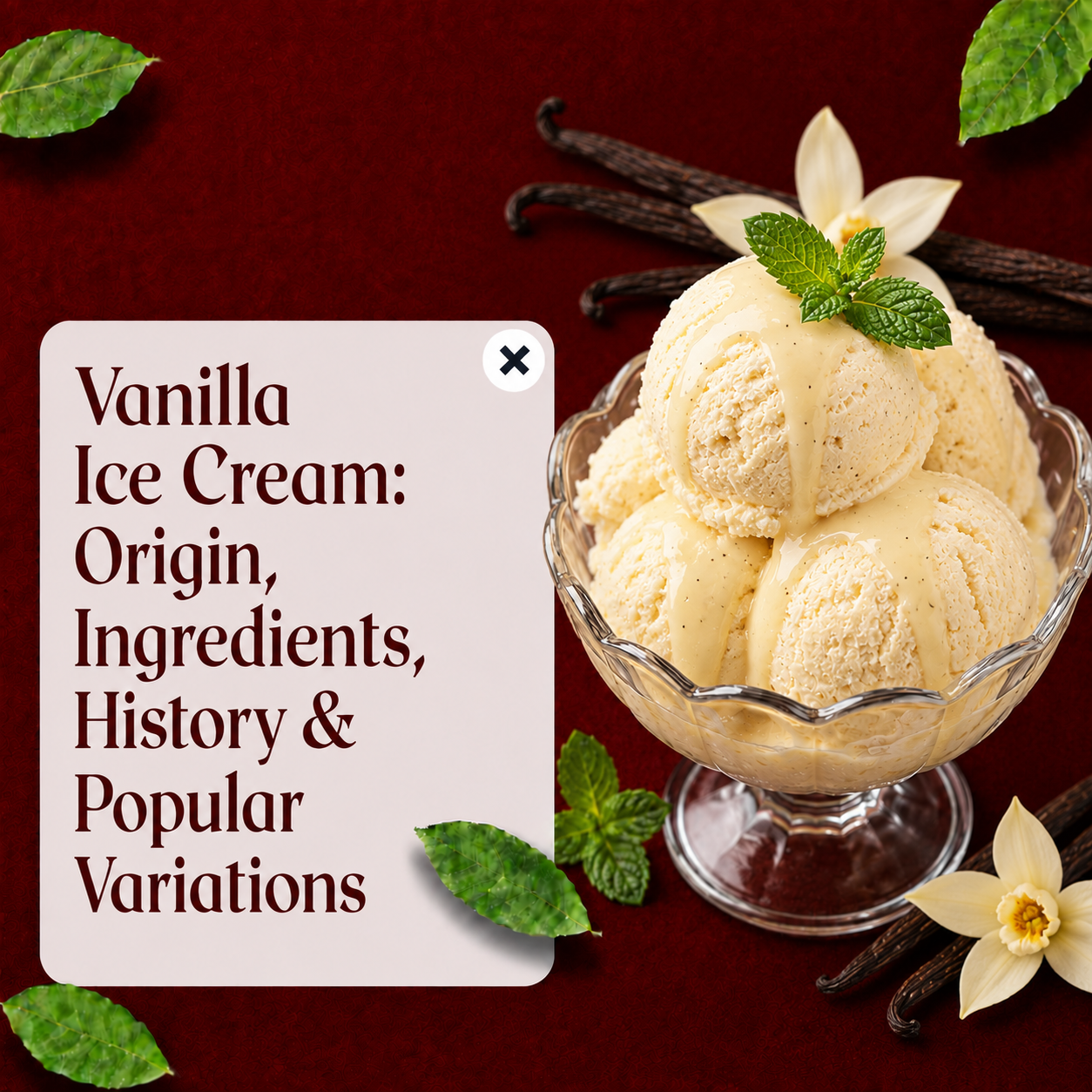
Vanilla ice cream is one of the most famous and widely enjoyed ice cream flavors in the world. It is known for its smooth, creamy texture and delicate aromatic flavor, making it delicious on its own and an ideal base for fruit, chocolate, caramel, nuts, and many other toppings.
Although vanilla is sometimes described as a simple flavor, it is actually one of the most complex and aromatic ingredients used in food. Over time, it became an essential flavor in desserts, baked goods, creams, and ice cream.
The Origin of Vanilla
Vanilla comes from the fruit of a plant belonging to the orchid family, and it is native to the tropical regions of Mexico and Central America.
Indigenous peoples of the region have known and used vanilla for centuries, particularly to flavor beverages made with cacao.
After Europeans arrived in the Americas, vanilla was introduced to Europe, where it gradually became a prized flavoring used in desserts and drinks.
How Did Become an Ice Cream Flavor?
Ice cream developed over a long period from frozen desserts and chilled beverages that appeared in different parts of the world.
As ice cream making became more established in Europe during the seventeenth and eighteenth centuries, flavors such as fruit, chocolate, and vanilla began appearing in recipes.
Vanilla eventually became one of the most popular ice cream flavors, especially as its cultivation expanded beyond Mexico and methods for extracting and preserving its flavor improved.
During the nineteenth and twentieth centuries, vanilla became one of the standard flavors used in both commercial and homemade .
The Basic Ingredients of Vanilla Ice Cream
Traditional vanilla ice cream is made with a relatively simple group of ingredients, including:
Milk, cream, sugar, and vanilla.
Some recipes use egg yolks to create a richer and thicker base, while others rely only on milk and cream.
Despite the simplicity of these ingredients, the balance between them has a major effect on the final result, especially the texture, sweetness, and intensity of the vanilla flavor.
Natural Vanilla Beans
Natural vanilla beans are one of the most distinctive ways to flavor .
Vanilla pods contain tiny black seeds that can be scraped out and added directly to the milk and cream mixture.
These small black specks remain visible in the finished ice cream and are often associated with the use of real vanilla beans.
The empty pod itself can also be infused in warm milk or cream to extract even more aroma and flavor.
Vanilla Extract
Vanilla extract is widely used in both homemade and commercial ice cream recipes.
It is produced by extracting flavor compounds from vanilla beans and is convenient because it can be added directly to the ice cream mixture.
The strength and quality of vanilla extract can vary depending on the beans used and the production method.
Artificial vanilla flavorings are also used in some products, although their composition and aromatic complexity differ from natural vanilla.
Why Is Vanilla Not Really a Simple Flavor?
Vanilla ice cream may appear simple compared with varieties filled with chocolate, fruit, or other ingredients, but natural vanilla contains many aromatic compounds.
Its flavor can vary depending on where the vanilla is grown and how the beans are cured and processed.
Some types of vanilla have creamy and sweet notes, while others may have floral, woody, smoky, or warm characteristics.
These differences make vanilla much more complex than the pale appearance of vanilla ice cream might suggest.
Famous Vanilla-Producing Regions
Although vanilla originated in Mexico, it is now cultivated in several tropical regions around the world.
Madagascar is one of the most famous vanilla-producing regions, while vanilla is also grown in Mexico, Tahiti, Indonesia, Uganda, and other tropical areas.
The flavor varies according to the variety and growing region, so pastry chefs and ice cream makers may select different types depending on the flavor profile they want to create.
One of the best-known varieties is Madagascar Bourbon vanilla, which is famous for its rich, creamy, and full-bodied aroma.
How Does Ice Cream Become Creamy?
The smooth texture of vanilla ice cream comes from the balance between milk, cream, sugar, air, and freezing temperature.
During freezing, churning helps prevent the formation of large ice crystals and incorporates air into the mixture.
The smaller the ice crystals, the smoother the final texture.
The fat in milk and cream also contributes to the rich and creamy mouthfeel associated with traditional ice cream.
Vanilla Ice Cream with Egg Yolks
Some traditional recipes use egg yolks to create a custard-style base.
Milk, cream, and sugar are heated, and egg yolks are carefully incorporated until the mixture thickens slightly.
After cooling, vanilla is added and the mixture is then churned and frozen.
This method usually produces a rich, dense, and exceptionally smooth ice cream.
Eggless Vanilla Ice Cream
Simpler versions of vanilla ice cream are also made without eggs.
These recipes generally use only milk, cream, sugar, and vanilla.
In some cases, the vanilla flavor may seem more noticeable because the base does not contain the additional richness and flavor of egg yolks.
This style is also popular in quick homemade ice cream recipes.
Why Is Vanilla Ice Cream White or Cream-Colored?
Vanilla itself does not give ice cream a strong color.
For this reason, vanilla ice cream is generally white or pale cream, depending on the color of the milk and cream and whether egg yolks are included.
Ice cream made with natural vanilla beans may also contain small black specks from the vanilla seeds.
Vanilla vs. French Vanilla
The term French Vanilla is often used for ice cream made with a custard base containing egg yolks.
As a result, French Vanilla ice cream is usually more yellow in color and richer in texture than some other styles of vanilla ice cream.
The name does not necessarily mean that the vanilla itself comes from France. Instead, it mainly refers to the custard-style preparation method.
Vanilla Ice Cream and Chocolate
Vanilla and chocolate are one of the most classic flavor combinations in the dessert world.
The delicate, aromatic flavor of vanilla balances the deeper and richer taste of cocoa and chocolate.
For this reason, vanilla ice cream is frequently served with chocolate cake, brownies, or chocolate sauce.
It is also commonly included in ice cream desserts that combine several flavors together.
Ice Cream and Fruit
Vanilla also pairs beautifully with a wide variety of fruits.
Some of the most popular combinations include:
Strawberries, berries, bananas, peaches, and apples.
Vanilla ice cream can be served with fresh fruit or fruit sauces and is also commonly paired with apple pie, fruit tarts, and crumbles.
This versatility has made vanilla one of the most useful ice cream flavors for accompanying other desserts.
Vanilla Ice Cream with Brownies and Pies
One of the most popular ways to serve vanilla ice cream is to place a scoop on top of a warm dessert.
It is commonly served with brownies, apple pie, warm cake, and other baked sweets.
This creates a contrast between the warmth of the dessert and the coldness of the ice cream, as well as between the creamy texture of the ice cream and the firmer texture of the cake or pastry.
For this reason, vanilla ice cream is one of the most common accompaniments to warm desserts in restaurants.
Vanilla and Caramel
Caramel is another flavor that pairs extremely well with vanilla.
Caramel sauce can be poured over vanilla ice cream, while salted caramel creates a balance between sweetness and a slight salty note.
Nuts such as pecans or walnuts may also be added to provide a crunchy texture.
Vanilla Ice Cream in Milkshakes
Vanilla ice cream is frequently used as the base for milkshakes.
When blended with milk, it creates a creamy drink that can be enjoyed as a simple vanilla milkshake or combined with strawberries, chocolate, bananas, and many other flavors.
For this reason, vanilla ice cream is considered one of the basic ingredients used in many cold drinks and dessert beverages.
Vanilla in the Dessert Industry
The importance of vanilla extends far beyond ice cream.
It is one of the most widely used flavors in:
Cakes, cookies, custards, creams, cheesecakes, puddings, chocolates, and baked desserts.
Vanilla is not always added simply to make a product taste strongly of vanilla. It is also commonly used to enhance other flavors and give desserts greater depth and balance.
Vanilla Ice Cream Around the World
Vanilla ice cream has become a standard flavor in ice cream shops, restaurants, and homes around the world.
Preparation methods vary between countries, but the main ingredients remain relatively similar.
Plant-based versions are also available today, using ingredients such as coconut milk or almond milk instead of traditional dairy products.
Why Has Vanilla Remained One of the Most Popular Flavors?
One of the main reasons for the continuing popularity of vanilla ice cream is its ability to pair with an enormous range of desserts and flavors.
It can be enjoyed on its own or combined with chocolate, fruit, caramel, nuts, cakes, pies, and many other sweets.
Its gentle flavor does not usually overpower other ingredients and often helps bring out their flavors more clearly.
For this reason, vanilla ice cream has become more than just an individual flavor. It is also one of the most important foundations in the world of desserts.
A Classic Flavor That Never Loses Its Appeal
The appeal of vanilla ice cream lies in its simple appearance, rich aroma, and remarkable versatility.
With basic ingredients such as milk, cream, sugar, and vanilla, it is possible to create a smooth and creamy dessert that works with dozens of toppings, sauces, and other sweets.
Despite the constant appearance of new and innovative ice cream flavors, vanilla continues to hold its place as one of the most famous frozen desserts in the world.
Vanilla is therefore a perfect example of a flavor that may appear simple at first, yet carries a long history, a complex aroma, and an exceptional ability to complement almost every type of dessert.
Coconut Balls: Small Treats with a Tropical Flavor and Soft Texture