Tarts are among the most popular desserts and baked goods in European cuisine. They are known for their crisp, delicate pastry base, which can be filled with a wide variety of ingredients such as fruit, cream, chocolate, lemon, and caramel.
Today, tarts are widely available in bakeries and cafés around the world. They are admired for their elegant appearance and their ability to be prepared in many different shapes and flavors, making them suitable for both special occasions and everyday hospitality.
The Origin of Tarts
The roots of the tart can be traced back to European cuisine, where filled pastries and pies had been prepared for centuries in France, England, and other parts of Europe.
As baking techniques developed, finer and more delicate pastry doughs began to appear, especially for desserts. These doughs eventually became the foundation of the modern tart.
Tarts are particularly associated with French cuisine, which played an important role in developing different pastry doughs, fillings, and decorative techniques.
What Makes a Tart Special?
The defining feature of a tart is its crisp pastry shell, which forms the base of the dessert.
The dough is rolled out and pressed into a shallow-sided tart pan before being baked and filled.
Unlike many pies, tarts are often open on top, allowing the filling, fruit, and decoration to remain visible.
This open presentation is one of the reasons tarts are considered especially attractive and elegant desserts.
Tart Pastry
Traditional tart pastry is made from simple ingredients such as:
Flour, butter, sugar, and eggs.
It usually contains a relatively high proportion of butter, which gives it its crisp and delicate texture after baking.
One of the best-known French tart doughs is Pâte Sucrée, a sweet pastry commonly used for fruit and chocolate tarts.
Another is Pâte Brisée, which is less sweet and can be used for both sweet and savory preparations.
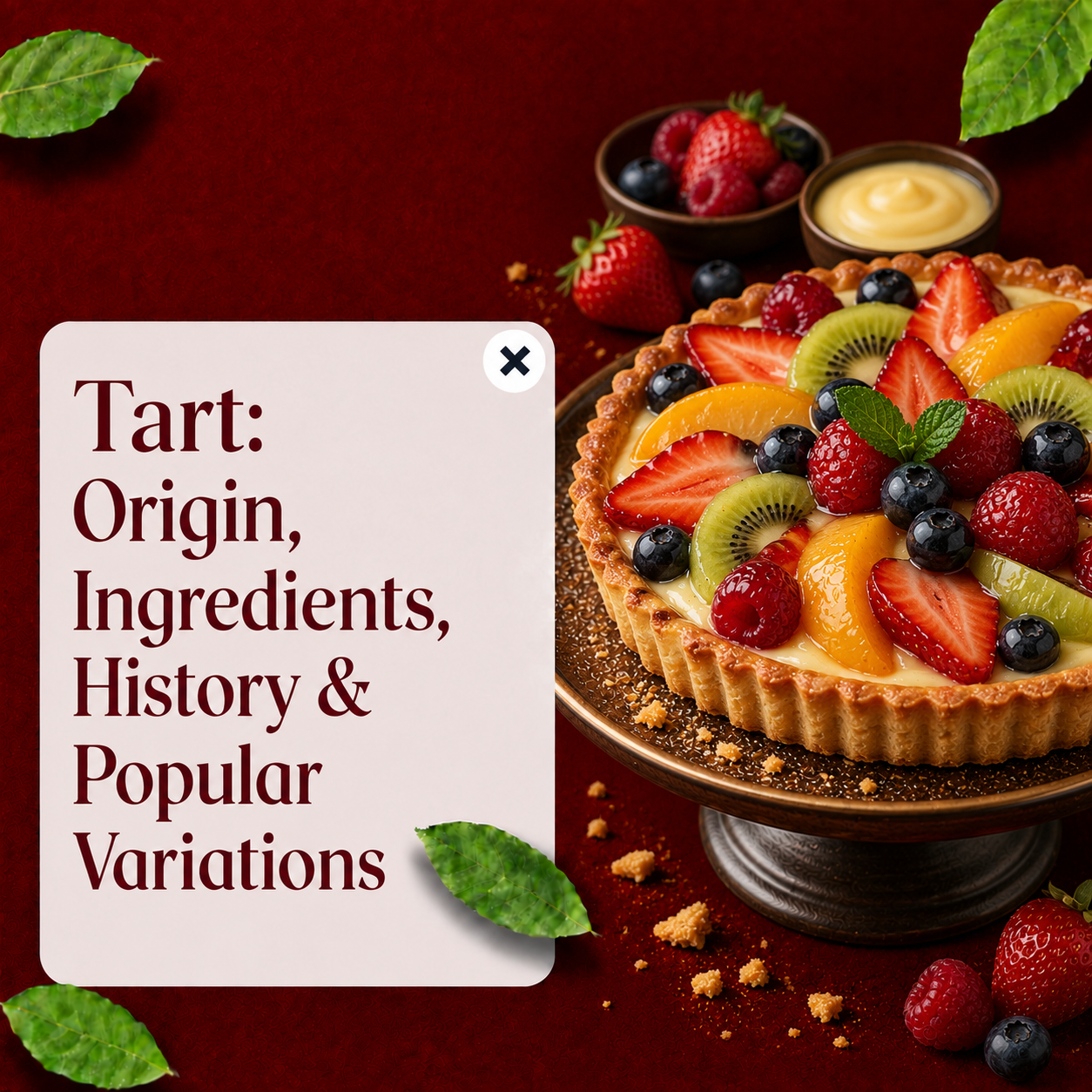
Fruit Tarts
Fruit tarts are among the most popular types of tarts.
They usually consist of a baked pastry shell filled with cream and topped with fresh fruits such as:
Strawberries, berries, kiwi, grapes, peaches, and mangoes.
The fruit is often coated with a thin, shiny glaze that helps preserve its appearance and gives the tart an elegant finish.
This type of tart combines the crispness of the pastry with the smoothness of the cream and the freshness of the fruit.
Lemon Tart
Lemon tart is one of the most famous classic tart varieties.
It is known for its creamy filling made from lemon juice, sugar, eggs, and butter, creating a balance between tartness and sweetness.
The filling is poured into a crisp tart shell and may be served as it is or topped with meringue.
Lemon tart has become a staple dessert in French bakeries and cafés around the world.
Chocolate Tart
Chocolate tart usually combines a crisp pastry shell with a rich filling made from chocolate and cream.
The filling is smooth and dense, while the pastry provides a noticeable contrast in texture.
Chocolate tarts may also be decorated with nuts, fruit, chocolate shavings, or caramel.
Caramel Tart
Another popular modern variation is caramel tart.
It often combines a crisp pastry shell with a layer of caramel, sometimes topped with chocolate.
The deep sweetness of caramel gives this tart a rich character, especially when a small amount of salt is added to create salted caramel.
Sweet and Savory Tarts
Although the word tart is most commonly associated with desserts, savory versions also exist.
Tart pastry can be filled with cheese, vegetables, eggs, meat, and many other ingredients.
One of the best-known related French dishes is quiche, which is made with a pastry base and a savory filling typically containing eggs and cream.
This means that the concept of a tart is not limited to desserts. It can also describe a style of open pastry with a filled base.
Tart vs. Pie: What Is the Difference?
Tarts may look similar to pies, but there are several common differences between them.
A tart is usually shallower and has relatively straight sides, and its top is often left open.
A pie is generally made in a deeper dish and may have a top crust that completely or partially covers the filling.
Tart pastry also tends to be firmer and more delicate, while pie crusts can vary significantly depending on the recipe.
Tart vs. Cake: What Is the Difference?
A tart does not rely on a soft cake batter. Instead, it is made with pastry dough that is rolled and fitted into a pan.
For this reason, its texture is very different from cake.
Cake is generally soft, airy, and tender, while a tart has a crisp base combined with a filling that may be creamy, fruity, or rich.
Tartlets
Small individual versions of tarts are commonly known as tartlets.
They are baked in small individual molds and may be filled with fruit, cream, chocolate, or other ingredients.
Tartlets are especially popular for parties, celebrations, and hospitality because they are easy to serve and give each guest an elegant individual portion.
Tarts in French Cuisine
Tarts hold an important place in French cuisine.
Many classic varieties are associated with French pastry traditions, including lemon tart, apple tart, fruit tart, and chocolate tart.
Another famous example is Tarte Tatin, an upside-down apple tart in which the fruit is cooked with sugar and butter before being covered with pastry, baked, and then inverted for serving.
French pastry traditions played a major role in making tarts an important part of modern pâtisserie.
Tarts Around the World
As French bakeries and European pastry techniques spread internationally, tarts became popular in many countries.
Their recipes also evolved to include local ingredients and flavors.
In some places, tarts are prepared with pistachios, dates, or coffee, while other regions use tropical fruits, specialty chocolates, or different types of cream.
This versatility has made the tart one of the desserts most open to creativity and innovation.
A Dessert That Combines Beauty and Flavor
The appeal of a tart lies in its ability to combine a crisp texture, a smooth filling, and an elegant appearance.
It can be simple, with only one filling, or elaborately decorated with fruit, cream, chocolate, and artistic details.
With its wide range of flavors and presentations, the tart remains one of the most popular desserts in bakeries and cafés around the world.
From classic fruit tarts to lemon, chocolate, and caramel varieties, the tart continues to show how a simple pastry shell and a well-balanced filling can be transformed into a dessert that combines elegance with flavor.
Apple Pie: History, Origin, Ingredients, and Popular Variations