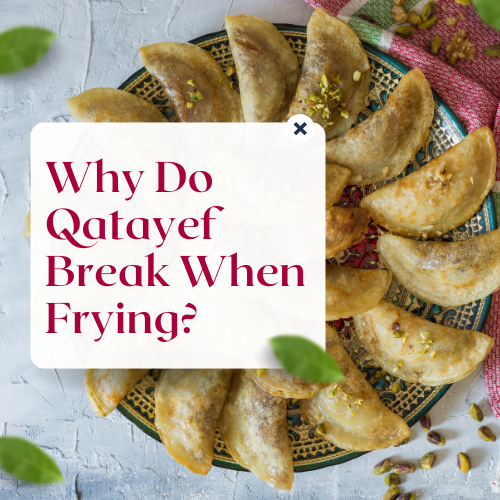
Is there anything more disappointing than preparing a fresh batch of Qatayef, filling them carefully with nuts or sweet cream, only to watch them split open, burst, and leak everywhere as soon as they hit the hot oil?
If you’ve ever ended up with cracked dough or a soggy, oil-logged pancake instead of a crispy, golden-brown crescent, you are definitely not alone! Qatayef—the iconic Middle Eastern folded pancakes synonymous with festive gatherings—require a fine balance between dough elasticity, moisture, and cooking technique.
Let’s break down why Qatayef break when frying and reveal the essential secrets to keeping your dough soft, pliable, and perfectly crispy on the outside without soaking up excess oil.
The Main Reasons Your Qatayef Split or Crack
Understanding why the dough tears is the first step to preventing a kitchen catastrophe:
- Stale or Dried-Out Pancakes: Qatayef dough dries out rapidly when exposed to air. Once dry, the edges lose their tackiness and crack when folded.
- Over-Filling the Pancakes: Packing too much Ashta (clotted cream) or chopped nuts puts immense pressure on the seal during frying.
- Under-Cooked or Over-Cooked Batter: If the pancakes cook too long on the griddle, they lose the moisture needed to seal smoothly. If under-cooked, the raw center Tears under heat.
- Incorrect Gluten Structure: Dough that lacks flexibility will snap instead of stretching around the filling.
5 Secrets to Soft Dough and Non-Soggy Qatayef
1. Keep Them Covered Immediately
The moment a cooked Qatayef pancake comes off the hot griddle, place it onto a clean kitchen towel and cover it immediately with another damp towel. This traps the steam, keeping the dough soft, pliable, and sticky enough to seal tightly.
2. Master the “One-Side Only” Cooking Rule
Never flip a Qatayef on the griddle! You only cook the bottom side until the top forms tiny bubbles and sets completely. The top surface must remain unbaked and slightly tacky so that when you fold it in half, the edges weld together seamlessly.
3. Seal the Edges with Firm, Double Pressure
When pinching the edges closed, go around the crescent twice. Press firmly with your fingertips to lock the seam. If using a soft cream filling like Ashta, ensure no moisture touches the outer rim, as wet edges will unseal during frying.
4. Fry in Hot, Clean Oil (The Crispiness Trick)
Frying in lukewarm oil is the number one cause of soggy, greasy Qatayef. Ensure your oil is preheated to 350°F–375°F (175°C–190°C). Hot oil sears the outer layer instantly, creating a crispy barrier that prevents oil absorption.
5. Cold Syrup for Hot Qatayef
To maintain that irresistible crunch, dunk your piping-hot, fried Qatayef directly into thick, cold sugar syrup (Attar) for a few seconds, then remove them to a wire rack. Pouring warm or thin syrup over hot pastries turns them soggy within minutes.
How Do You Fill Your Qatayef?
Are you Team Ashta with orange blossom syrup, or do you prefer the traditional spiced walnut and cinnamon filling? Do you fry yours to a deep golden crunch or bake them with a brush of ghee?
Share your family traditions and favorite fillings in the comments below!