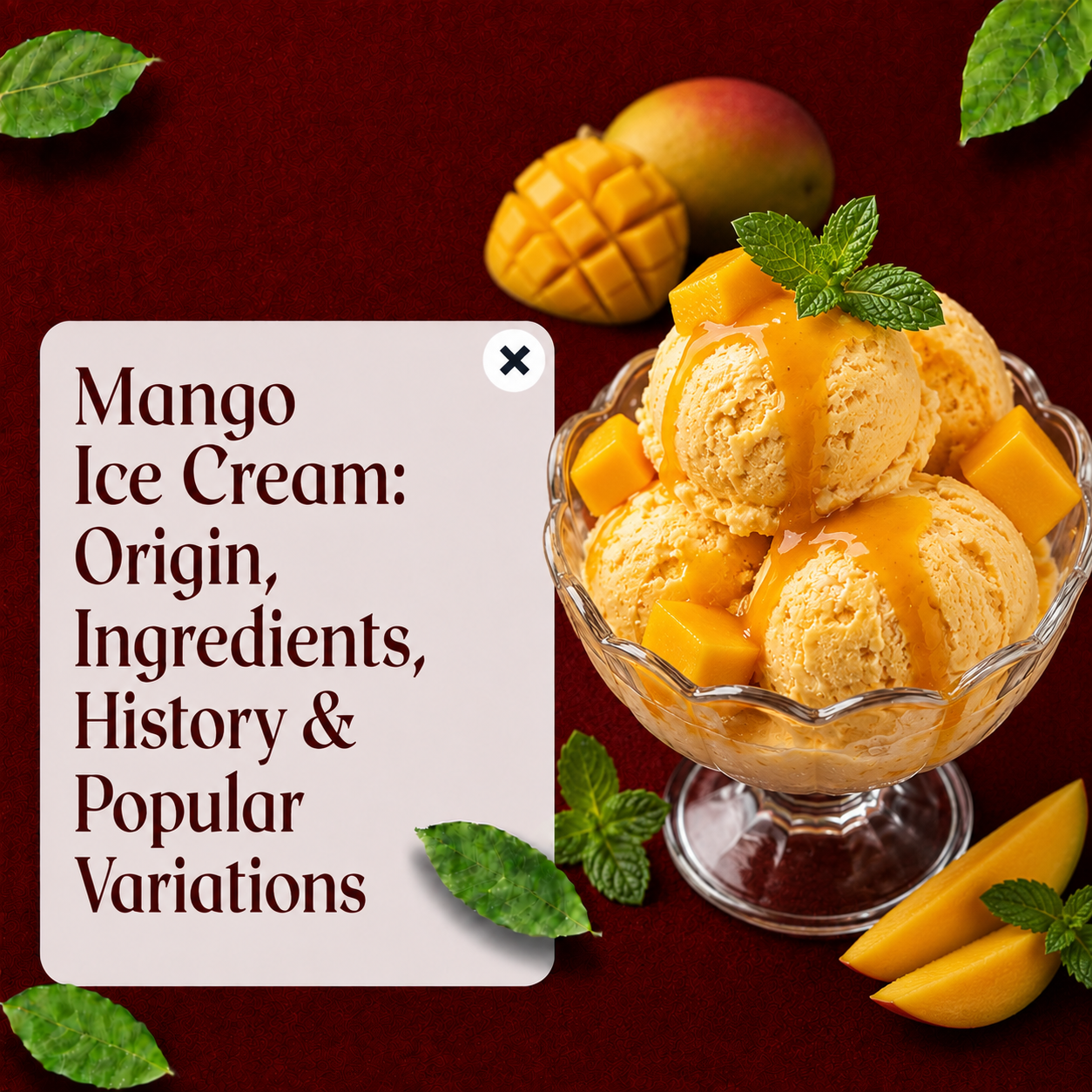
Mango ice cream is one of the most popular fruit-based frozen desserts. It has a beautiful golden color, a tropical aroma, and a smooth texture.
This dessert is especially popular in regions where mangoes grow widely. These include India, South Asia, and Southeast Asia. Over time, mango ice cream also became popular in restaurants and ice cream shops around the world.
Today, people enjoy it as a refreshing summer dessert. It can be creamy, light, or even dairy-free, depending on the ingredients.
Mango: An Ancient Tropical Fruit
Mango is one of the oldest cultivated tropical fruits. It has been grown in South Asia for thousands of years.
As trade expanded, mango cultivation spread to other regions. These included Africa, the Middle East, Southeast Asia, and the Americas.
Today, hundreds of mango varieties exist. They differ in size, color, sweetness, aroma, and texture.
Because ripe mangoes are naturally sweet and soft, they work very well in desserts. They are also ideal for juices, smoothies, and frozen treats.
How Did Mango Become an Ice Cream Flavor?
As ice cream became more popular, producers began experimenting with fruit flavors.
Mango was an excellent choice because of its natural sweetness and creamy flesh.
Mango desserts are especially common in India and other South Asian countries. Therefore, mango naturally became a popular flavor for frozen desserts.
Later, Indian and Asian restaurants introduced mango ice cream to customers in many other countries.
As a result, the flavor became more familiar to people around the world.
Basic Ingredients of Mango Ice Cream
Traditional mango ice cream usually contains four main ingredients:
- Mango pulp
- Milk
- Cream
- Sugar
Some recipes also include vanilla or a small amount of lemon juice.
In addition, sweetened condensed milk is often used in homemade versions. It adds sweetness and helps create a smooth texture.
Because the ingredient list is simple, the quality of the mango is very important.
Why Ripe Mangoes Are Important
The quality of the fruit has a major effect on mango ice cream.
Ripe mangoes are usually sweeter, softer, and more aromatic. Therefore, they are easier to blend into a smooth purée.
On the other hand, unripe mangoes may taste more acidic. They can also have a weaker aroma.
For the best flavor, soft and fragrant mangoes are usually preferred.
A naturally sweet mango can also reduce the amount of extra sugar needed.
Mango Pulp
Mango pulp provides most of the flavor and color in mango ice cream.
To prepare it, ripe mangoes are usually peeled and blended until smooth. The purée can then be mixed with the other ingredients.
Fresh mango works very well. However, frozen or canned mango pulp can also be used when fresh fruit is unavailable.
The final color depends on the mango variety. Some mangoes create a deep orange shade, while others produce a pale yellow color.
Traditional Mango Ice Cream
Traditional mango ice cream combines mango purée with milk, cream, and sugar.
First, the mixture is chilled. Then, it is frozen while being churned.
Churning is important because it helps control the formation of ice crystals. As a result, the ice cream becomes smoother and creamier.
An ice cream machine makes this process easier. However, other freezing methods can also work.
No-Churn Mango Ice Cream
You do not always need an ice cream machine to make mango ice cream.
A popular no-churn version combines mango purée, whipped cream, and sweetened condensed milk.
After mixing, the dessert is placed in the freezer until firm.
This method is popular because it is simple and requires little equipment. Therefore, it is ideal for homemade ice cream.
The result is usually rich, smooth, and creamy.
Mango and Condensed Milk
Sweetened condensed milk works especially well with mango.
It provides sweetness and creates a rich texture. In addition, it can help the mixture stay softer after freezing.
Condensed milk also balances the mild acidity of some mango varieties.
For these reasons, mango and condensed milk are commonly used together in homemade frozen desserts.
Mango Ice Cream and Kulfi
Mango is also a popular flavor for kulfi, a traditional South Asian frozen dessert.
Kulfi is usually denser than regular ice cream. This is because it is often made with milk that has been slowly reduced.
Traditional kulfi flavors include pistachio, cardamom, and saffron. However, mango has also become one of the most popular modern flavors.
Although kulfi and ice cream are different, both show how important mango is in South Asian dessert culture.
Mango Ice Cream vs. Mango Sorbet
It normally does not contain milk or cream.
Therefore, sorbet has a lighter and more refreshing texture.
Mango ice cream, in contrast, usually contains dairy. As a result, it feels richer and creamier.
Both desserts highlight the tropical flavor of mango in different ways.
Mango and Coconut
Mango pairs naturally with coconut.
For this reason, some recipes use coconut milk instead of dairy milk or cream.
Coconut adds another tropical flavor. It can also create a smooth and rich texture.
In addition, shredded coconut can be used as a topping.
This combination is especially popular in tropical-style desserts.
Mango and Other Fruits
Mango also combines well with many other fruits.
Popular choices include strawberries, pineapple, passion fruit, bananas, and berries.
Fruits with a slightly tart flavor can balance the sweetness of mango.
Fresh fruit pieces may also be added on top of the ice cream. Alternatively, they can be mixed directly into the dessert.
These combinations add more flavor, color, and texture.
Mango and Pistachios
Pistachios are another popular addition to mango ice cream.
Their green color creates a beautiful contrast with the yellow or orange mango.
They also add a pleasant crunch to the soft ice cream.
This combination is especially common in desserts influenced by Indian and Middle Eastern flavors.
Why Is Lemon Added to Mango Ice Cream?
Some mango ice cream recipes include lemon or lime juice.
The goal is not to make the dessert sour. Instead, a small amount of citrus can brighten the mango flavor.
It can also balance extra sweetness.
However, only a small quantity is needed. Too much citrus may overpower the natural mango taste.
Why Can Mango Ice Cream Become Icy?
Mango contains a significant amount of water.
Therefore, using too much mango purée can sometimes create large ice crystals during freezing.
The balance between fruit, sugar, and fat is important.
Cream can help create a smoother texture. Sugar also affects how firmly the mixture freezes.
In addition, churning can reduce the size of ice crystals.
For this reason, a balanced recipe usually produces better results.
How to Serve Mango Ice Cream
Mango ice cream can be served in a bowl or cone.
It also pairs well with several toppings, such as fresh mango, pistachios, coconut, mango sauce, or whipped cream.
In addition, it can be used in milkshakes and smoothies.
Some people also add it to layered desserts for extra color and flavor.
Because of its bright appearance, mango ice cream can make a simple dessert look more attractive.
Mango Ice Cream in Summer
Mango ice cream is strongly associated with summer.
In many countries, mango season arrives during the warmer months. Therefore, mango desserts become especially popular at this time.
The fruit offers sweetness, freshness, and a tropical aroma.
At the same time, the cold texture of ice cream makes it refreshing on hot days.
For this reason, mango ice cream, sorbet, milkshakes, and cold mango drinks are popular summer choices.
Mango Ice Cream Around the World
Today, mango ice cream is available in many countries.
It is especially popular in India, Pakistan, Bangladesh, and parts of Southeast Asia.
However, its popularity has also grown in the Middle East, Europe, and the Americas.
Restaurants, cafés, supermarkets, and ice cream shops now offer many mango-based frozen desserts.
The worldwide popularity of mango has helped make this flavor easier to find.
Why Is Mango Ice Cream So Popular?
Mango ice cream combines several appealing qualities.
It offers natural sweetness, a tropical aroma, a bright color, and a creamy texture.
Moreover, mango works well with many other ingredients. These include coconut, vanilla, pistachios, and different fruits.
It can also be prepared in several ways. Traditional versions use milk and cream, while simpler recipes may use condensed milk.
Meanwhile, dairy-free versions can use coconut milk or be prepared as sorbet.
A Refreshing Tropical Dessert
Mango ice cream is a simple dessert with a distinctive tropical character.
Its refreshing temperature pairs perfectly with the natural sweetness and aroma of ripe mangoes.
In addition, its versatility allows it to appear in many forms. It can be rich and creamy, light and fruity, or completely dairy-free.
Because mango pairs well with many ingredients, the dessert can also be adapted to different tastes and cultures.
For these reasons, mango ice cream remains one of the world’s most popular fruit-based frozen desserts, especially during warm summer days.
Strawberry Ice Cream: A Classic Flavor Combining Refreshment and Natural Sweetness