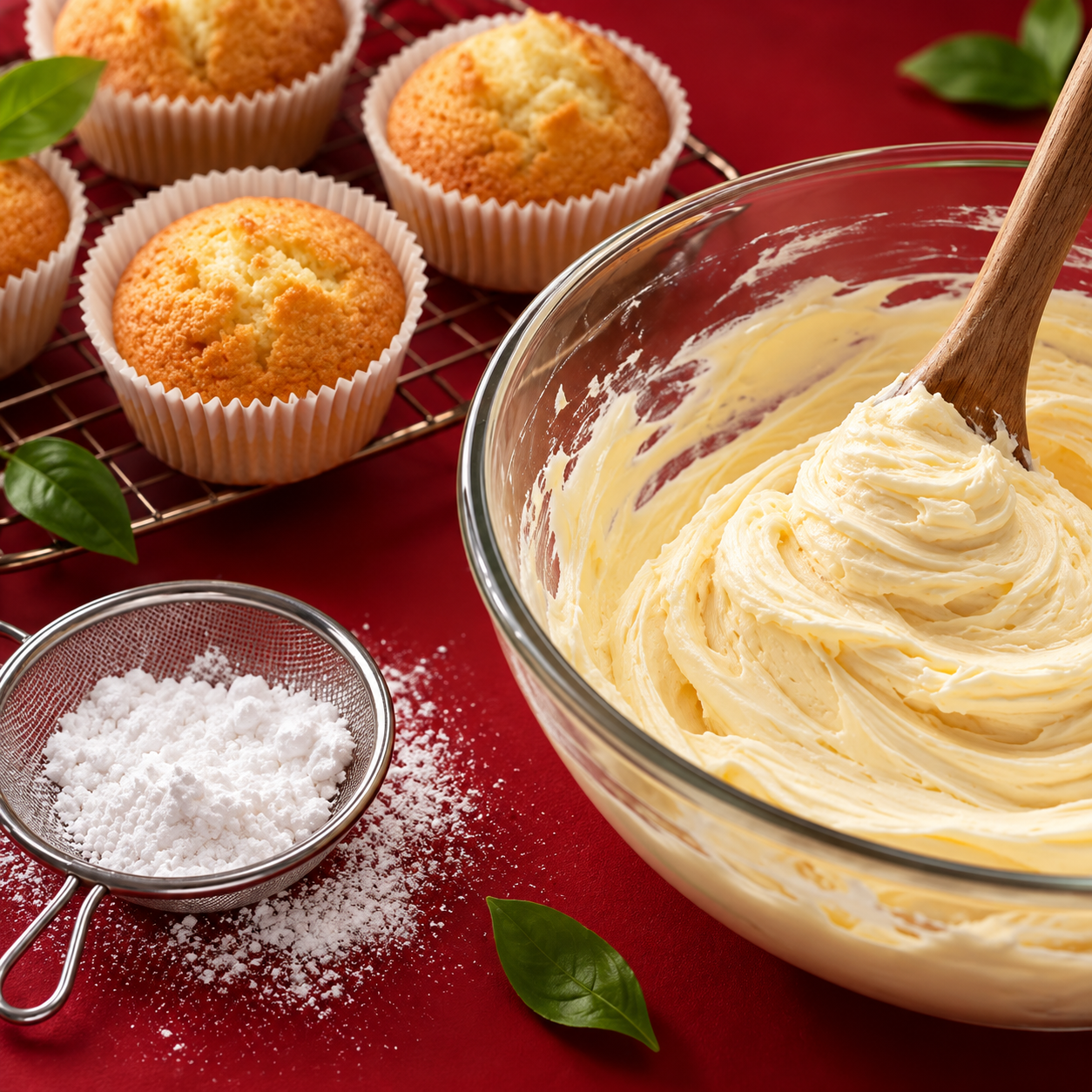
When bakers compare Swiss vs Italian buttercream, they are comparing two silky, less-sweet frostings made from meringue and butter. Both pipe beautifully and taste lighter than American buttercream; however, they are made in different ways, and that changes how easy and how stable they are.
This guide explains the differences and when to use each one. After that, you will find a tested Swiss meringue buttercream recipe and fixes for curdled or soupy buttercream.
Swiss vs Italian Buttercream: The Main Difference
- Swiss: you heat egg whites and sugar together over a pan of water, then whip them into meringue.
- Italian: you pour hot sugar syrup at 118°C (245°F) into whipping egg whites.
In both cases, you then beat in soft butter. As a result, both frostings are smooth and not too sweet.
Comparing Swiss vs Italian Buttercream
- Difficulty: Swiss is easier, because you do not need a sugar thermometer or hot syrup.
- Stability: Italian is slightly firmer and holds better in warm rooms.
- Texture: both are silky; Italian is a little lighter.
- Sweetness: both are much less sweet than American buttercream.
- Best for beginners: Swiss meringue buttercream.
Swiss or Italian Buttercream: Which Should You Choose?
Choose Swiss buttercream for home cakes, cupcakes and everyday decorating, since it is simple and reliable. In contrast, choose Italian buttercream for tall wedding cakes or hot weather, because it is more stable. For freezing frosted cakes, both work well; see how to freeze cakes and cupcakes.
Swiss Meringue Buttercream Recipe
Ingredients
- 4 egg whites (about 120 g)
- 200 g (1 cup) sugar
- Pinch of salt
- 340 g (1½ cups) unsalted butter, soft but cool, cubed
- 2 teaspoons vanilla extract
How to make Swiss meringue buttercream
- Heat. First, whisk the egg whites, sugar and salt in a heatproof bowl over simmering water until the sugar dissolves and the mixture reaches 70°C (160°F).
- Whip. Next, whip on high speed for 8–10 minutes, until the meringue is glossy and the bowl feels cool.
- Add the butter. Then add the butter one cube at a time, beating on medium speed.
- Keep beating. After that, keep beating even if it looks curdled; it will turn smooth.
- Flavor. Finally, beat in the vanilla until silky.
Swiss vs Italian Buttercream Problems and Fixes
Curdled buttercream
Cause: In most cases, this happens because the butter was too cold.
Fix: Warm the side of the bowl with a hot towel for a few seconds, and keep beating.
Soupy buttercream
Cause: The meringue or butter was too warm.
Fix: Chill the bowl for 15 minutes, then beat again.
Buttercream tastes too buttery
Cause: This is normal for meringue buttercreams.
Fix: Add more vanilla and a pinch of salt. In addition, melted chocolate or fruit purée balances the butter.
Tips for Silky Swiss and Italian Buttercream
- Use a clean, grease-free bowl; otherwise, the whites will not whip.
- Butter should be about 18°C (65°F): soft enough to press, but not shiny.
- Beat the finished buttercream with a paddle for 2 minutes to remove air bubbles.
Storage Tips
Keep buttercream in the fridge for 1 week or in the freezer for 3 months. Then bring it to room temperature and beat it smooth before using.
The Story Behind It
Meringue-based buttercreams come from European pastry kitchens, where chefs wanted frostings that were lighter and less sweet than sugar icing. You can read more about buttercream on Wikipedia.
Swiss vs Italian Buttercream FAQ
Is Swiss or Italian buttercream safer to eat?
Both are safe when made correctly, since the egg whites are heated to a safe temperature in each method.
Can I color meringue buttercream?
Yes. However, use gel colors, because liquid colors can split the buttercream.
Which one is better for piping flowers?
Italian buttercream holds sharp details a little better, especially in warm kitchens.
Ready for your next bake? If you found this comparison of Swiss vs Italian buttercream useful, take a look at our digital cookbook: 31 sweet recipes from the Middle East and the West, written in the same step-by-step style.