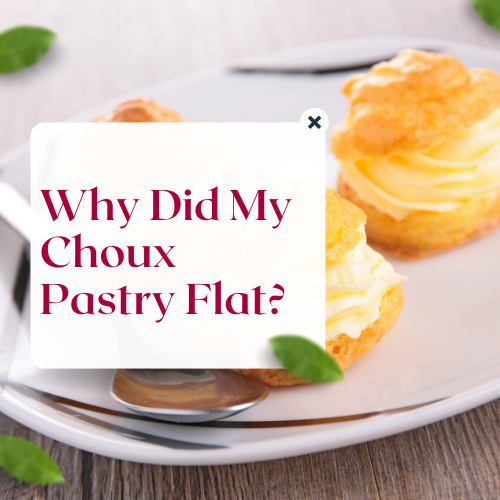
Few things in French baking are as rewarding as watching a tray of choux pastry rise in the oven into light, airy, hollow shells ready to be filled with rich pastry cream. But few things are as frustrating as opening the oven door to find flat, dense, or soggy pancakes instead of golden profiteroles or towering eclairs!
If your choux pastry failed to rise, don’t throw in the towel. Baking choux isn’t about luck—it relies entirely on a clever combination of steam expansion and egg protein structure.
Let’s dive into why your choux pastry turned out flat and unlock the secrets to achieving the ultimate puff every single time.
The Science: How Does Choux Pastry Rise Without Leaveners?
Unlike traditional cakes or breads, choux pastry contains no baking powder, baking soda, or yeast.
Instead, its magical rise comes entirely from steam trap expansion. When the high-moisture batter hits the hot oven, the water trapped inside rapidly turns to steam, forcing the outer dough shell to expand outward. Meanwhile, the egg proteins cook and set, locking that hollow shape into place.
If anything disrupts this steam-trapping process, your pastries will collapse flat.
4 Common Reasons Your Choux Pastry Stayed Flat (And How to Fix Them)
1. You Added Too Much (or Too Little) Egg
Eggs are the heart of choux pastry, providing both moisture for steam and structure for setting.
- The Fix: Never dump all your eggs in at once! Humidity and flour absorbency vary daily. Whisk your eggs in a jug and add them gradually to the cooked flour paste until you reach the “V-shape test”—the batter should slide off a lifted spatula, leaving a clear V-shaped ribbon hanging from the edge.
2. You Didn’t Cook the Dough Base Long Enough
Before adding eggs, you must cook the flour, water, and butter mixture on the stovetop.
- The Fix: Cook the panade over medium heat for 2 to 3 minutes, stirring constantly until a thin film forms on the bottom of the saucepan. This step evaporates excess water and gelatinizes the starches, allowing the dough to absorb maximum egg structure later.
3. You Opened the Oven Door Too Early
Resist the temptation to peek!
- The Fix: Opening the oven door during the first 20 minutes allows cool air to rush in, causing the steam inside the un-set shells to condense and deflate instantly. Keep that oven door firmly closed until the pastries are fully risen and golden brown.
4. Trapped Steam Softened the Shells After Baking
Even if your eclairs puff up beautifully in the oven, trapped internal moisture can turn them soggy and flat as they cool.
- The Fix: Once baked, prick the bottom or side of each profiterole or eclair with a toothpick and return them to the turned-off oven with the door propped slightly open for 5–10 minutes. This releases residual steam and crisps up the outer shell.
What’s Your Favorite Choux Pastry Filling?
Are you a purist who loves classic vanilla pastry cream and chocolate ganache, or do you prefer filling your profiteroles with ice cream or salted caramel?
Share your favorite flavor twists and baking wins in the comments below!