Moghli dessert is a traditional Levantine sweet known especially in Lebanon, Syria, Palestine, and Jordan. Made mainly from rice flour, sugar, cinnamon, caraway, and water, it has a thick pudding-like texture and a distinctive warm, spiced flavor.
More than simply a dessert, Moghli has an important cultural meaning. In many Levantine families, it is traditionally prepared to celebrate the birth of a new baby and served to relatives and guests who visit the family to offer congratulations.
Usually topped with shredded coconut and a generous selection of nuts, Moghli remains one of the most recognizable desserts associated with family celebrations in the Levant.
What Is Moghli Dessert?
Moghli is a thick, smooth pudding traditionally prepared from rice flour, sugar, water, cinnamon, and caraway.
Unlike many Middle Eastern puddings that rely on milk, Moghli is commonly prepared with water. Its characteristic brown color and aromatic flavor come mainly from the spices used during cooking.
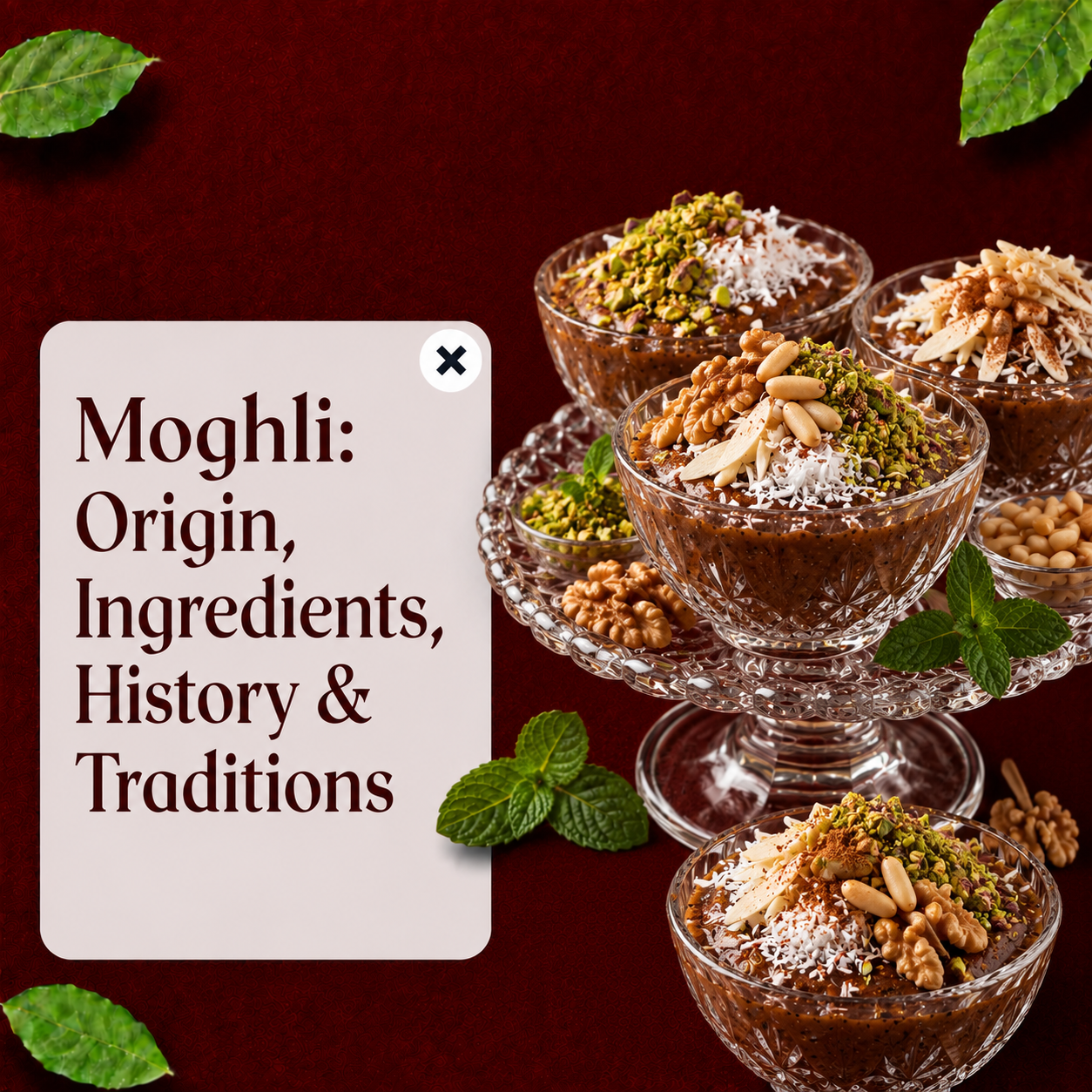
After the mixture thickens, it is poured into individual bowls or cups and allowed to cool. It is then decorated with shredded coconut and nuts such as almonds, walnuts, pistachios, and pine nuts.
This combination of warm spices, smooth pudding, coconut, and crunchy nuts gives Moghli dessert its distinctive appearance and flavor.
The Origin of Moghli
The exact historical origin of Moghli is difficult to determine, but the dessert has long been part of traditional Levantine cuisine.
It became particularly well established in Lebanon and Syria, where recipes were passed from one generation to another within families.
The dessert reflects an important feature of traditional Levantine cooking: transforming simple ingredients such as rice, sugar, and spices into a dish associated with hospitality and celebration.
Over time, Moghli became especially connected with childbirth and welcoming a newborn.
Why Is It Called Moghli?
The name Moghli is closely connected with the cooking process used to prepare the dessert.
Its ingredients are heated and stirred until the rice flour thickens and the mixture develops its smooth pudding-like consistency.
The prolonged cooking also allows the flavor and aroma of cinnamon and caraway to become fully incorporated into the dessert.
This cooking process is an important part of creating the characteristic texture and flavor of traditional Moghli.
Traditional Moghli Ingredients
Traditional Moghli dessert is generally prepared with a small number of basic ingredients:
- Rice flour
- Sugar
- Cinnamon
- Caraway
- Water
The exact quantities vary according to family traditions and personal preference.
Some families prefer a stronger cinnamon flavor, while others use more caraway to give the dessert a more pronounced aromatic character.
Although the base ingredients are simple, the elaborate toppings make the final presentation much richer.
Cinnamon and Caraway in Moghli
Caraway provides a distinctive earthy and slightly spicy flavor that makes Moghli immediately recognizable.
The balance between these two spices varies from one household to another, creating slightly different versions of the same traditional dessert.
How Rice Flour Gives Moghli Its Texture
Rice flour plays an essential role in creating the thick texture of Moghli dessert.
When rice flour is heated with water and sugar, it gradually absorbs liquid and thickens the mixture.
The result is a smooth pudding with a consistency that becomes firmer as it cools.
This thickness is particularly useful because Moghli is traditionally covered with generous amounts of coconut and nuts. A firm surface allows these toppings to remain visible rather than sinking into the pudding.
The use of rice flour is also one of the main differences between Moghli and traditional rice pudding made with whole rice grains.
Why Is Moghli Served When a Baby Is Born?
Perhaps the most famous tradition surrounding Moghli dessert is its connection with the birth of a baby.
In many Levantine families, especially in Lebanon, Moghli is prepared when a child is born and offered to relatives, friends, and guests who visit the family.
Through generations, the dessert became associated with congratulations, hospitality, and the welcoming of a newborn.
For many families, serving Moghli is therefore not simply a culinary tradition. It is part of the social customs surrounding one of the happiest occasions in family life.
Although Moghli can also be served at other gatherings, childbirth remains the celebration with which it is most strongly associated.
Traditional Moghli Toppings
Decoration is an important feature of traditional Moghli.
Once the pudding has cooled, its surface is commonly covered with shredded coconut before nuts are arranged on top.
Popular Moghli toppings include:
- Almonds
- Walnuts
- Pistachios
- Pine nuts
- Shredded coconut
Some versions also include raisins.
In traditional preparations, certain nuts may be soaked before serving. This softens them slightly and can give them a fresher appearance.
The toppings transform a simple brown pudding into an attractive dessert suitable for celebrations and hospitality.
Why Is Coconut Added to Moghli?
Shredded coconut is one of the most recognizable toppings used on Moghli dessert.
Its bright white color creates a striking contrast with the dark brown pudding underneath.
Coconut also adds a mild sweetness and a different texture from the creamy pudding and crunchy nuts.
In many traditional presentations, a complete layer of coconut is placed over the surface before almonds, walnuts, pistachios, or pine nuts are added.
This layered decoration has become part of the familiar appearance of Moghli.
Moghli vs. Muhallabia
Moghli and muhallabia are both traditional puddings commonly served in individual bowls, but their ingredients, colors, and flavors are very different.
Muhallabia is generally a light-colored milk pudding prepared with milk and a thickening ingredient such as cornstarch or rice flour. It may also be flavored with rose water or orange blossom water.
Moghli is traditionally made with rice flour and water, while cinnamon and caraway provide its characteristic flavor.
Moghli is therefore darker, more strongly spiced, and usually decorated with a heavier layer of coconut and nuts.
Muhallabia, by comparison, tends to have a lighter and more delicate flavor.
Moghli vs. Rice Pudding
Moghli dessert is also different from traditional rice pudding.
Rice pudding is usually prepared with whole grains of rice cooked with milk and sugar.
Moghli uses rice flour instead of whole rice grains, creating a completely smooth consistency.
The flavor profiles are also different.
Rice pudding may be flavored with vanilla, rose water, orange blossom water, or cinnamon. Moghli relies much more heavily on the distinctive combination of cinnamon and caraway.
As a result, the two desserts have noticeably different textures, colors, and aromas.
Moghli in Lebanon
Moghli holds a particularly important place in Lebanese food culture.
It is strongly associated with celebrating a newborn and is frequently prepared for guests visiting the family after a birth.
Individual cups are traditionally decorated generously with coconut and nuts, creating an elegant presentation for visitors.
Although recipes vary among households, the connection between Moghli and childbirth remains one of its most recognizable cultural traditions in Lebanon.
Moghli in Syria, Palestine, and Jordan
Moghli and similar spiced rice-flour puddings are also known in other parts of the Levant, including Syria, Palestine, and Jordan.
Preparation methods and ingredient proportions may vary between regions and families.
Differences can include the amount of sugar used, the balance between cinnamon and caraway, and the combination of nuts chosen for decoration.
These variations reflect the way traditional recipes develop as they are passed down through different families and communities.
Moghli at Family Gatherings
Although closely associated with childbirth, Moghli can also appear at family gatherings and special occasions.
Because it can be prepared in advance and served chilled or at room temperature, it is convenient for entertaining groups of guests.
Serving the dessert in individual cups also makes it suitable for celebrations.
Its generous topping of coconut, pistachios, walnuts, almonds, and pine nuts gives it the festive appearance traditionally associated with hospitality.
The Cultural Meaning of Moghli
What makes Moghli special is not simply its ingredients or flavor but its social significance.
For generations, the dessert has been linked with family, congratulations, hospitality, and the arrival of a new child.
Preparing and serving Moghli can therefore represent a continuation of family traditions.
Recipes may be passed from parents and grandparents to younger generations, allowing the dessert to remain connected with family memories as well as Levantine culinary heritage.
Why Moghli Remains Popular Today
Despite the enormous variety of modern desserts now available, traditional Moghli continues to hold an important place in many Levantine homes.
Its appeal comes from the combination of several elements:
- A smooth and thick rice-flour texture
- The warm aroma of cinnamon
- The distinctive flavor of caraway
- Generous coconut and nut toppings
- A strong connection with family traditions
These characteristics make it very different from most other puddings.
Its association with happy family occasions has also helped preserve its cultural importance across generations.
Moghli: More Than a Traditional Levantine Dessert
Moghli dessert represents an important part of Levantine culinary culture.
From simple ingredients such as rice flour, sugar, cinnamon, and caraway comes a distinctive pudding traditionally covered with coconut and nuts.
Yet its importance extends beyond food.
Its long association with childbirth, hospitality, congratulations, and family gatherings has transformed Moghli into a symbol of celebration in many Levantine households.
For this reason, Moghli remains more than a traditional sweet. It carries memories, family traditions, and part of the culinary heritage of the Levant, continuing to welcome new generations just as it has done for generations before them.
Strawberry Ice Cream: A Classic Flavor Combining Refreshment and Natural Sweetness