
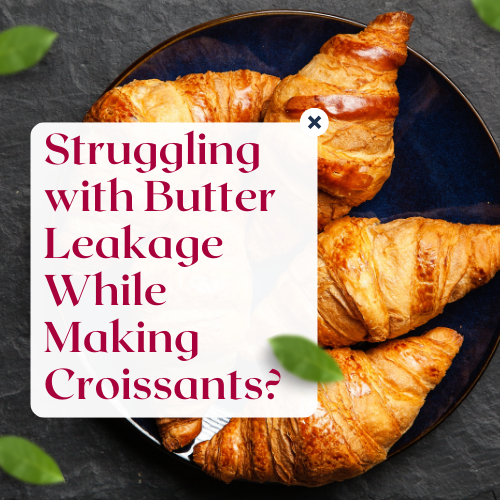
Discover Solutions Through These Interactive Steps, Few baking achievements rival pulling a tray of golden, flaky, honeycomb-structured croissants out of the oven. But for many home bakers and pastry enthusiasts, the baking process comes with a nightmare moment: opening the oven door to find your croissants sitting in a sizzling pool of melted butter while the pastry turns out dry and dense instead of airy and laminated!
Butter leakage during baking—often called “butter pool syndrome”—is the ultimate sign that the lamination process broke down.
When butter leaks out, you lose those precious layers that create the iconic flaky crunch and tender interior. Let me walk you through why croissant butter leaks and guide you through an interactive troubleshooting roadmap to keep that butter locked inside every fold!
The Science: Why Does Butter Leak During Baking?
Croissant dough relies on lamination—the art of folding thin sheets of butter between layers of yeast-leavened dough.
In a hot oven, the water trapped inside the butter turns to steam, forcing the surrounding dough layers apart into delicate pockets before evaporating. Meanwhile, the flour proteins set, locking that flaky honeycomb structure into place.
Butter leaks when the thermal equilibrium between the dough and the butter is destroyed. If the butter melts before the dough structure bakes and sets, it flows straight out of the pastry onto your baking sheet.
Interactive Troubleshooting Steps: Where Did Your Lamination Break?
Work through these interactive steps to pinpoint exactly where your croissant process lost its butter barrier!
Step 1: Check Your Butter Texture During Lamination
- The Test: Press your finger into the butter block before rolling out the dough. Is it rock-hard, or soft and greasy?
- What Went Wrong:
- Too Hard: If the butter is too cold, it shatters into sharp chunks inside the dough (shattering). Those sharp butter pieces pierce the dough layers, creating escape routes for liquid fat later.
- Too Soft: If the butter is too warm, it melts directly into the flour (marbling). You lose distinct layers completely, turning your lamination into a basic brioche dough.
- The Fix: Aim for pliable, plastic consistency—the butter should bend without snapping or melting, matching the firmness of the chilled dough perfectly.
Step 2: Evaluate Your Proofing Temperature
- The Test: Look closely at your shaped croissants while they proof on the tray. Are they glistening with an oily shine or dripping fat before entering the oven?
- What Went Wrong: Proofing your croissants in a warm room above 80°F (26.5°C) melts the butter block right inside the unbaked dough structure.
- The Fix: Keep your proofing environment cool and humid, ideally between 75°F–78°F (24°C–25.5°C). It takes longer, but it preserves the delicate fat barrier intact.
Step 3: Inspect Your Oven Temperature
- The Test: Check how quickly your croissants start browning in the oven.
- What Went Wrong: Baking at too low a temperature causes the butter to melt gradually and seep out long before the steam can puff the flour layers and set the structure.
- The Fix: Preheat your oven thoroughly to 390°F–400°F (200°C) for the initial rise, then lower it slightly to 350°F–365°F (175°C–185°C) to finish baking evenly. The initial burst of intense heat traps steam instantly and locks in the butter.
Step 4: Examine Your Roll-Out and Resting Technique
- The Test: Did the dough resist or shrink back aggressively while rolling with your rolling pin?
- What Went Wrong: Overworking the dough without adequate rest builds up gluten tension. When you force stubborn dough out flat, the pressure tears the thin dough layers, causing butter to leak from the tears during baking.
- The Fix: Chill the dough in the refrigerator for at least 30 minutes between folds (turns) to let the gluten relax and keep the butter firm.
What Is Your Biggest Croissant Challenge?
Have you ever experienced the dreaded butter pool on your baking sheet, or are you working on perfecting that beautiful honeycomb cross-section? Do you prefer classic all-butter croissants, pain au chocolat, or savory almond croissants?
Share your croissant journey, baking fails, and victory moments in the comments below!
If you would like to learn about the recipes in detail, we recommend you check out our digital booklet of 31 recipes for Eastern and Western sweets via the following link: