Donuts, also spelled doughnuts, are among the most famous sweet baked and fried treats in the world. They are known for their soft, light dough and familiar round shape, and they are often fried before being coated with sugar, chocolate, glaze, or other toppings.
Over time, donuts evolved from a simple form of fried dough into a global product available in countless flavors and styles, from classic sugar-coated rings to filled varieties containing cream, jam, chocolate, and custard.
The Origin of Donuts
It is difficult to identify one person or place as the sole inventor of the donut because fried dough has existed in many cultures for centuries.
However, the development of the modern American donut is especially connected with Dutch immigrants who settled in North America. They prepared a type of fried dough known as olykoek, meaning “oil cake.”
As time passed, these fried pastries developed in the United States and took on new shapes and preparation methods until the modern donut gradually emerged.
How Did the Hole in the Middle Appear?
One of the most recognizable features of the traditional donut is the round hole in its center.
A popular story attributes this idea to the American sailor Hanson Gregory in the nineteenth century. According to the story, he created a hole in the center of the dough so that it would cook more evenly during frying.
Although the exact historical details of this story are not completely certain, it has become one of the best-known legends associated with donut history.
From a practical point of view, the hole also makes the dough less thick, allowing heat to reach the center more quickly and evenly during frying.
The Meaning of the Word “Doughnut”
The traditional English word doughnut is formed from two words:
Dough, meaning the soft flour mixture used for baking, and nut, which was once used to describe a small round piece.
Over time, the shorter spelling donut became extremely popular, especially in the United States.
Today, both spellings are widely accepted, although doughnut remains the more traditional form.
The Basic Ingredients of Donuts
Traditional yeast donuts are usually made from a basic combination of ingredients such as:
Flour, milk or water, sugar, eggs, butter, and yeast.
The yeast allows the dough to rise and gives the finished donut its light and soft texture.
After the dough has risen, it is rolled out, cut into the desired shape, and fried in hot oil until golden.
The final coating or filling is then added, giving each type of donut its own distinctive character.
Fried Donuts
Fried donuts are the most traditional and widely recognized type.
When the dough enters the hot oil, it expands and develops a golden exterior while remaining soft and tender inside.
The frying temperature is important. If the oil is too cool, the dough may absorb too much oil. If it is too hot, the outside can brown before the inside is fully cooked.
Achieving the right temperature helps create a donut that is light, evenly cooked, and golden.
Baked Donuts
Alongside fried donuts, baked donuts have become increasingly popular in recent years.
They are prepared in special donut pans and baked in the oven rather than fried in oil.
Their texture is often closer to cake than to traditional yeast-raised donuts.
Baked donuts have become especially popular in home kitchens because they are easy to prepare and do not require deep frying.
Types of Donuts
There are many different types of donuts, which can be classified according to their dough, shape, and filling.
Classic Ring Donuts
These are the familiar round donuts with a hole in the center.
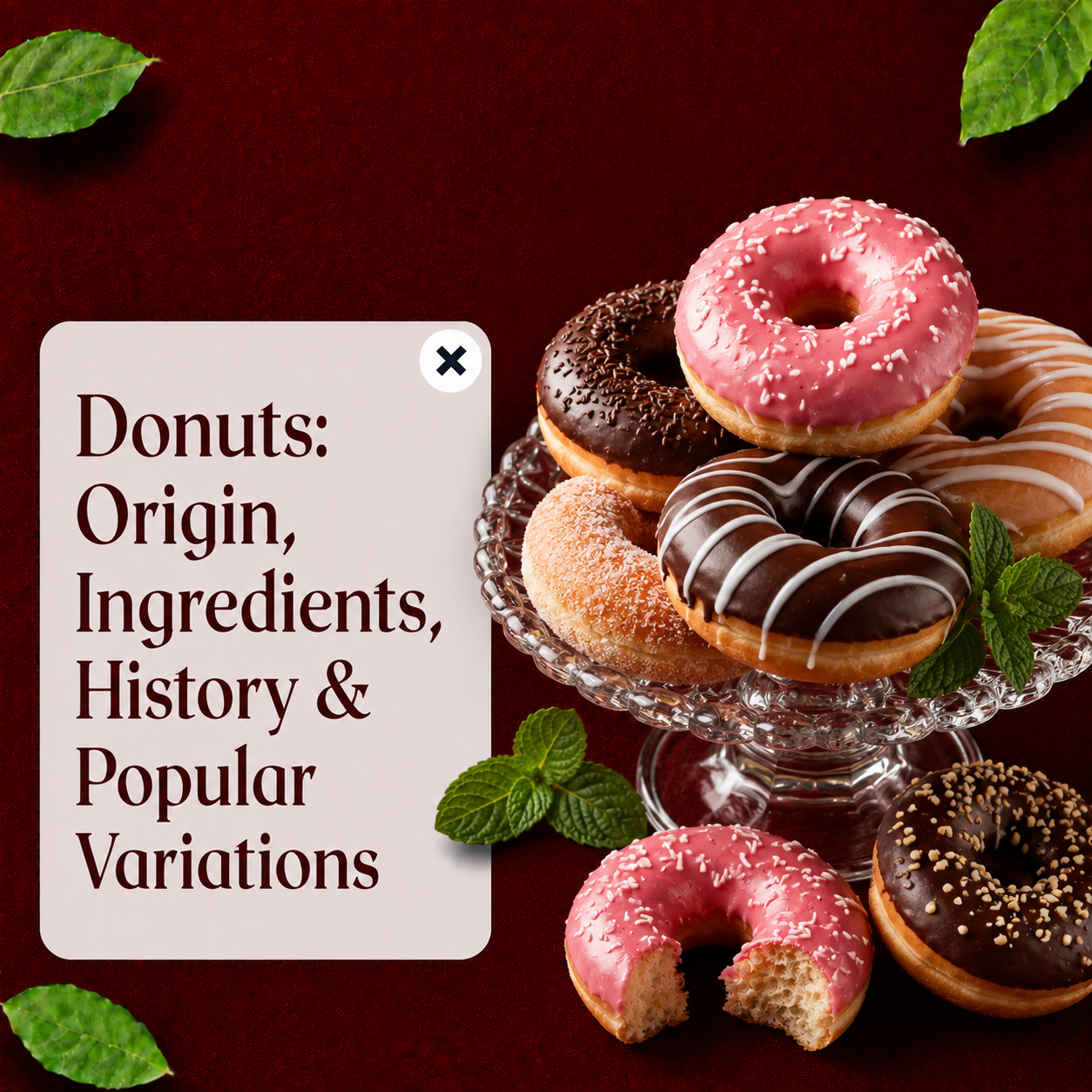
They may be coated with granulated sugar, powdered sugar, cinnamon sugar, or a thin glaze.
Filled Donuts
Filled donuts generally do not have a hole in the center.
After frying, they are filled with cream, chocolate, jam, custard, or other sweet fillings.
Cake Donuts
Cake donuts are made from a batter or dough that is more similar to cake and does not necessarily rely on yeast.
Their texture is usually denser and more crumbly than yeast donuts.
Yeast Donuts
Yeast donuts are known for their light, airy, and soft texture.
They are among the most common styles sold in modern donut shops.
Sugar-Coated Donuts
One of the simplest and oldest ways to serve donuts is to coat them with sugar.
Granulated sugar or powdered sugar may be added after frying, while cinnamon sugar is another popular option.
Despite their simplicity, sugar-coated donuts remain a classic because the light coating allows the flavor of the dough itself to remain noticeable.
Chocolate Donuts
Chocolate is one of the most popular donut toppings.
Donuts may be covered with dark chocolate, milk chocolate, or white chocolate.
They can also be filled with chocolate cream.
Nuts, chocolate chips, sprinkles, or other decorative toppings are often added to make them even more attractive.
Jam- and Cream-Filled Donuts
Not all donuts are rings with holes in the middle.
Some are fried as complete rounds or balls and then filled with jam, custard, or cream.
Similar pastries exist throughout Europe, including German and Polish varieties made from yeast dough and filled after frying.
These styles demonstrate how closely donuts are related to a much broader international tradition of filled fried pastries.
Donuts in the United States
Donuts are strongly associated with American culture.
During the twentieth century, they became a common product in bakeries, cafés, and dedicated donut shops.
Their convenient size, portability, and wide variety of flavors made them popular for breakfast or as a sweet snack with coffee.
The image of a donut served with a cup of coffee became one of the most recognizable combinations in American popular culture.
Donuts Around the World
Although American-style donuts are internationally famous, fried dough sweets exist in many cultures.
Germany has varieties such as the jam-filled Berliner, while Italy, Poland, France, and many other countries have their own forms of sweet fried dough.
In the Arab world, donuts have become increasingly popular in recent decades and can now be found in bakeries, cafés, and dessert shops.
Local flavors such as pistachio, dates, cardamom, and caramel have also been incorporated into modern donut creations.
Donuts and Zalabia: Are They the Same?
Donuts share some similarities with traditional Middle Eastern fried sweets such as zalabia and awameh, but they are not the same.
Donut dough often contains milk, eggs, and butter and is prepared in a way similar to sweet bread dough.
Zalabia and awameh use different doughs, shapes, and preparation methods and are often soaked in sugar syrup after frying.
However, they all share the basic idea of using fried dough as the foundation of a sweet dessert.
Decorations and Colors
Modern donuts have become especially well known for their wide variety of decorative styles.
They can be covered with chocolate, colorful glaze, caramel, cream, or icing and topped with nuts, shredded coconut, dried fruit, or sprinkles.
Brightly colored glazes are especially popular for children’s parties, birthdays, and celebrations.
This visual variety has also helped make donuts extremely popular on social media and in bakery displays.
Donuts in Cafés and Special Occasions
Today, donuts are commonly served in cafés alongside coffee, tea, and cold drinks.
They have also become popular at parties, gatherings, and birthdays because several flavors and colors can be offered at the same time.
Smaller versions known as mini donuts are also common and are especially suitable for buffets and occasions where individual bite-sized desserts are preferred.
From Fried Dough to a Global Dessert
The appeal of donuts lies in the simplicity of their basic idea and the almost endless ways they can be adapted.
The same dough can become a completely different dessert simply by changing the filling, coating, or decoration.
Donuts can be served simply with sugar and cinnamon or transformed into rich desserts filled with chocolate, cream, caramel, or nuts.
Thanks to their soft texture, distinctive shape, and wide variety of fillings and toppings, donuts evolved from a simple fried dough treat into one of the most famous sweet pastries in the world.
They continue to change with new flavors and creative designs while preserving the basic idea that has made them popular for generations: a soft, golden piece of dough that can be enjoyed in countless different ways.
Chocolate Fondant: Origin, History and the Secret of Its Molten Center