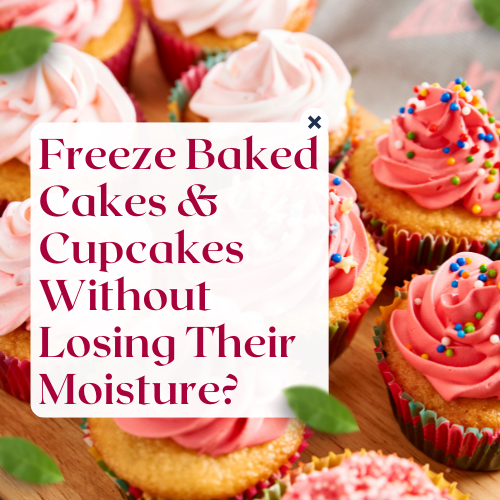
Whether you’re prepping weeks ahead for a big birthday bash, running a busy home bakery, or simply trying to save half a leftover chocolate sponge from going stale, a big question always arises: Can you freeze baked cakes and cupcakes without losing their moisture?
If the thought of freezing your baked goods conjures up images of dry, crumbly slices or freezer-burned sponge tops, you are not alone! Many home bakers believe that freezing destroys fresh texture.
However, professional bakeries freeze their cakes all the time—and here is the ultimate plot twist: When done correctly, freezing actually traps moisture, making your cakes even softer and tenderer than the day they were baked!
Let’s break down the science of freezing sponge cakes and unlock the secrets to keeping them irresistibly moist.
The Science: How Freezing Locks in Cake Moisture
When a freshly baked cake cools to room temperature, water molecules slowly evaporate into the air. If left on the counter, staling begins immediately as the starches crystallize.
When you freeze a warm or freshly cooled cake wrapped airtight:
- Moisture Trapping: Cold temperatures freeze water molecules in place before they can escape into the surrounding air.
- Texture Softening: As the liquid freezes into micro-crystals within the crumb, it gently breaks down tough gluten strands, resulting in an extraordinarily soft, melt-in-your-mouth texture once thawed.
Interactive Step-by-Step Guide: How to Freeze Cakes Like a Pro
Follow these simple diagnostic steps to ensure your frozen treats thaw out tasting like they just came straight from the oven!
Step 1: The Timing Test (When to Wrap)
- The Mistake: Wrapping a hot cake straight out of the oven, or letting it sit on the counter until it dries out completely.
- The Secret: Let your baked cake or cupcakes cool on a wire rack until they reach cool room temperature (slightly tacky, but no longer emitting hot steam). Wrapping too hot creates steam pools that turn your cake soggy; waiting too long lets moisture escape.
Step 2: The Double-Shield Protection
Freezer burn is the true enemy of cake texture! Unprotected cake crumb will absorb stale freezer odors and dry out rapidly.
- For Unfrosted Cakes & Cupcakes:
- Wrap each cake layer or individual cupcake tightly in two layers of plastic wrap (cling film).
- Add a final protective layer of heavy-duty aluminum foil or place the wrapped treats inside a freezer-safe ziplock bag.
- For Frosted Cakes & Cupcakes:
- Place the frosted cake or cupcakes uncovered in the freezer for 1–2 hours until the buttercream or frosting sets rock-hard (flash freezing).
- Once frozen solid, wrap tightly in plastic wrap and aluminum foil.
Step 3: The Thawing Golden Rule
- The Mistake: Unwrapping the frozen cake immediately upon taking it out of the freezer.
- The Secret: Always thaw your wrapped cake inside the refrigerator overnight or on the counter while it remains completely wrapped! Keeping the plastic wrap on forces condensation to form on the outside of the plastic rather than on the cake surface, rehydrating the crumb as it warms up.
How Long Do They Last in the Freezer?
- Unfrosted Cake Layers & Cupcakes: Best within 2 to 3 months for peak flavor and moisture.
- Frosted Cakes (Buttercream/Ganache): Best within 1 to 2 months.
- Cakes with Delicate Fillings (Custard/Fresh Fruit/Cream): Not recommended for freezing, as fresh dairy and fruit break down and become watery upon thawing.
What Is Your Meal-Prep Strategy?
Do you prefer baking your cake layers weeks ahead to reduce party-day stress, or do you only freeze leftover slices? Have you ever tried freezing frosted cupcakes before?
Share your baking routine and freezer hacks in the comments below!
If you would like to learn about the recipes in detail, we recommend you check out our digital booklet of 31 recipes for Eastern and Western sweets via the following link: