
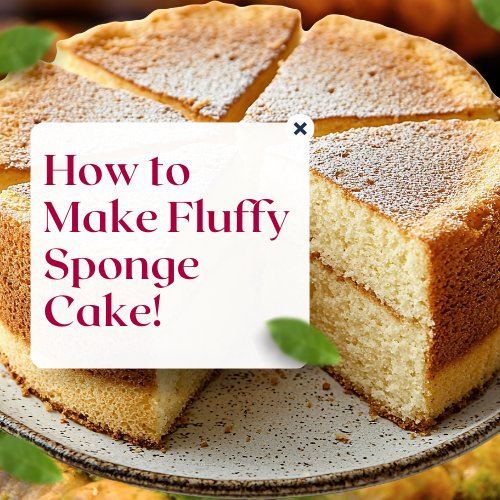
Picture this: You peer through the oven door, watching your sponge cake rise into a golden, airy masterpiece. You smile, already imagining that first soft, melt-in-your-mouth bite. But 10 minutes after pulling it out of the oven, tragedy strikes—the center sinks into a sad, dense crater!
If you’ve ever felt the heartbreak of a collapsed cake, don’t beat yourself up! Sponge cakes are notoriously temperamental, relying almost entirely on precise techniques rather than heavy lifting from chemical leaveners.
The good news? Once you understand what causes that disappointing deflation, baking a light, cloud-like sponge becomes second nature. Let’s walk through the most common sponge cake mistakes and how to avoid them for perfect results every single time.
Mistake 1: Whipping Eggs Without Precision
Sponge cake gets its delicate lift from trapped air in beaten eggs, not mounds of baking powder.
- The Fix: Whip your egg whites (or whole eggs, depending on your recipe) until they reach stiff, glossy peaks or a thick ribbon stage. Under-whipping leaves you with insufficient air bubbles to hold the cake’s structure, while over-whipping turns the whites dry and clumpy, making them collapse during baking.
Mistake 2: Aggressive Folding (Destroying the Air)
You’ve spent ten minutes whipping air into your eggs—don’t ruin it in ten seconds with a heavy hand!
- The Fix: When combining your dry ingredients with the whipped eggs, ditch the electric mixer and grab a rubber spatula. Use a gentle figure-eight folding motion, cutting down the center, sweeping around the bowl, and folding over. Stop the second the flour disappears!
Mistake 3: Opening the Oven Door Too Early
We all love a sneak peek, but opening the oven door prematurely is a guaranteed recipe for a sunken center.
- The Fix: Resist the urge! Opening the door introduces a sudden rush of cool air, causing the delicate, un-set air pockets inside the batter to contract and collapse. Keep that door shut for at least the first 75% of the recommended baking time.
Mistake 4: Over-Greasing the Cake Pan
It sounds counterintuitive, but slicking the sides of your baking pan with too much butter or oil actually hinders your cake’s growth.
- The Fix: Sponge cake batter needs to “climb” the walls of the pan as it expands. Greasing the sides makes them too slippery, forcing the batter to slide down and collapse. Instead, line only the bottom with parchment paper and leave the sides ungreased.
Mistake 5: Cooling the Cake Incorrectly
As a sponge cake cools, the steam inside condenses. If it cools too quickly or unevenly, gravity pulls the structure down.
- The Fix: Once baked, let the cake rest in its pan on a wire rack for about 10 minutes before running a thin knife around the edges to release it. If you’re making a traditional angel food or chiffon sponge, cool it upside down on a rack so gravity actually stretches the cake while it sets!
What’s Your Biggest Cake Baking Challenge?
Baking is a science, but with these adjustments, you hold all the keys to a towering, pillowy sponge cake that holds its shape beautifully.
Have you ever suffered from the dreaded sunken cake center? Which of these secrets are you going to try on your next baking day? Share your thoughts and questions in the comments below—let’s troubleshoot together!
If you would like to learn about the recipes in detail, we recommend you check out our digital booklet of 31 recipes for Eastern and Western sweets via the following link: