Apple pie is one of the world’s most recognizable fruit desserts. Its combination of tender apples, warm spices, and golden pastry has made it a favorite in homes, bakeries, and cafés for generations.
Many people now connect apple pie with American culture, but its story began much earlier in Europe. Medieval cooks prepared fruit-filled pastries centuries before the dessert became a familiar part of American food traditions.
This article explores the origin of apple pie, the ingredients that define it, popular crust styles, global variations, and the reasons this classic dessert remains widely loved.
The Origin of Apple Pie
The history of fruit pies stretches back hundreds of years. European cooks used pastry to hold meat, fruit, and other fillings, while sweet pies became more common as sugar and spices became easier to obtain.
English and other Western European baking traditions included early forms of apple-filled pies. Apples worked especially well because growers cultivated them widely, and families could store them for relatively long periods.
Over time, better pastry-making techniques helped bakers create more refined versions. These developments laid the foundation for the dessert we recognize today.
The Library of Congress also provides historical information about pie traditions and their development.
How the Dessert Reached North America
European settlers carried their baking traditions to North America. As apple cultivation expanded, home cooks used the fruit in many dishes, including pies.
The ingredients were practical and familiar. Flour, fat, apples, sugar, and spices could produce a filling dessert that suited family meals and seasonal gatherings.
As generations adapted old recipes to local ingredients, apple pie became deeply connected with American home cooking.
Why It Became an American Cultural Symbol
By the nineteenth and twentieth centuries, the dessert had gained a strong place in American food culture. Families served it at gatherings, restaurants offered it on menus, and popular expressions reinforced its cultural image.
The phrase “As American as apple pie” became especially well known. Although the dish has European roots, the expression shows how closely Americans came to associate it with home, tradition, and national identity.
The Library of Congress also discusses the historical importance of apples in North America and their connection with American identity.
Apple Pie Ingredients
Traditional apple pie relies on two essential parts: pastry and fruit filling.
Bakers usually make the crust with flour, butter or shortening, water, and salt. For the filling, they combine sliced apples with sugar and cinnamon. Some versions also include lemon juice, vanilla, nutmeg, cloves, ginger, or a small amount of butter.
To manage excess juice, bakers may add flour or cornstarch. These ingredients help the filling thicken as it cooks.
Choosing the Right Apples
The apple variety can greatly affect flavor and texture.
Some apples soften quickly in the oven, while firmer varieties keep their shape. Many bakers prefer fruit that offers a balance of sweetness, acidity, and firmness.
Using more than one variety can add complexity. A mixture of sweet and tart apples often creates a fuller flavor than a single variety alone.
For a successful filling, the fruit should become tender without turning completely soft or watery.
Cinnamon and Other Warm Spices
Cinnamon plays a central role in the familiar flavor of apple pie. Its warm aroma complements the natural sweetness and acidity of baked apples.
Bakers often add nutmeg, cloves, or ginger for extra depth. These spices become especially popular during autumn and winter, when warm desserts appear more often on seasonal menus.
Together, fruit, sugar, cinnamon, and pastry create the aroma that many people associate with home baking.
Popular Crust Styles
Different crust designs can change both the appearance and texture of the dessert.
Fully Covered Crust
A fully covered version uses pastry on both the bottom and top. After adding the fruit filling, the baker places a second sheet of pastry over the pie and cuts small openings so steam can escape.
This method creates a crisp outer layer around a soft, juicy center.
Lattice Crust
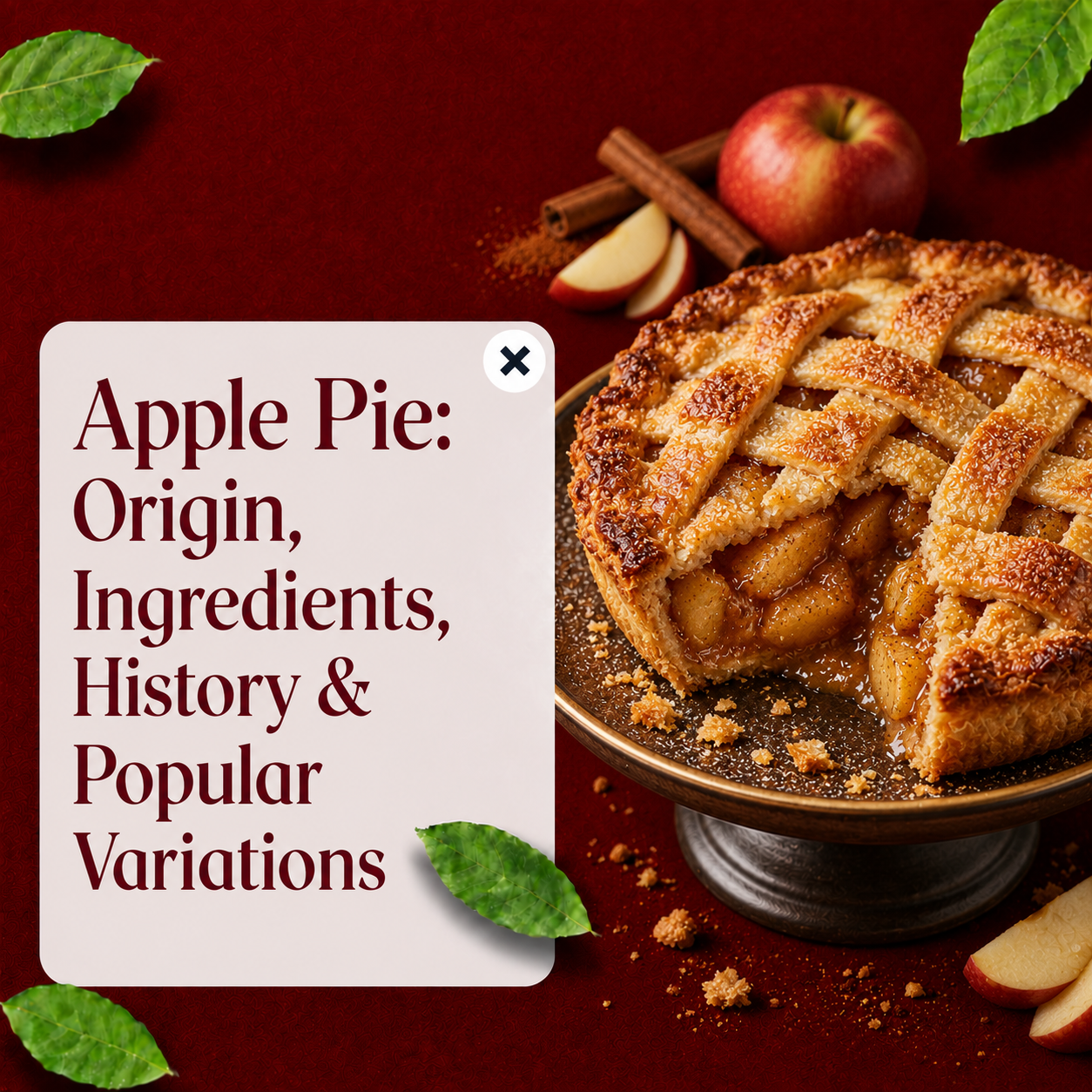
A lattice design uses strips of pastry woven across the top. The pattern leaves parts of the filling visible and gives the finished pie a decorative appearance.
Many bakeries and home cooks choose this style for holidays and special occasions.
Open-Faced and Crumb-Topped Versions
Some versions leave part of the fruit exposed. Others use a crumb topping made from flour, butter, and sugar instead of a full upper crust.
These styles provide a softer, more crumbly texture than a traditional double-crust pie.
Apple Pie vs. Apple Crumble
Apple pie and apple crumble both use baked fruit, but their structures differ.
A traditional pie includes a pastry base and may also have pastry on top. Apple crumble usually replaces the upper crust with a mixture of flour, butter, sugar, and sometimes oats.
As a result, crumble has a loose, crumbly surface, while the pie offers a firmer pastry texture.
Both desserts highlight the natural character of apples, but each delivers a different eating experience.
Why the Filling Can Become Runny
Apples naturally release juice during baking. If too much liquid collects inside the crust, the filling may become watery.
Bakers use several methods to control moisture. Flour or cornstarch can thicken the released juices, while partially cooking the fruit before assembly can reduce excess liquid.
Cooling also matters. After baking, the filling continues to set as the dessert rests. Waiting before slicing helps produce cleaner pieces and a more stable texture.
Serving It With Ice Cream
Warm apple pie with vanilla ice cream remains one of the best-known serving combinations.
People often call this style à la mode. The contrast between warm pastry and cold ice cream adds both temperature and texture variety.
Vanilla also pairs naturally with baked apples and cinnamon. Other popular accompaniments include whipped cream, custard, or caramel sauce.
Autumn, Holidays, and Family Gatherings
The dessert has a strong connection with autumn because many regions harvest apples during this season.
Its warm spices and baked-fruit aroma suit cooler weather, which helps explain its popularity during holiday periods and family gatherings.
In the United States and Canada, families often include apple pie on seasonal tables. Its familiar ingredients and homemade character continue to support its reputation as a comforting classic.
Apple Pie Around the World
Many countries have their own apple-based pastries and baked desserts.
England, the Netherlands, France, Germany, and Austria all have traditions that combine apples with pastry in different ways. Some use thinner crusts, while others add raisins, nuts, cream, custard, or regional spices.
These variations show how a simple combination of fruit and dough can develop into many distinct desserts.
Modern Bakery and Café Variations
Modern bakers continue to reinterpret apple pie while preserving its basic character.
Mini pies, individual portions, caramel versions, nut-filled variations, and decorative lattice designs now appear in cafés and bakeries around the world.
Despite these changes, the classic combination of apples, cinnamon, sugar, and flaky pastry remains the most familiar.
Why This Dessert Remains Popular
Several qualities help explain the long-lasting appeal of apple pie.
The crust offers a crisp or flaky texture, while the filling provides softness, sweetness, and gentle acidity. Warm spices add depth without overpowering the fruit.
The dessert also works well warm or cold and pairs easily with cream, custard, caramel, or ice cream. This flexibility makes it suitable for everyday meals as well as celebrations.
A Classic That Continues Across Generations
Apple pie developed from old European baking traditions and later became an important part of American food culture.
Its history crosses countries and generations, but its appeal still comes from a simple combination of fruit, pastry, sugar, and warm spices.
From homemade versions to modern café interpretations, this classic dessert continues to hold a familiar place in kitchens and bakeries around the world.
Vanilla Ice Cream: The Classic Flavor That Became an Icon of the Frozen Dessert World