
Picture this: You’ve spent hours meticulously baking a rich, velvety cheesecake. You carefully follow the recipe, set the timer, and wait in anticipation. The timer dings, you open the oven door, and…
CRACK! 💔
A giant Grand Canyon-style fissure has split right down the middle of your beautiful dessert.
If this has ever happened to you, don’t drop your spatula in frustration just yet! At Noor Al-Oyoun, we want to share a sweet little secret with you: A cracked cheesecake still tastes like heaven.
However, we all love that smooth, picture-perfect top that looks like it came straight out of a luxury bakery.
So, why do cheesecakes crack in the oven? And more importantly, how can you prevent it from ever happening again? Let’s dive in and unlock the secrets to baking a flawless, crack-free cheesecake!
The Science: Why Does Cheesecake Crack?
Unlike regular sponges, a baked cheesecake is actually an egg custard disguised as a cake.
When you bake egg proteins, they naturally expand and firm up. But if they get too hot or dry out, those proteins tighten too much, squeezing out moisture and snapping the smooth surface right open!
5 Golden Rules to Prevent Cheesecake Cracks
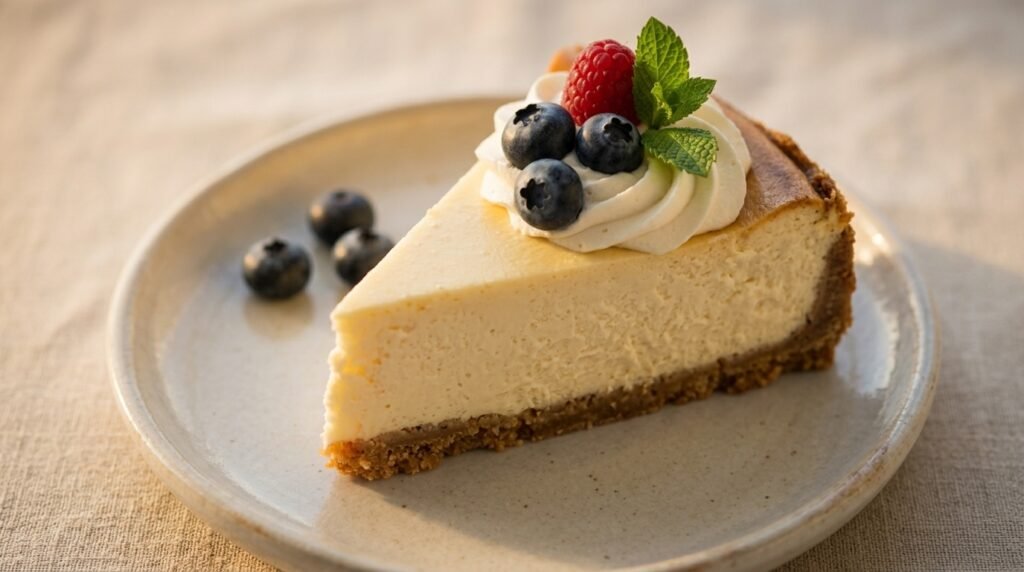
1. Master the Water Bath (Bain-Marie) 🌊
If you skip the water bath, you are playing Russian roulette with your cheesecake!
Pro Tip: Wrap the outside of your springform pan tightly with heavy-duty aluminum foil (or use a silicone pan protector) so water doesn’t seep into your crust!
Why it works: Baking your springform pan inside a larger pan filled with hot water creates a humid oven environment. This ensures gentler, even heating and prevents the edges from cooking faster than the delicate center.
2. Don’t Over-Beat the Eggs! 🥚
This is the #1 mistake home bakers make!
- The Trick: Beat your cream cheese and sugar to your heart’s content, but once you start adding the eggs, turn your mixer down to low.
- Mixing eggs at high speed incorporates air into the batter. That air expands like tiny balloons while baking and collapses as it cools, leaving a giant crack behind! Mix just until combined.
3. Cool It Down Slowly (The Golden Cooling Rule! ❄️)
Cheesecakes hate sudden temperature changes! Rushing your hot cake directly onto a cold kitchen counter causes the center to contract quickly and split.
- The Secret: When baking time is up and the center is still slightly jiggly, turn off the oven, crack the door open an inch, and leave the cheesecake inside for 1 hour.
- This gradual cooling process relaxes the custard gently.
4. Run a Knife Around the Edge 🔪
As a cheesecake cools, it naturally shrinks. If the cake sticks to the sides of the pan, the tension pulls the center apart!
- The Fix: After your cheesecake rests in the turned-off oven for 10–15 minutes, run a thin, warm knife gently around the inside rim of the pan to loosen the edges. Now, it can shrink inward without tearing!
5. Don’t Over-Bake! Embrace the Jiggle 🍮
If you wait for the entire cheesecake to feel firm, it’s already overcooked!
- How to tell when it’s done: Give the pan a gentle nudge. The outer 2-inch ring should be set, but a 2-inch circle in the center should still jiggle slightly like Jell-O. Residual heat will finish cooking the middle as it cools.
Emergency Room: How to Cover Up a Cracked Cheesecake!
Did your cheesecake already crack? Don’t panic! You can easily transform it into an edible masterpiece with these delicious cover-ups:
🍓 The Fruit Mask: Pile fresh berries or spoonfuls of strawberry/blueberry compote right over the center crack.
🍫 The Ganache Shield: Pour a glossy layer of warm chocolate ganache or salted caramel sauce over the top.
🍦 The Classic Sour Cream Top: Mix sour cream, powdered sugar, and a touch of vanilla, spread it over the cake 5 minutes before it finishes baking, and bake for a smooth finish!
What’s Your Ultimate Cheesecake Flavor? 🍰
Are you a lover of Classic New York Style, Creamy Lotus Biscoff, or San Sebastian Basque? Have you tried any of these cooling tricks before?
Drop your cheesecake stories, photos, and questions in the comments below! Our Noor Al-Oyoun baking community is always here to share sweet tips and ideas.
Don’t forget to bookmark this guide, share it with fellow bakers, and check out our full [Classic New York Cheesecake Recipe] to put these 5 fixes to the test today!
Happy Baking! 🧀🍰✨
If you would like to learn about the recipes in detail, we recommend you check out our digital booklet of 31 recipes for Eastern and Western sweets via the following link:
