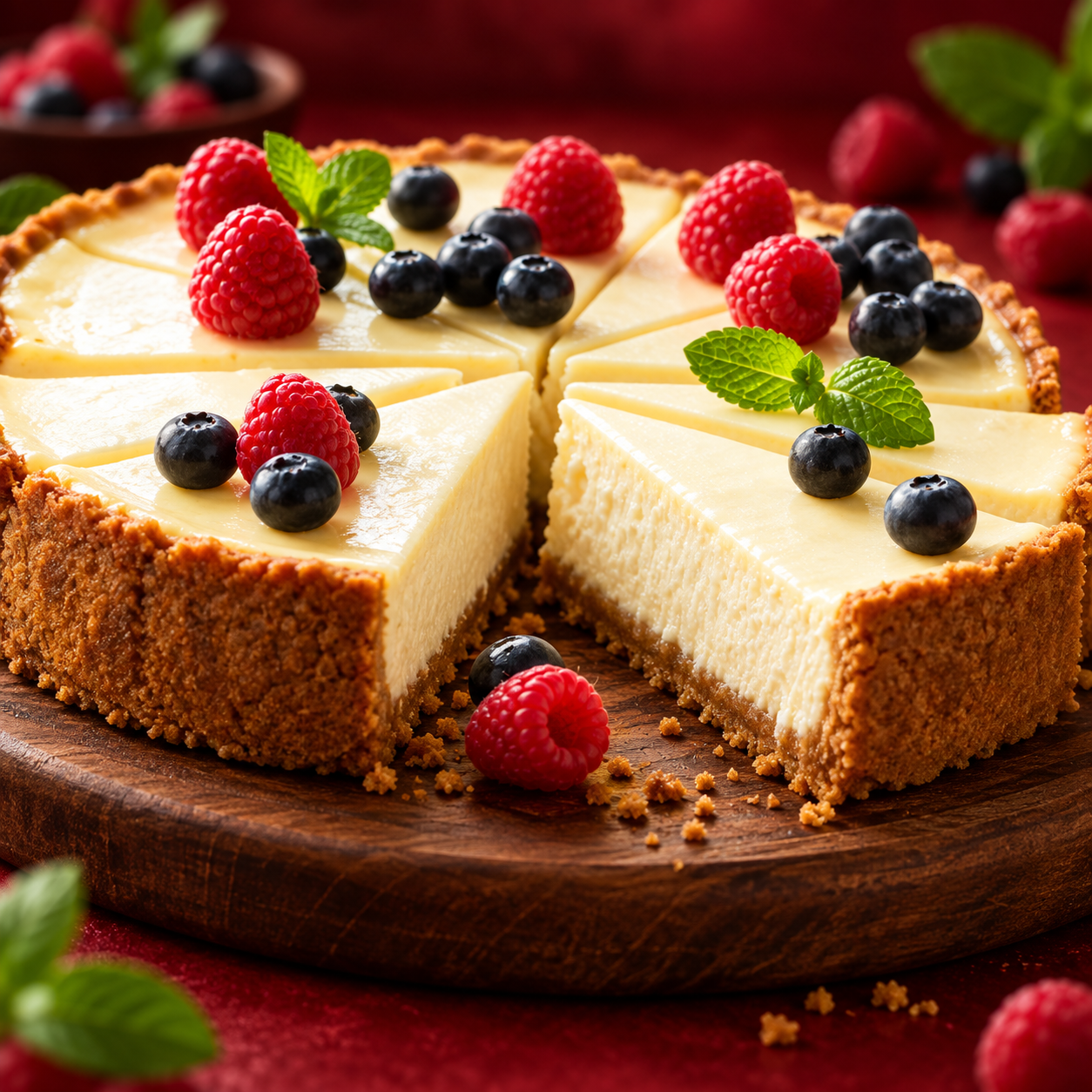
A cracked cheesecake still tastes good, but the deep split across the top can be disappointing after hours of work. Usually, cracks come from one of five things: overbaking, too much air in the batter, a dry oven, sudden cooling, or a cake that sticks to the pan.
This guide explains each cause and how to prevent it. After that, you will learn how to fix or hide a cracked cheesecake with a simple sour cream topping.
Why Cheesecake Cracks: The Quick Answer
- It was overbaked, so the eggs set too firmly and shrank.
- The batter was overmixed, so trapped air rose and burst.
- The oven was too dry or too hot.
- It cooled too fast, so the surface pulled apart.
- The cake stuck to the sides of the pan as it shrank.
Cracked Cheesecake: Causes and Fixes
Overbaking
Cause: Typically, it is because the cheesecake stays in the oven until the center is firm. As a result, the egg proteins tighten, and the top splits.
Fix: Take it out while the edges are set but the center still wobbles like jelly, about 5 cm (2 inches) across. In fact, the center finishes setting as it cools.
Overmixing the batter
Cause: High-speed beating adds air, and the bubbles rise and break the surface.
Fix: Beat the cream cheese smooth first, then add the eggs on low speed, one at a time, just until mixed.
A dry or very hot oven
Cause: Dry heat sets the edges too fast, while the center keeps rising.
Fix: Bake at a low temperature, such as 160°C (325°F), and add moisture. Our guide to the cheesecake water bath explains the easiest method.
Cooling too fast
Cause: A sudden change from a hot oven to a cool kitchen makes the cake shrink unevenly.
Fix: Turn the oven off, open the door slightly, and leave the cheesecake inside for 1 hour. Then cool it on the counter before chilling.
The cake sticks to the pan
Cause: As the cheesecake shrinks, a stuck edge pulls the center apart.
Fix: Run a thin knife around the edge 10 minutes after baking, so the cake can shrink freely.
How to Fix a Cracked Cheesecake After Baking
- Small cracks: while the cake is still warm, press the edges of the crack gently together with a wet spatula.
- Medium cracks: spread whipped cream or a fruit topping over the top.
- Large cracks: cover them with the baked sour cream topping below, which looks smooth and glossy.
Sour Cream Topping for a Cracked Cheesecake
Ingredients
- 240 g (1 cup) full-fat sour cream
- 2 tablespoons sugar
- 1 teaspoon vanilla extract
- 1 teaspoon lemon juice
How to make the topping
- Mix. First, stir the sour cream, sugar, vanilla and lemon juice until smooth.
- Spread. Next, spread it over the baked, warm cheesecake, right to the edges.
- Bake. Then bake at 180°C (350°F) for 8–10 minutes, until just set.
- Chill. Finally, cool the cheesecake and chill it overnight.
Tips to Prevent a Cracked Cheesecake
- Use room-temperature cream cheese and eggs, because cold ingredients need more mixing.
- Tap the pan on the counter before baking, so large air bubbles rise and pop.
- Use an oven thermometer; otherwise, a hot oven can crack even a perfect batter.
For a complete recipe that follows all these rules, see our New York cheesecake recipe.
Storage Tips
Keep cheesecake covered in the fridge for up to 5 days. In addition, it freezes well for 2 months; see how to freeze cakes without losing moisture.
Origins
Cheesecakes were made in ancient Greece, but the creamy baked version became famous in New York in the early 1900s, after cream cheese was invented. You can read more about the history of cheesecake on Wikipedia.
Cracked Cheesecake FAQ
Is a cracked cheesecake undercooked?
No. In fact, a cracked cheesecake is usually overcooked rather than undercooked.
Does a water bath always prevent cracks?
It helps a lot. However, overbaking and overmixing can still cause cracks.
Why did my cheesecake crack in the fridge?
It cooled too fast, or it stuck to the pan. Therefore, cool it slowly and loosen the edges first.
Keep baking with us. If you found this guide to cracked cheesecake useful, our digital cookbook collects 31 of our favorite desserts, from knafeh to cheesecake, in one easy download.