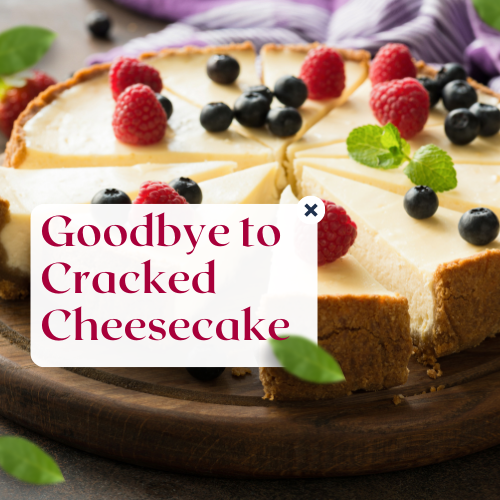
Take This Interactive Quiz to Find Your Baking Mistake , Few desserts command as much awe at the dinner table as a tall, velvety, perfectly smooth baked cheesecake. But for many home bakers, pulling a cheesecake out of the oven feels like a high-stakes gamble: will it emerge as a pristine, crack-free masterpiece, or will it look like the Grand Canyon split right down the center?
A deep crack in the surface of your cheesecake is almost always caused by a small break in temperature control, moisture balance, or air entrapment.
Instead of hiding those giant surface cracks under a mountain of fruit topping, let’s get to the root of the issue! Take our quick, interactive diagnostic quiz below to pinpoint your exact baking mistake and learn how to prevent it next time.
The Interactive Quiz: What Caused Your Cheesecake Crack?
Answer these 4 quick diagnostic questions based on your baking routine to find your solution!
Question 1: How did you mix your cream cheese and eggs?
- A) I whipped everything on high speed for several minutes to make sure there were no lumps.
- B) I mixed everything gently on low speed just until combined, adding eggs one at a time.
- Result if you chose A: Over-Mixing (Trapped Air). High-speed whipping incorporates excess air bubbles into the batter. As the cheesecake bakes, those air pockets expand and rise to the surface. Once the cheesecake cools, the air bubbles collapse, causing the center to sink and crack open.
- The Fix: Beat your room-temperature cream cheese first until smooth, but once you begin adding eggs, switch to low speed and mix just until incorporated.
Question 2: Did you use a water bath (Bain-Marie) during baking?
- A) No, I baked the springform pan directly on the center oven rack.
- B) Yes, I wrapped the pan tightly in foil and placed it inside a hot water bath.
- Result if you chose A: Lack of Humidity & Direct Heat. Cheesecakes are delicate egg custards, not traditional sponges. Without a water bath, the edges cook and set much faster than the center, creating thermal tension that pulls the top surface apart as it cools.
- The Fix: Always use a water bath! The surrounding water keeps the oven environment humid and regulates the temperature around the springform pan so the cheesecake cooks uniformly at a gentle heat.
Question 3: How did you cool your cheesecake after turning off the oven?
- A) I immediately took it out of the oven and placed it on the kitchen counter (or in the fridge).
- B) I turned off the oven, propped the door open slightly, and let it cool inside for an hour.
- Result if you chose A: Thermal Shock (Rapid Temperature Drop). Taking a hot cheesecake out of a (325 F) – (160 C) oven straight into cool room air causes the structure to shrink too rapidly, snapping the surface intact.
- The Fix: Practice patience! When the bake time is up, turn off the oven, prop the door open slightly with a wooden spoon, and let the cheesecake rest inside for 60 minutes before moving it to the counter.
Question 4: Did you run a knife around the edges before chilling?
- A) No, I left it attached to the sides of the springform pan as it cooled.
- B) Yes, as soon as it came out of the oven, I ran a thin paring knife around the inner rim.
- Result if you chose A: Pan Resistance. As a cooling cheesecake contracts, it naturally shrinks inward. If the outer ring of the batter remains stuck to the sides of the pan, the edges won’t pull inward—forcing the center of the cake to split apart instead.
- The Fix: Let the cheesecake sit for 5 minutes after removing it from the oven, then gently run a warm, thin knife around the inside rim of the pan to release the edges.
What Is Your Biggest Cheesecake Challenge?
Did your quiz results reveal an issue with thermal shock, or are you guilty of whipping those eggs on high speed? What is your favorite cheesecake style—classic New York, Basque burnt, or fruit-swirled?
Share your quiz results and baking experiences in the comments below!
If you would like to learn about the recipes in detail, we recommend you check out our digital booklet of 31 recipes for Eastern and Western sweets via the following link: