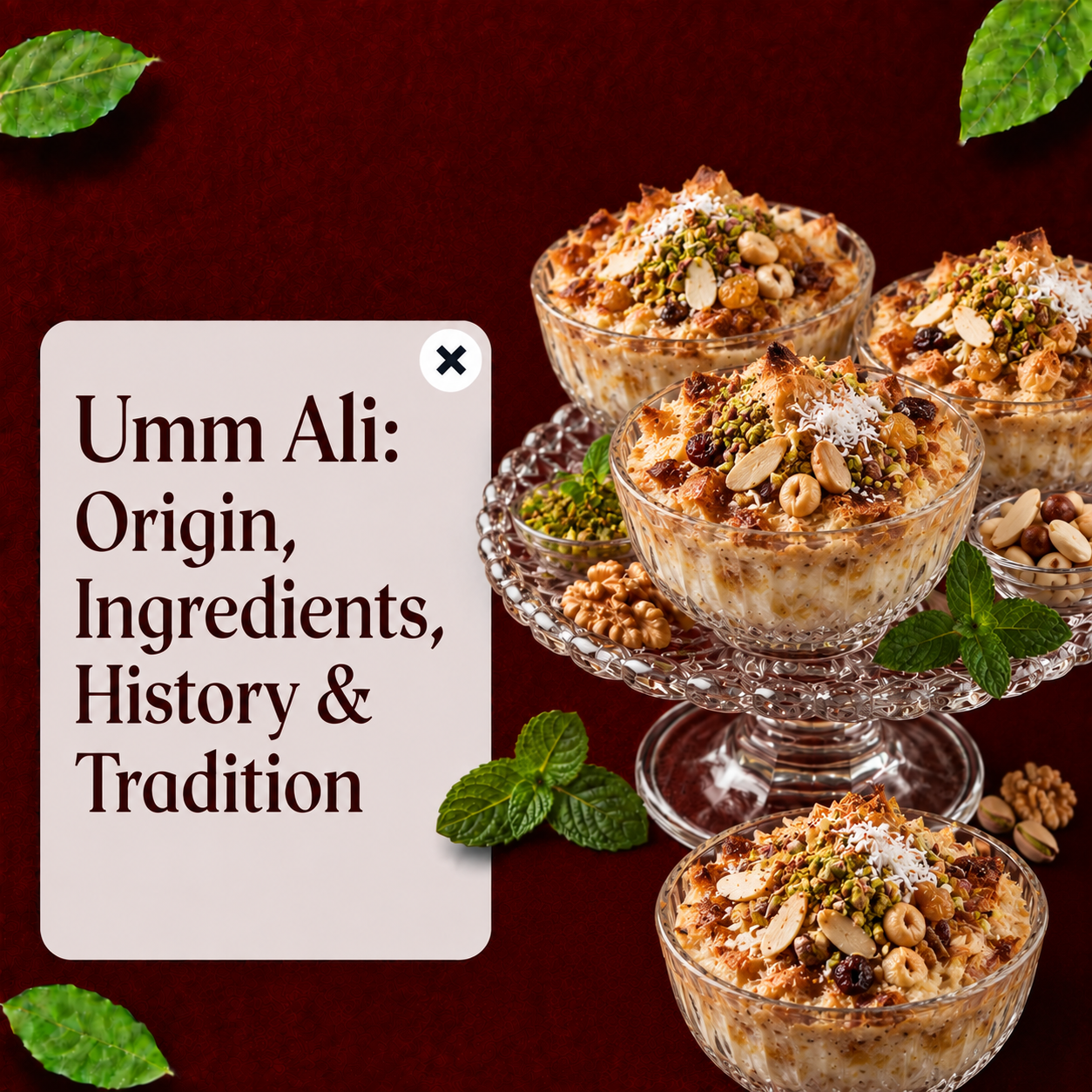
Umm Ali is one of the most famous traditional desserts in Egyptian cuisine. It is known for its rich combination of baked pastry or bread, milk, sugar, and nuts, all baked together until the top becomes golden and crisp while the inside remains soft and creamy.
Over time, this dessert became closely associated with family gatherings, celebrations, and large feasts. It has also spread beyond Egypt and is now well known in many Arab countries.
The Origin of Umm Ali
One of the most widely told stories says that the dessert appeared during the Ayyubid period in the thirteenth century and that its name was connected to a historical woman known as Umm Ali.
According to the popular legend, the dessert was prepared to celebrate a political victory following a conflict within the royal court. It was then distributed among the people, and the name became associated with the dish.
However, the exact details of this story are not fully documented.
Why Is It Called Umm Ali?
Unlike many desserts named after their ingredients or appearance, this sweet carries the name of a woman.
The popular historical story connected with Umm Ali helped make the dessert more distinctive and memorable.
Over time, the name came to refer directly to the well-known Egyptian dessert made from milk, pastry, and nuts, regardless of the exact historical origin of the name.
The Basic Ingredients of Umm Ali
Umm Ali is made with ingredients that are simple yet rich.
The most common ingredients include:
Baked pastry or bread, milk, sugar, nuts, raisins, and coconut, depending on the recipe.
Modern versions may use puff pastry, croissants, traditional Egyptian roqaq, or other baked breads and pastries as the base.
Sweetened milk is poured over the pastry pieces, nuts are added, and the dessert is baked until the mixture becomes rich and creamy and the top turns golden brown.
The Role of Pastry in the Dessert
The pastry is the ingredient that gives Umm Ali its distinctive texture.
As it absorbs the milk, it becomes soft and tender inside, while some pieces on the surface remain crisp and toasted.
This contrast between softness and crunch is one of the most recognizable characteristics of Umm Ali.
Recipes differ in the type of pastry or bread used, but the basic concept remains the same: using baked pastry that can absorb milk and flavor while retaining some texture.
Milk and the Creamy Texture
Milk forms the foundation of both the flavor and texture of Umm Ali.
It is usually heated with sugar before being poured over the pastry.
Once the dish is placed in the oven, the pastry absorbs much of the milk, transforming the mixture into a rich and soft baked pudding.
Some recipes also add cream to the milk for an even richer and smoother texture.
Nuts and Raisins
Nuts are among the most important ingredients in Umm Ali.
Common choices include almonds, hazelnuts, pistachios, and walnuts, along with raisins and coconut.
These ingredients provide crunch and richness, creating a balance of milk, pastry, and nuts in every spoonful.
The quantity and variety of nuts used can differ according to the recipe, region, and personal preference.
Cream on Top
In many modern recipes, a layer of cream is added over the top of Umm Ali before baking.
This layer helps create a rich, golden surface in the oven.
It also makes the dessert smoother and more luxurious, which is one reason this style has become especially common in restaurants and hotels.
Umm Ali and Toasted Pastry
Umm Ali can be prepared using different types of bread and pastry.
Some recipes use traditional Egyptian roqaq, while others rely on puff pastry or croissants.
This flexibility has allowed the dessert to adapt easily to available ingredients while preserving its basic concept.
The choice of pastry also affects the final texture. Puff pastry produces lighter and flakier layers, while bread or roqaq creates a firmer and more substantial consistency.
Umm Ali vs. Bread Pudding
Umm Ali is often compared with bread pudding found in Western cuisines because both desserts combine bread or pastry with milk and sugar.
However, there are several clear differences in flavor and presentation.
Umm Ali generally relies more heavily on nuts, coconut, and raisins and is commonly served hot in an open baking dish with a browned surface.
Bread pudding, on the other hand, often contains eggs and spices such as cinnamon and vanilla, and its preparation can vary significantly from one country to another.
Umm Ali During Special Occasions
Umm Ali holds a special place at celebrations and large gatherings in Egypt and throughout the Arab world.
It is usually served hot, particularly during colder months, because the combination of warm milk, pastry, and nuts creates a comforting and satisfying dessert.
It is also popular during Ramadan, when it is often served after iftar as a rich and beloved sweet.
Umm Ali in Restaurants and Hotels
Umm Ali has become a staple dessert in many Egyptian and Arab restaurants.
It is also commonly served in hotels and large buffets, often in small clay dishes that help retain heat and allow the surface to brown beautifully.
Some restaurants have also introduced modern variations flavored with chocolate, caramel, pistachios, and other ingredients.
Umm Ali Outside Egypt
As Egyptian and Arab cuisine spread internationally, Umm Ali became familiar in the Gulf countries, the Levant, and other regions.
It often appears on menus under the names Om Ali or Umm Ali and is commonly described as an Egyptian-style bread and milk pudding.
Its simple ingredients and rich flavor have helped make it popular among people from many different cultural backgrounds.
A Dessert That Combines Simplicity and Richness
The pastry absorbs the milk and becomes soft, while the nuts and toasted pieces on the surface remain crisp.
With the addition of sugar, raisins, coconut, and cream, the result is a warm and comforting dessert full of flavor.
Thanks to its long association with Egyptian cuisine, Umm Ali has maintained its place as one of the best-known traditional Arab desserts.
Umm Ali therefore remains more than just a dessert made from milk and pastry. It is a dish that carries a part of Egyptian culinary heritage, with a popularity that has moved from traditional homes and family tables to restaurants, hotels, and dessert menus around the world.
Pancakes: Origin, History, Types and Popular Toppings