Namoura is one of the best-known traditional semolina desserts of the Levant. Golden on the outside, soft and moist on the inside, and soaked with fragrant sugar syrup, it is especially associated with Lebanese cuisine and is also enjoyed across Syria, Palestine, Jordan, and other parts of the Middle East.
Simple ingredients and a distinctive texture have helped namoura remain a favorite in homes, pastry shops, celebrations, and family gatherings for generations.
What Is Namoura?
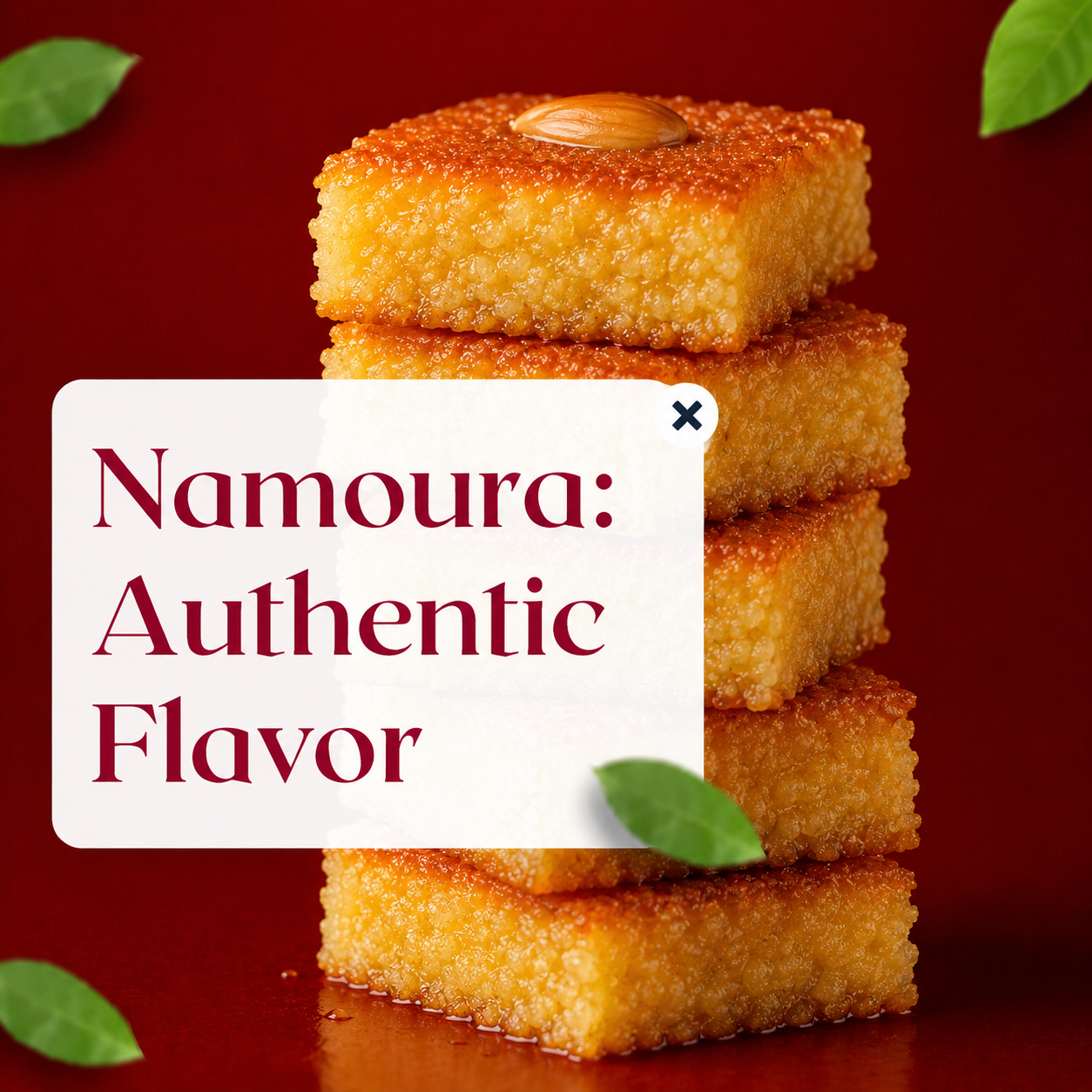
Namoura is a baked semolina cake soaked in sugar syrup. Unlike many Western-style cakes, its characteristic texture comes primarily from semolina rather than ordinary wheat flour.
The cake is usually baked in a large tray, cut into squares or diamond shapes, and decorated with almonds, pine nuts, cashews, or sometimes coconut. After baking, it is soaked with warm or cooled sugar syrup flavored with rose water or orange blossom water.
The semolina absorbs the syrup while maintaining a slightly grainy texture, giving namoura its characteristic combination of softness, richness, and moisture.
The Origin of Namoura
Namoura is strongly associated with the Levantine culinary tradition, particularly Lebanon. However, identifying one precise historical birthplace is difficult because closely related semolina-and-syrup desserts have been prepared throughout the Eastern Mediterranean and Middle East for generations.
Today, the name namoura is particularly common in Lebanon, while closely related desserts appear under different names elsewhere.
Rather than viewing these sweets as completely separate inventions, they can be understood as regional interpretations of a long-established tradition of baking semolina cakes and soaking them in aromatic syrup.
Namoura, Basbousa, and Harisseh
One of the most interesting aspects of namoura is the variety of names used for similar desserts.
In Lebanon, the name namoura is widely used. In Egypt, a closely related dessert is commonly known as basbousa, while the name harisseh or hareesa is frequently encountered in Palestine, Jordan, and parts of Syria.
The recipes are not always identical. Depending on the country or family tradition, differences may include the type of semolina, the addition of yogurt or coconut, the amount of butter or ghee, and the flavoring used in the syrup.
For this reason, it is more accurate to describe namoura, basbousa, and harisseh as closely related regional desserts rather than insist that every version is exactly the same.
Traditional Ingredients
Namoura is known for having a relatively simple ingredient list. Traditional versions commonly include:
- Semolina
- Sugar
- Ghee or butter
- Water, milk, or yogurt depending on the recipe
- Baking powder or yeast in some versions
- Almonds, cashews, or pine nuts for decoration
The syrup, known in Arabic as attar or qater, is generally made from sugar and water and flavored with rose water, orange blossom water, or sometimes lemon juice.
Some recipes also include desiccated coconut, which adds extra flavor and texture.
Why Semolina Is Important
Semolina is the ingredient that gives namoura its unmistakable character.
Because semolina is coarser than ordinary flour, it produces a cake with a slightly grainy and substantial texture. More importantly, it absorbs the aromatic syrup particularly well without immediately turning into a soft sponge.
This allows the finished dessert to remain moist while still maintaining its shape when cut into individual pieces.
Different cooks prefer different grades of semolina, and this choice can noticeably change the final texture. Some versions are fine and tender, while others are more coarse and dense.
The Importance of Sugar Syrup
The syrup is essential to namoura.
After the cake is baked until golden, sugar syrup is poured over it so that the semolina gradually absorbs the liquid. This process creates the moist texture and pronounced sweetness for which namoura is famous.
Rose water and orange blossom water are commonly added to the syrup, giving the dessert the floral aroma found in many Levantine sweets.
The quantity of syrup also differs according to preference. Some families prefer namoura heavily soaked and very sweet, while others use less syrup for a firmer and lighter result.
Its Traditional Shape
Namoura is commonly prepared in a large round or rectangular baking tray.
Before or after baking, it is divided into squares or diamond-shaped pieces. A whole almond or another nut is often placed in the center of each portion, giving the dessert its familiar decorative appearance.
The simple decoration has become one of the visual signatures of traditional namoura.
Namoura During Ramadan and Celebrations
Namoura is frequently associated with Ramadan, Eid, family gatherings, and other festive occasions. Its rich sweetness makes it particularly popular as a dessert served after a meal or alongside coffee and tea.
Because it is baked in a large tray and divided into many portions, it is also convenient for serving groups of guests.
In many families, the recipe carries sentimental importance because it is passed down from parents and grandparents. Preparing the dessert can therefore become a way of preserving family memories as well as culinary traditions.
What Makes Namoura Special?
Namoura combines several characteristics that distinguish traditional Middle Eastern desserts.
Its semolina base gives it a textured bite, while ghee or butter adds richness. The sugar syrup provides moisture and sweetness, and rose water or orange blossom water contributes its unmistakable aroma.
A lightly browned top provides some contrast to the moist interior, while almonds or other nuts add a small amount of crunch.
Despite the simplicity of its ingredients, these elements create a dessert with a surprisingly complex combination of textures and aromas.
Namoura and Arabic Hospitality
Sweets have long played an important role in Middle Eastern hospitality, and namoura fits naturally into this tradition.
Pieces may be arranged on large serving plates and offered with Arabic coffee, black coffee, or tea. The bitterness of the drink complements the sweetness of the syrup-soaked cake.
Serving homemade namoura can also represent generosity, particularly when large trays are prepared for relatives, neighbors, or guests during celebrations.
Namoura Today
Namoura remains widely available in traditional bakeries throughout the Levant, but it has also traveled far beyond the region.
Middle Eastern bakeries and restaurants around the world now sell namoura, basbousa, and related semolina desserts. Families living abroad continue to prepare them at home, helping introduce these sweets to new generations and new audiences.
Modern versions sometimes include pistachios, coconut, cream, or different flavorings, yet the classic combination of semolina, butter or ghee, aromatic syrup, and nuts remains at the heart of traditional namoura.
More Than a Semolina Cake
Although namoura is often described simply as a semolina cake, its cultural meaning extends beyond its ingredients.
It represents a style of Middle Eastern pastry making in which simple pantry ingredients are transformed through texture, fragrance, and syrup. It is also connected with family recipes, holiday gatherings, hospitality, and memories passed from one generation to another.
Conclusion
Namoura is a traditional Levantine semolina dessert known for its golden surface, moist texture, and fragrant sugar syrup. Closely related to basbousa and harisseh, it appears in several regional forms, each reflecting local ingredients and family traditions. (Feast in the MIddle East)
Whether served during Ramadan, offered to guests with coffee, or enjoyed as an everyday sweet, namoura continues to hold an important place in Middle Eastern culinary heritage. Its simple ingredients, distinctive texture, and floral aroma have allowed this traditional dessert to remain loved across generations.
Date Maamoul: A Traditional Arab Sweet with an Authentic Flavor