Walnut Maamoul
Walnut maamoul is a traditional Middle Eastern pastry known for its delicate semolina shell, aromatic walnut filling, and beautifully decorated surface. It is widely enjoyed across the Levant and is especially popular in Lebanon, Syria, Palestine, Jordan, and neighboring regions.
More than a simple sweet, walnut maamoul is closely connected to family gatherings, hospitality, and religious celebrations. Preparing it is often a shared family tradition in which several generations work together to fill, shape, and decorate each piece.
What Is Walnut Maamoul?
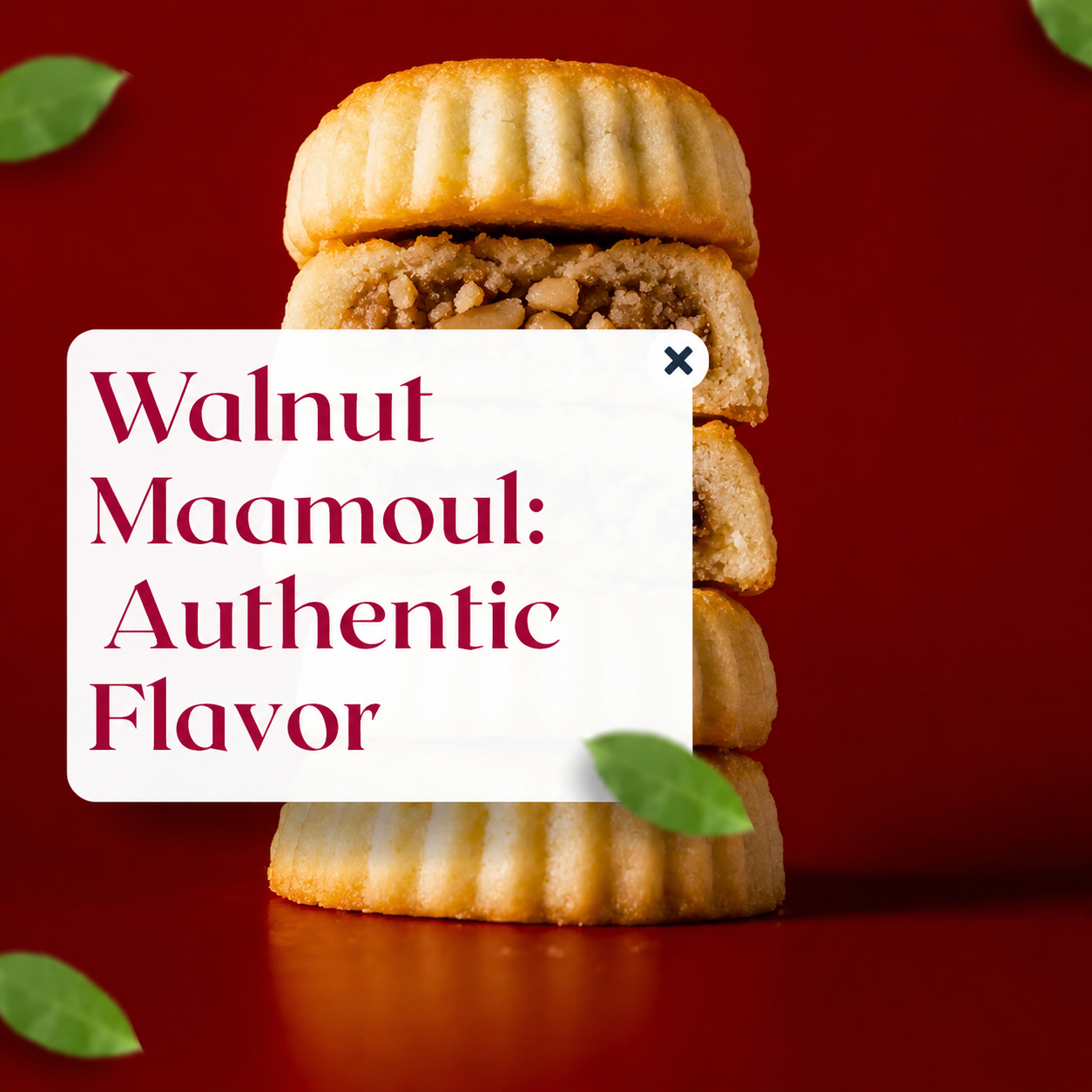
Walnut maamoul is a small baked pastry made from a tender dough that usually contains semolina, flour, ghee, or butter. The pastry is filled with chopped walnuts mixed with sugar and fragrant ingredients such as rose water, orange blossom water, or cinnamon.
The contrast between the crumbly outer shell and the rich, slightly crunchy walnut filling gives this variety its distinctive character. It may also be dusted with powdered sugar after baking, particularly when a sweeter presentation is preferred.
Walnuts are one of the three most common traditional maamoul fillings, alongside dates and pistachios.
The Origin of Walnut Maamoul
The exact birthplace of maamoul cannot be attributed with certainty to one country. Filled pastries have existed in the Middle East for centuries, and different communities developed their own versions using locally available ingredients.
Maamoul as it is known today is particularly associated with the Levant. It became an important part of the culinary traditions of Lebanon, Syria, Palestine, and Jordan before spreading to other parts of the Arab world.
Food historians have also connected maamoul with older regional traditions of preparing pastries filled with dates or nuts. For this reason, it is best understood as part of a shared Middle Eastern culinary heritage rather than the creation of a single country or community.
Why Are Walnuts Used in Maamoul?
Walnuts have a rich, earthy flavor that works especially well with the buttery or ghee-based maamoul dough. Their slight bitterness balances the sweetness of the sugar, producing a filling that is flavorful without being excessively sweet.
The walnuts are usually chopped rather than ground completely. This allows the filling to retain some texture and creates a pleasant contrast with the soft, crumbly pastry shell.
Sugar is commonly added to the walnuts, while rose water or orange blossom water provides a distinctive floral aroma. Some families also add cinnamon, giving the filling a warmer and slightly spiced flavor.
The Meaning of the Name “Maamoul”
The word maamoul comes from the Arabic verb meaning “to make” or “to prepare.” The name is well suited to this pastry because traditional maamoul requires careful preparation and detailed handwork.
Every piece must be filled individually, sealed carefully, and pressed into a decorative mold. In traditional households, the process can take several hours, especially when large quantities are prepared for holidays.
The effort involved in making maamoul is part of its cultural importance. It represents patience, craftsmanship, and the sharing of family traditions.
Traditional Ingredients
The precise ingredients vary between families and regions, but walnut maamoul dough commonly includes:
- Fine or coarse semolina
- Flour in some versions
- Ghee or butter
- Sugar
- Milk or water
- Rose water or orange blossom water
- Yeast or baking powder, depending on the recipe
The filling is usually prepared from chopped walnuts, sugar, and floral water. Cinnamon may also be included according to local customs or personal preference.
Traditional recipes aim to create a pastry that remains pale and tender after baking, rather than becoming dark or overly crisp.
Decorative Molds and Shapes
One of the most recognizable characteristics of walnut maamoul is its patterned surface. Traditional wooden molds are carved with geometric, floral, or shell-like designs.
A portion of filled dough is placed inside the mold and pressed gently. The mold is then tapped against a table or work surface to release the decorated pastry.
In many families and bakeries, different shapes are used to distinguish between fillings. Date maamoul may have one shape, while walnut and pistachio varieties are given different patterns. This makes it possible to identify the filling without cutting the pastry open.
The molds also give handmade maamoul an artistic quality, with each piece reflecting the skill and traditions of its maker.
Walnut Maamoul During Religious Holidays
Walnut maamoul is strongly associated with religious and family celebrations. Muslim families frequently prepare it for Eid al-Fitr and Eid al-Adha, serving it to relatives, neighbors, and guests with Arabic coffee or tea.
Many Arab Christian families also prepare maamoul during Easter and Christmas. Some Jewish communities in the region have traditionally served related versions during festive occasions.
Its presence across different celebrations demonstrates how culinary traditions can be shared among communities while maintaining their own family customs and meanings.
A Family and Community Tradition
In many homes, making walnut maamoul is a social event rather than an individual task. Family members gather before a holiday to prepare large batches together.
One person may divide the dough, another may prepare small portions of walnut filling, and others may shape and decorate the pastries. Children often participate by pressing the dough into molds or arranging the finished pieces on baking trays.
Through these gatherings, recipes and techniques are passed from grandparents and parents to younger generations. Even when the ingredients are similar, each family may have its own preferred texture, shape, spice mixture, or decorative pattern.
What Makes Walnut Maamoul Special?
Walnut maamoul is valued for its balance of flavors and textures. The pastry shell is delicate and crumbly, while the filling is sweet, aromatic, and slightly crunchy.
Unlike date maamoul, which has a smooth and naturally sweet filling, walnut maamoul has a more textured interior and a deeper nutty flavor. It is often dusted with powdered sugar, which also helps distinguish it from some date-filled varieties.
The aromas of ghee, toasted walnuts, rose water, and orange blossom water give the pastry its unmistakable Middle Eastern identity.
Nutritional Characteristics
Walnuts contain beneficial fats, protein, fiber, and several vitamins and minerals. However, walnut maamoul also contains ghee or butter, sugar, and semolina, making it a rich, energy-dense dessert.
It is therefore best enjoyed in moderate portions. One or two pieces served with unsweetened tea or Arabic coffee can provide a satisfying way to experience its flavor without excessive sweetness.
Walnut Maamoul Today
Walnut maamoul is now available far beyond the Middle East. It can be found in Arab bakeries, supermarkets, specialty food stores, and online shops in many countries.
Modern manufacturers produce packaged maamoul in different sizes and styles, while artisan bakeries continue to use traditional recipes and hand-carved molds. It is also commonly presented in elegant gift boxes during holidays and family occasions.
Arab communities living abroad have played an important role in introducing maamoul to new audiences. As a result, people from different cultural backgrounds are discovering its flavor and the traditions behind it.
More Than a Traditional Sweet
Walnut maamoul is more than a pastry filled with nuts. It represents hospitality, celebration, craftsmanship, and family cooperation.
Its decorative patterns reflect generations of traditional skill, while its aroma often reminds people of holiday preparations and gatherings at home. Every piece carries a connection to the people who prepared it and the occasion for which it was made.
Conclusion
Walnut maamoul is one of the most treasured pastries in Middle Eastern cuisine. Its delicate semolina shell, fragrant walnut filling, and detailed decoration give it a unique taste and appearance.
Its continued presence during Eid, Easter, Christmas, and family celebrations shows how deeply it is connected to the cultural heritage of the region. Whether handmade at home or presented in a decorative gift box, walnut maamoul continues to symbolize generosity, tradition, and the joy of sharing food with others.
READ MORE : 5 Secrets Why Is My Basbousa Dry and Hard?
If you would like to learn about the recipes in detail, we recommend you check out our digital booklet of 31 recipes for Eastern and Western sweets via the following link: