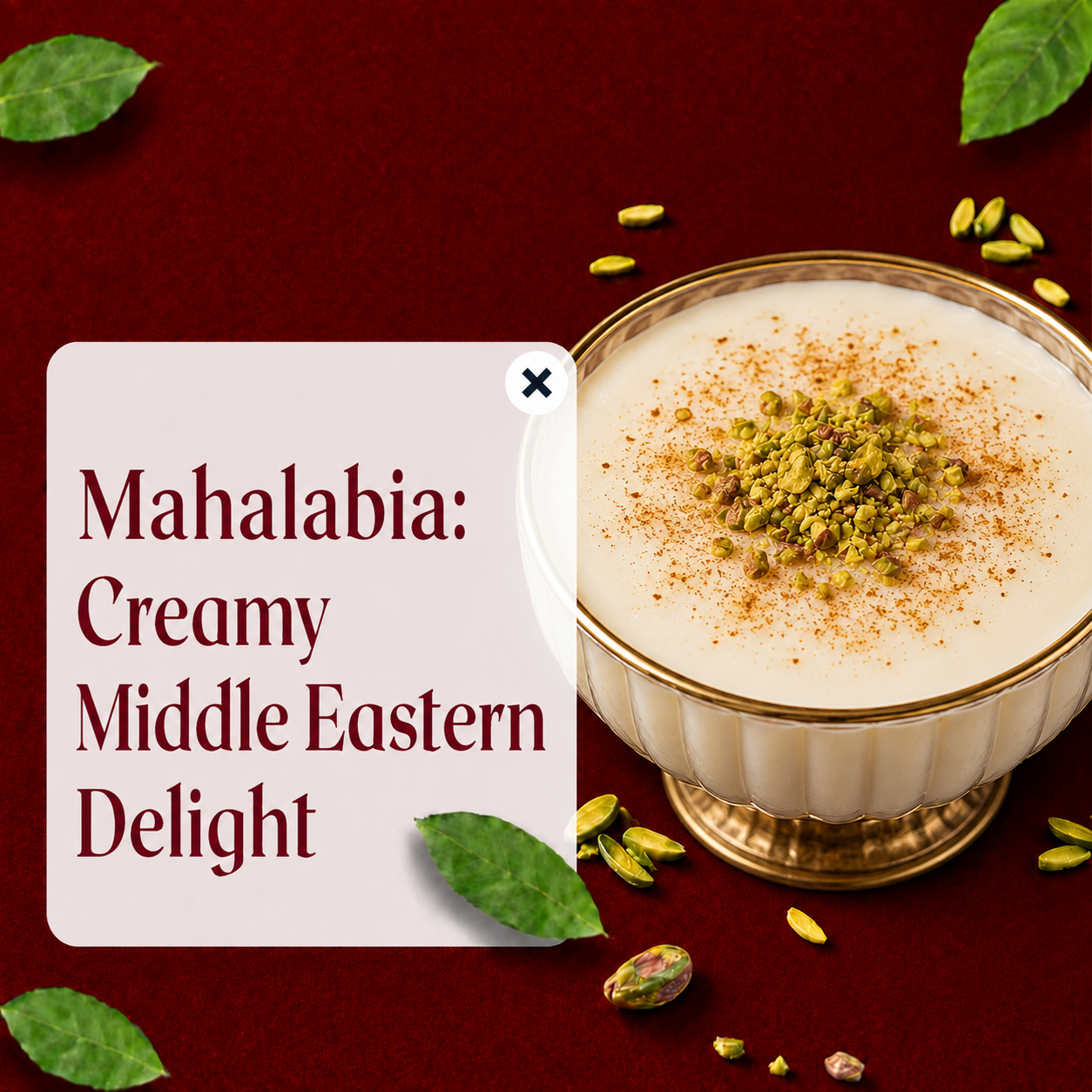
Muhallabia is one of the most popular traditional desserts in the Levant and across the Arab world. It is known for its smooth, creamy texture and delicate flavor, traditionally based on milk, sugar, and starch, with rose water or orange blossom water often added in Middle Eastern versions.
Thanks to its simple ingredients and easy presentation, muhallabia has become a beloved homemade dessert. It is also commonly served in restaurants, pastry shops, family gatherings, and special occasions.
The Origin of Muhallabia
Muhallabia has a long history in Middle Eastern cuisine. Several stories and theories exist regarding its origins and development, making it difficult to attribute the dessert in its modern form to one specific country.
Throughout history, similar milk-based dishes appeared under different names and in different forms before spreading through the cuisines of the Levant, Egypt, Turkey, and other parts of the Arab and Islamic world.
Over time, modern muhallabia developed into a dessert based mainly on milk, sugar, and a thickening ingredient, such as cornstarch or rice flour.
Why Is It Called Muhallabia?
According to one historical tradition, the name muhallabia is associated with Al-Muhallab ibn Abi Sufra, a well-known military commander from the early Islamic period.
However, the exact details surrounding the origin of the name are not completely certain.
For this reason, this explanation is best regarded as part of the traditional stories surrounding the dessert rather than as a firmly established historical fact.
Whatever the origin of its name, the word muhallabia today is widely associated across the Arab world with a smooth, white milk pudding.
The Basic Ingredients of Muhallabia
Traditional muhallabia relies on a small number of simple ingredients, the most important of which are:
Milk, sugar, and starch.
The milk is heated with sugar, and starch that has been dissolved separately is gradually added until the mixture thickens and develops a smooth, creamy consistency.
In the Levant, flavorings such as rose water or orange blossom water are commonly added, giving the dessert its characteristic Middle Eastern fragrance.
Some recipes also use vanilla or mastic to create a different aromatic profile.
The Secret of Its Smooth Texture
One of the defining characteristics of muhallabia is its smooth and uniform consistency.
This texture usually comes from cornstarch, which thickens the milk as it is heated.
The amount of starch must be carefully balanced. If too little is used, the pudding may remain too liquid. If too much is added, the dessert can become overly firm.
The ideal result lies somewhere in between: a pudding firm enough to hold its shape in a serving bowl while remaining soft, creamy, and delicate when eaten.
Rose Water and Orange Blossom Water
Fragrant floral flavors are an important part of the character of traditional Middle Eastern muhallabia.
Rose water or orange blossom water is commonly used in Levantine recipes and is usually added in small quantities so that the fragrance does not overpower the natural flavor of the milk.
Preferences vary between regions and families. Some use only rose water, while others prefer orange blossom water. Certain recipes combine both.
These floral flavors give traditional muhallabia a distinctive aroma that immediately connects it with Middle Eastern dessert traditions.
How Muhallabia Is Decorated
Pistachios are among the most popular toppings, but other common decorations include:
- Almonds
- Walnuts
- Coconut
- Raisins
- Cinnamon
Nuts add both color and visual appeal while creating a pleasant contrast between the creamy pudding and their gentle crunch.
The classic presentation of white pudding topped with green pistachios remains one of the most recognizable ways to serve muhallabia.
Muhallabia and Rice Pudding: What Is the Difference?
Muhallabia can sometimes be confused with rice pudding because both desserts have a similar pale color and creamy appearance. However, there is an important difference.
Muhallabia is typically made from milk and starch without whole grains of cooked rice. As a result, its consistency is smooth and uniform.
Rice pudding contains cooked rice grains, which remain visible and give the dessert a thicker and more textured consistency.
Both desserts may include sugar, rose water, orange blossom water, and nuts, depending on the recipe.
Muhallabia in the Levant
Muhallabia holds a special place in the cuisines of Syria, Lebanon, Palestine, and Jordan, where it is considered a simple homemade dessert that can be prepared throughout the year.
It is often served chilled after being refrigerated, making it especially popular during the warm summer months and during Ramadan.
Muhallabia can be prepared in a large serving dish or divided into small individual cups, making it convenient for family gatherings, celebrations, and hospitality.
Similar Desserts Around the World
In Turkey, a closely related milk pudding is known as Muhallebi. Various milk puddings also exist throughout the Mediterranean and Middle East, differing in their thickening ingredients, flavorings, and methods of preparation.
Some cultures flavor their milk puddings with cinnamon, while others use rose water, mastic, orange blossom water, or nuts.
Despite these differences, the basic idea remains similar: a simple, smooth milk-based dessert that is often served chilled.
Muhallabia During Ramadan and Special Occasions
Muhallabia is a popular choice during Ramadan because of its light texture and the convenience of preparing it in advance and keeping it chilled in the refrigerator.
It is also served during family gatherings and celebrations.
Modern versions may include layers of fruit, jelly, nuts, chocolate, or different sauces, allowing the traditional pudding to be presented in many creative ways.
Despite these contemporary variations, the classic white muhallabia decorated with pistachios remains one of the most familiar and traditional presentations.
A Simple Dessert That Has Maintained Its Popularity
The appeal of muhallabia comes from its combination of simplicity, delicate flavor, and smooth creamy texture.
With only a few basic ingredients, it is possible to create an elegant and widely loved dessert suitable for people of different ages and for many occasions.
Despite the enormous variety of modern desserts available today, muhallabia continues to hold an important place in Arab homes. For many people, it carries memories of family gatherings, hospitality, traditional kitchens, and desserts prepared by previous generations.