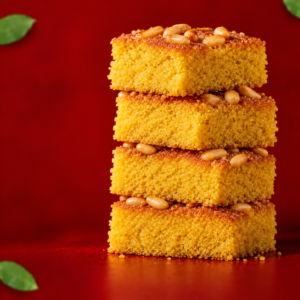
Kunafa khishneh is the coarse, crunchy style of kunafa. Instead of grinding the kataifi into crumbs, you keep it in long buttered strands, so the top bakes into a crisp, golden nest over a layer of soft melted cheese. Finally, cold syrup and crushed pistachios finish it.
Khishneh means “rough” in Arabic, and many people prefer it because of the contrast between the crunchy top and the stretchy cheese. After the recipe, you will also find fixes for dry strands, a pale top, and soggy kunafa.
Kunafa Khishneh at a Glance
- Prep time: 40 minutes (plus soaking the cheese)
- Bake time: 30–35 minutes
- Pan: 30 cm (12-inch) round or 23 × 33 cm (9 × 13-inch) metal pan
- Serves: 10
Ingredients
For the kunafa
- 500 g (1 lb) kataifi dough, thawed
- 250 g (1 cup + 2 tablespoons) ghee or clarified butter, melted
- 400 g (14 oz) Akkawi cheese, soaked to remove salt
- 200 g (7 oz) mozzarella, grated
- 3 tablespoons crushed pistachios, to garnish
For the syrup
- 400 g (2 cups) sugar
- 250 ml (1 cup) water
- 1 teaspoon lemon juice
- 1 tablespoon orange blossom water
How to Make Kunafa Khishneh
- Prepare the cheese. First, slice the Akkawi and soak it in cold water for 4–6 hours, changing the water often. Then drain, pat dry, and mix with the mozzarella.
- Make the syrup. Next, boil the sugar and water for 8–10 minutes, add the lemon juice, and stir in the orange blossom water off the heat. Then let it cool completely.
- Loosen the kataifi. Then pull the kataifi apart with your fingers and cut it into pieces about 5 cm (2 inches) long.
- Add the ghee. Pour the warm ghee over the strands and rub it in well, so every strand looks shiny.
- Build the layers. After that, heat the oven to 190°C (375°F). Then press half the kataifi into the pan, spread the cheese on top, and cover it loosely with the remaining kataifi.
- Bake. Bake on the lower rack for 30–35 minutes, until the top is deep golden and crisp.
- Add the syrup. Finally, pour the cold syrup over the hot kunafa, sprinkle with pistachios, and serve warm.
Kunafa Khishneh: Common Problems and How to Fix Them
Why is my kunafa dry and brittle?
Cause: The strands did not get enough ghee, or the kunafa baked too long.
Fix: Rub the ghee into every strand, and stop baking as soon as the top turns deep golden. Also, the syrup softens the strands slightly once you pour it.
Why is the top pale while the bottom burns?
Cause: Most of the time, this is because the oven heats mostly from below, or the pan is very thin.
Fix: Move the pan to the middle rack for the last 10 minutes. If that is not enough, switch on the top heat for 2–3 minutes and watch it closely.
Why is my kunafa soggy?
Cause: The syrup was hot, or you added too much at once.
Fix: Always pour cold syrup over hot kunafa, and add it gradually. Our guide to the right knafeh syrup ratio explains the rule.
Why is the cheese hard and squeaky?
Cause: You used only Akkawi, or the cheese cooled before serving.
Fix: Mix in mozzarella for stretch, and serve the kunafa warm. For more solutions, see our article on rubbery knafeh cheese.
Tips for Success With Kunafa Khishneh
- Cut the kataifi short. Otherwise, long strands are hard to slice once baked.
- Keep the top layer loose and fluffy, because that is what makes it crisp.
- Use ghee instead of regular butter, since milk solids in butter burn before the kataifi is golden.
Kunafa Khishneh Variations
- Fine knafeh: grind the kataifi for a smooth crust. See our Nabulsi knafeh recipe.
- Cream kunafa: replace the cheese with thick ashta cream.
- Kunafa rolls: wrap buttered kataifi around fingers of cheese and bake them on a tray.
Storage Tips
Above all, kunafa is best eaten fresh. However, leftovers keep in the fridge for up to 2 days. Then reheat them in a hot oven for 8–10 minutes to crisp the top again.
Where It Comes From
Kunafa is one of the oldest Arab sweets, and it appears in medieval cookbooks from Cairo and Damascus. Today, every region has its own style, from the fine crust of Nablus to the shredded khishneh found across Syria, Lebanon, Jordan and Egypt. You can read more about the history of knafeh on Wikipedia.
Kunafa Khishneh FAQ
What is the difference between kunafa khishneh and na’meh?
Khishneh uses long, coarse kataifi strands for a crunchy top. Na’meh, however, uses finely ground kataifi for a smooth, thin crust.
Can I use butter instead of ghee?
Yes, but clarify it first by melting it and pouring off the clear fat, so it does not burn.
Can I make kunafa without cheese?
Yes. Fill it with ashta or with a nut filling of pistachios and sugar instead.
Love baking? If you enjoyed this kunafa khishneh, you will find 31 more Eastern and Western desserts in our digital cookbook, each with exact measurements and clear steps.