Cookies are among the most popular baked treats in the world. They are easy to eat, simple to store, and available in countless flavors and textures. Some are thin and crispy, while others are thick, soft, and chewy.
Today, cookies are found in homes, cafés, bakeries, supermarkets, and celebrations around the world. From classic chocolate chip to varieties made with oats, nuts, dates, or spices, this small baked treat has become a global favorite.
But where did cookies come from, and how did they become so popular?
The History of Cookies
The history of goes back several centuries. Early versions were probably very different from the we know today.
Bakers are believed to have used small amounts of cake batter or dough to test oven temperatures before baking larger cakes. Because these small portions baked quickly, they helped bakers understand whether an oven was hot enough.
Over time, these small test cakes became treats of their own.
The English word cookie is generally linked to the Dutch word koekje, which means “little cake.” Dutch settlers later helped popularize the term in North America.
As baking traditions developed, cookies gradually became an important part of American and European baking.
How Cookies Developed Over Time
Early cookies were made with simple ingredients. Flour, sugar, and fat formed the base of many early recipes.
However, baking changed as ingredients became easier to obtain. Sugar became more widely available, while ingredients such as chocolate, nuts, spices, and dried fruits created new possibilities.
As a result, cookie recipes became much more diverse.
During the twentieth century, cookies became especially popular as homemade treats in the United States and Europe. Commercial bakeries also began producing packaged cookies on a large scale.
Today, cookies are sold by small local bakeries as well as major international food companies.
Basic Cookie Ingredients
Most cookies are made from a simple group of ingredients:
- Flour
- Sugar
- Butter or oil
- Eggs
- Vanilla
Some recipes also include baking soda or baking powder.
Although these ingredients may seem simple, changing their proportions can significantly affect the final texture.
For example, additional flour may create a thicker and firmer cookie. More butter can increase spreading during baking. Meanwhile, different types of sugar can influence both texture and flavor.
Therefore, even small changes can produce very different results.
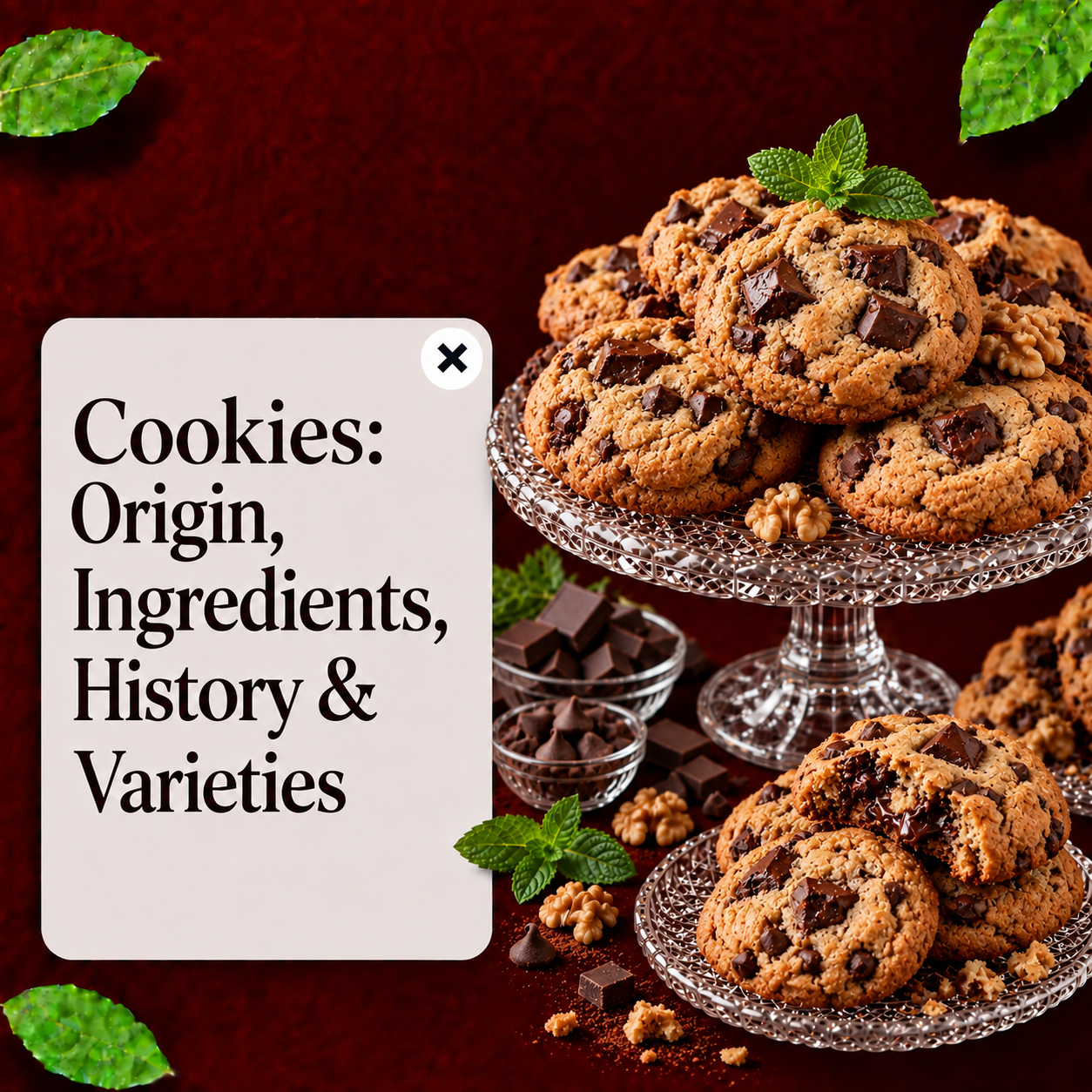
Chocolate Chip Cookies
Chocolate chip cookies are among the most famous cookies in the world.
They were developed in the United States during the 1930s and eventually became closely associated with American baking.
The traditional version combines a sweet cookie dough with pieces of chocolate. During baking, the chocolate softens while remaining visible throughout the cookie.
Over the years, many variations have appeared. Some contain walnuts, pecans, or hazelnuts, while others use dark, milk, or white chocolate.
Today, chocolate chip cookies remain a popular choice in homes, bakeries, and cafés.
Soft vs. Crispy Cookies
One reason cookies are so popular is their wide range of textures.
Some cookies are thin, light, and crispy. Others are thick, soft, and chewy in the center.
Several factors influence cookie texture, including:
- Type of sugar
- Amount of butter
- Amount of flour
- Oven temperature
- Baking time
- Dough temperature
In general, longer baking can create a drier and crispier cookie. On the other hand, a shorter baking time often helps preserve moisture in the center.
The recipe itself also plays an important role. Therefore, two cookies baked for the same amount of time can still have very different textures.
How Sugar Affects Cookies
Sugar does much more than add sweetness.
Different types of sugar can change the texture, color, and flavor of cookies.
White sugar usually contributes to a lighter and crispier texture. Brown sugar, meanwhile, contains more moisture and has a deeper flavor.
As a result, cookies made with brown sugar are often softer and chewier.
Many modern recipes combine white sugar and brown sugar. This combination can help create cookies with slightly crisp edges and a soft center.
Popular Types of Cookies
There are thousands of cookie varieties around the world. However, several types are especially well known.
Chocolate Cookies
Chocolate cookies usually contain cocoa powder or melted chocolate in the dough. They have a rich chocolate flavor and may also contain chocolate chips or chunks.
Vanilla
Vanilla cookies have a simple and delicate flavor. Because of their neutral base, they can easily be decorated or combined with chocolate, nuts, and other ingredients.
Oatmeal
Oatmeal cookies contain rolled oats, which give them a distinctive texture. Raisins, chocolate, cinnamon, and nuts are also common additions.
Peanut Butter
Peanut butter cookies are especially popular in North America. They are known for their rich nutty flavor and soft texture.
Sugar
Sugar cookies are made from a simple sweet dough. They are often cut into decorative shapes and served during holidays and celebrations.
Filled cookies are also popular. Their centers may contain chocolate, caramel, cream, fruit, or nut-based fillings.
Chocolate and Nuts
Chocolate is one of the most common ingredients added to cookies.
Dark chocolate, milk chocolate, and white chocolate can all be used. Depending on the recipe, the chocolate may appear as chips, chunks, or larger pieces.
Nuts are another popular addition.
Walnuts, pecans, almonds, pistachios, and hazelnuts can add both flavor and crunch. In addition, combining chocolate with nuts creates a richer and more complex taste.
For this reason, chocolate-and-nut cookies are common in cafés and bakeries around the world.
Why Do Cookies Spread During Baking?
Cookies often spread as they bake because the fat in the dough begins to melt.
As butter softens in the oven, the dough becomes less firm and starts spreading across the baking tray.
However, several factors influence how much a cookie spreads.
These include the amount of flour, sugar, and fat in the dough. Dough temperature also matters.
For example, warm dough may spread more quickly. Chilled dough usually spreads more slowly and can produce thicker cookies.
This is why many recipes recommend refrigerating cookie dough before baking.
Why Are Some Cookies Chewy?
A chewy cookie usually contains enough moisture to keep the center soft after baking.
Ingredients such as brown sugar can help because they retain more moisture than white sugar.
Baking time is also important. Cookies that remain in the oven for too long can lose moisture and become crispier.
In addition, thicker cookies often stay softer in the center because the middle takes longer to bake completely.
Therefore, the final texture depends on both the ingredients and the baking process.
in American Culture
Cookies have a strong connection with American home baking.
One of the most familiar combinations is cookies served with a glass of milk. This pairing appears frequently in advertising, television, movies, and everyday family traditions.
Cookies are also closely connected with holidays and celebrations.
During the Christmas season, for example, families often bake and decorate cookies in festive shapes.
School events, family gatherings, parties, and bake sales have also helped make cookies an important part of American food culture.
Cookies and Biscuits: What Is the Difference?
The words cookies and biscuits can have different meanings depending on the country.
In the United States, a cookie is usually a small, sweet baked treat.
In Britain and several other countries, the word biscuit is commonly used for many sweet, crisp baked products.
The word cookie may still be used for certain styles, especially softer or larger baked treats that resemble American-style cookies.
In many Arab countries, both English terms can be seen in bakeries and cafés. However, cookies often refers to larger, softer products, especially varieties containing chocolate chips.
Cookies Around the World
Although cookies have strong European and American connections, they are now enjoyed throughout the world.
Different cultures have adapted them using local ingredients and flavors.
In the Arab world, for example, modern cookies may contain dates, pistachios, cardamom, sesame, or tahini.
Other regions use ingredients such as coconut, dried fruits, spices, or locally produced nuts.
These adaptations demonstrate one of the greatest strengths of cookies: they can easily change according to local tastes.
Why Are So Popular?
Several factors have helped cookies become one of the world’s most popular baked treats.
First, they are easy to serve in individual portions. They can also be stored and transported more easily than many cakes and creamy desserts.
In addition, cookie recipes are highly flexible.
A basic dough can be transformed by adding:
- Chocolate
- Nuts
- Dried fruit
- Oats
- Spices
- Caramel
- Cream fillings
- Fruit fillings
Their size and texture can also be changed easily.
As a result, bakers can create everything from small crispy cookies to large, thick, soft cookies.
A Small Treat with Endless Variety
Cookies began as simple baked treats, but they have developed into one of the world’s most recognizable desserts.
Their popularity comes from their simplicity and versatility. With only a few basic ingredients, bakers can create an enormous variety of flavors, textures, and styles.
From classic chocolate chip cookies to modern varieties flavored with dates, pistachios, or tahini, cookies continue to evolve with different cultures and tastes.
Today, they are enjoyed in homes, cafés, bakeries, and celebrations around the world. Their ability to change while remaining simple is one of the main reasons cookies continue to be loved by people of all ages.
Chocolate Fondant: Origin, History and the Secret of Its Molten Center