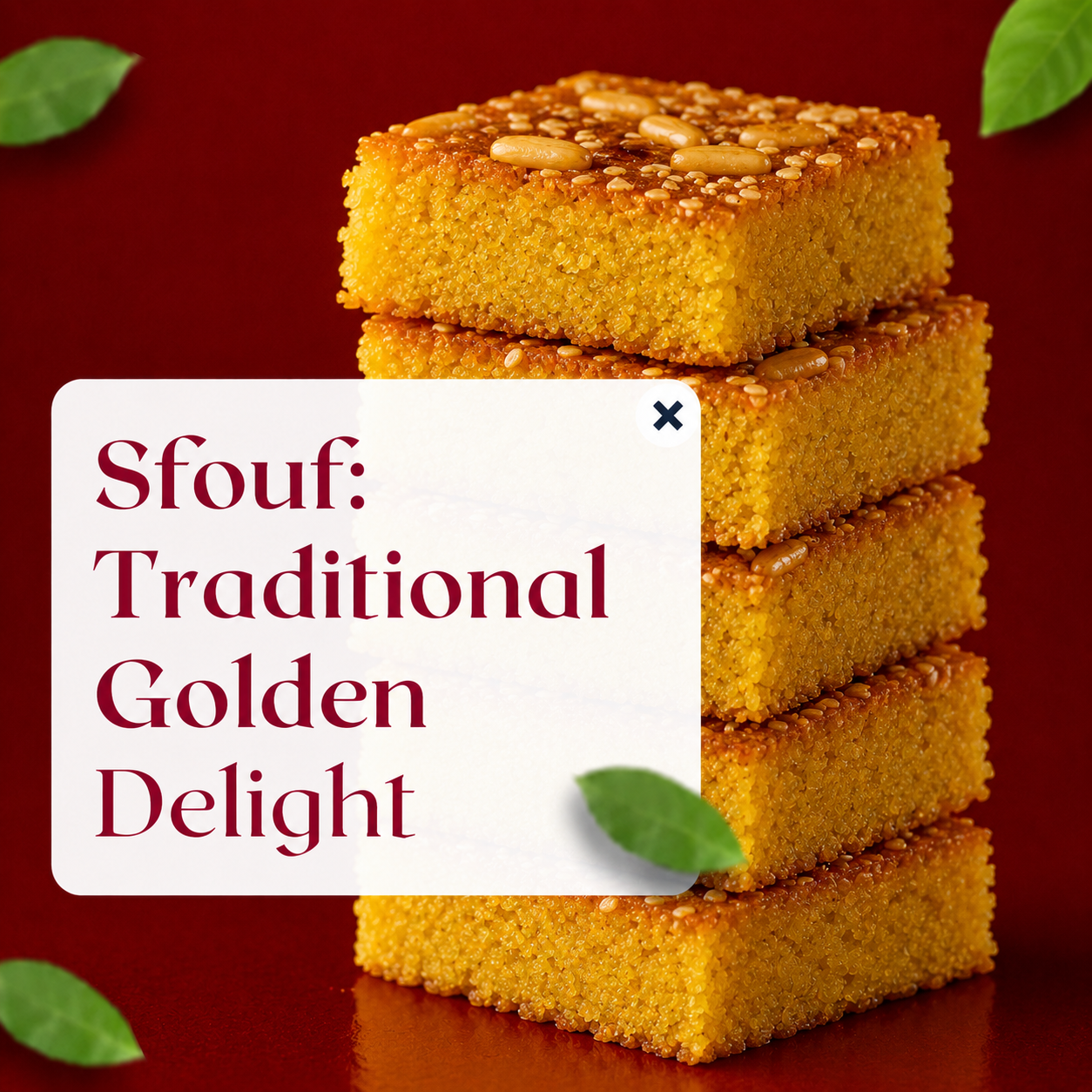
Sfouf is one of the well-known traditional desserts of Lebanese cuisine. It is a simple Middle Eastern cake distinguished by its beautiful golden-yellow color and unique yet delicate flavor. This characteristic color comes mainly from turmeric, one of the key ingredients that gives sfouf its recognizable appearance and sets it apart from many other semolina-based desserts.
The Origin of Sfouf
Sfouf is particularly associated with although similar versions are also prepared in Syria and other parts of the Levant. Its preparation has been passed down through generations as a simple homemade dessert made from affordable and easily available ingredients.
For many years, sfouf has been associated with family gatherings, special occasions, and home hospitality. It is also commonly served as a light sweet alongside tea or coffee. The simplicity of its ingredients and preparation has helped it remain a favorite in Lebanese households to this day.
What Makes Sfouf Special?
The most striking feature of sfouf is its bright golden color, which comes from turmeric. The cake is usually made with semolina, flour, and sugar, together with a source of fat such as oil or ghee. Milk or water may also be added, depending on the recipe.
Recipes can vary slightly from one region or family to another. Some versions include anise or orange blossom water to add another layer of traditional Middle Eastern flavor, while the top is often decorated with pine nuts, almonds, or other nuts.
Another well-known tradition is greasing the baking pan with tahini before pouring in the batter. This not only helps prevent sticking but also gives the cake a distinctive flavor and contributes to a lightly browned base and edges during baking.
Sfouf and Namoura: What Is the Difference?
may look similar to because semolina is commonly used in both desserts, but there are important differences between them.
has a texture that is closer to a traditional cake and is distinguished by the use of turmeric and its yellow-golden color.
Namoura, on the other hand, generally has a denser texture and a more pronounced sweetness because aromatic sugar syrup is poured over it after baking.
These differences in texture, flavor, and preparation give each dessert its own distinctive identity.
The Place of Sfouf in Lebanese Cuisine
Sfouf is a wonderful example of a traditional Lebanese homemade dessert that has maintained its identity despite the development of modern baking and the growing popularity of contemporary desserts.
It usually requires neither complicated techniques nor expensive ingredients. Despite its simplicity, its attractive golden appearance and distinctive flavor have made it closely associated with memories of home, family gatherings, and traditional hospitality.
Another interesting characteristic is that , which distinguishes this cake from many other types of baked desserts.
The Role of Turmeric in Sfouf
Turmeric is perhaps the ingredient most strongly associated with sfouf. While it is widely known as a spice used in savory dishes, in sfouf it serves a different purpose.
It gives the cake its unmistakable yellow-golden appearance while contributing a subtle earthy note to its flavor. Only a relatively small amount is generally needed to achieve the traditional color.
This use of turmeric is one of the features that makes sfouf immediately recognizable among Lebanese and Middle Eastern desserts.
Traditional Decoration
Sfouf is usually baked in a large round or rectangular tray and divided into squares or diamond-shaped portions.
Before baking, the surface may be decorated with often placing one nut in the center of each future piece.
This simple decoration complements the bright yellow color of the cake and gives traditional its familiar homemade appearance.
This simple decoration complements the bright yellow color of the cake and gives traditional its familiar homemade appearance.
Unlike elaborately decorated cakes, sfouf relies on its natural color, simple pattern, and nuts for its visual appeal.
Sfouf and Lebanese Hospitality
Like many traditional Lebanese sweets, sfouf is closely connected with hospitality.
It can be prepared in a large tray, making it convenient for serving family members, friends, and guests. Pieces of sfouf are commonly enjoyed with Lebanese coffee, , whether during an afternoon gathering or after a meal.
Its relatively simple preparation has also made it a popular choice for informal family visits, celebrations, and community gatherings.
For many people, the smell and appearance of freshly baked sfouf bring back memories of traditional kitchens and recipes prepared by mothers and grandmothers.
Sfouf Today
Sfouf continues to have an important place in Lebanese and Levantine cuisine, both in homes and in bakeries and pastry shops.
Outside the Arab world, the dessert is becoming increasingly known under names such as Sfouf or Lebanese Turmeric Cake. Lebanese communities around the world have helped preserve the recipe and introduce it to people from different culinary backgrounds.
Modern versions may include different nuts, alternative sweeteners, plant-based ingredients, or new flavor combinations. However, the essential characteristics of traditional sfouf remain largely unchanged:
More Than Just a Golden Cake
Sfouf represents the beauty of traditional home baking, where ordinary ingredients can be transformed into something memorable.
Its golden appearance comes from a simple spice, its texture comes from the combination of semolina and flour, and its familiar flavor carries memories of family kitchens and gatherings.
Unlike luxurious desserts that depend on elaborate decoration or expensive ingredients, sfouf reflects the simplicity and generosity of traditional Lebanese home cooking.
Conclusion
Sfouf is more than just a traditional Lebanese cake. It is a part of Lebanon’s culinary heritage and a dessert that reflects the simplicity, warmth, and hospitality of Lebanese home cooking.
Its distinctive turmeric color, tender texture, subtle sweetness, and traditional nut decoration have helped it remain popular across generations.
Whether enjoyed with a cup of coffee at home, served to guests during a family gathering, or discovered in a Lebanese bakery abroad, sfouf continues to carry the flavors and memories of Lebanese culinary tradition.
How to Make Authentic Arabic Ashta at Home in 15 Minutes?