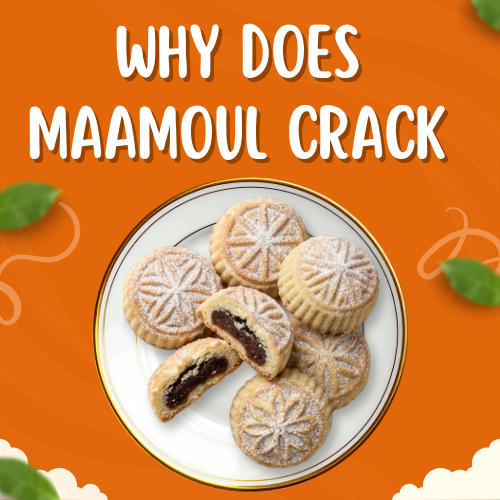
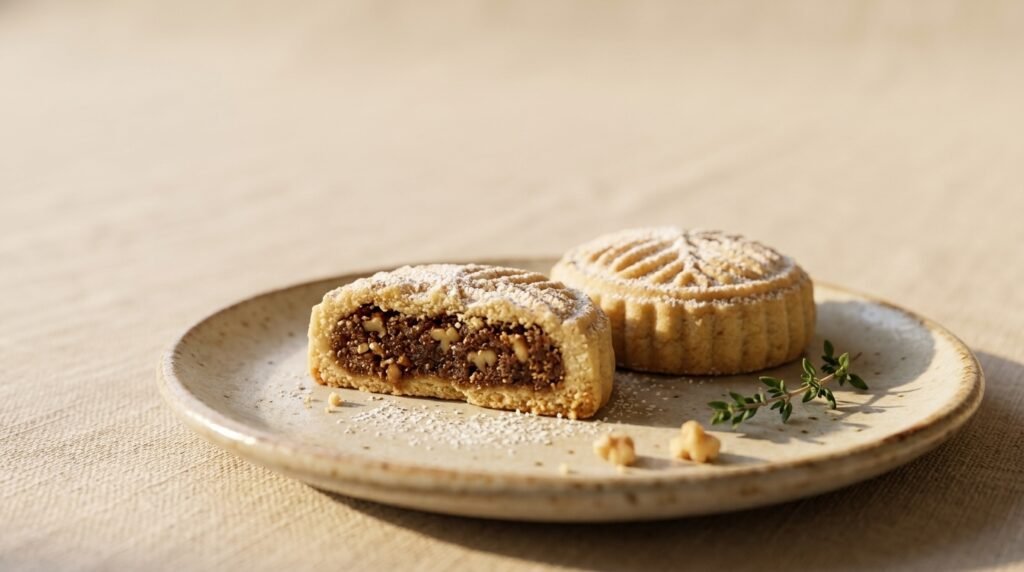
Picture this: You’ve spent hours carefully shaping your Maamoul, using your favorite wooden mold to press that iconic, delicate pattern into every single piece. They look like little edible pieces of art! 🎨
You slide the tray into the oven, waiting for that golden perfection…
Then, you open the oven door and heartbreak strikes: Your Maamoul looks like a cracked road map, and the beautiful pattern has completely disappeared! 💔
If this nightmare has ever happened to you, take a deep breath. You are not alone!
At Noor Al-Oyoun, we know that cracking is the #1 heartbreak in the world of Middle Eastern baking. But here’s the good news: Maamoul cracking isn’t bad luck—it’s just science! And once you know the secret, you’ll bake smooth, perfectly embossed Maamoul every single time.
Let’s decode the mystery and fix those cracks for good!
The Science: Why Does Maamoul Crack in the First Place?
Maamoul cracks when steam gets trapped inside the dough and tries to escape violently while baking. When the pressure inside builds up, BOOM—it snaps the top layer open.
Here are the 4 main culprits behind the crack:
5 Secrets to Bake Crack-Free Maamoul Every Single Time
1. Easy on the Yeast & Baking Powder! 🛑
This is the most common mistake. Many think adding extra yeast or baking powder makes Maamoul fluffier. In reality, it causes the dough to puff up like a balloon in the oven, stretching and destroying the delicate design!
The Fix: Stick strictly to the recipe. For semolina Maamoul, a tiny pinch of yeast is more than enough. For flour Maamoul, skip the yeast altogether and use a whisper of baking powder!
2. Chill Your Maamoul Before Baking (The Golden Rule! ❄️)
Want your mold pattern to stay sharp and resistant to cracking? Cold dough is your best friend.
- The Secret Hack: Once you shape your Maamoul on the baking tray, pop the entire tray into the fridge for 15 to 20 minutes before baking.
- Why it works: Chilling solidifies the butter or ghee. When cold dough hits a hot oven, the pattern sets immediately before the dough has a chance to puff up or spread!
3. Master the Oven Temperature (Hot & Fast!) 🔥
Baking Maamoul is completely different from baking regular cakes. Slow and low baking will dry out the filling, creating steam that causes cracks.
- The Fix: Preheat your oven to a high temperature (200°C / 400°F).
- Pro Tip: Turn on the top broiler first for 2–3 minutes just to set the pattern on top, then turn on the bottom heat to finish baking. Fast baking seals the crust without overheating the inside!
4. Watch Your Stuffing-to-Dough Ratio 🌴
We all love a generous filling of dates, pistachios, or walnuts, but greedy filling leads to cracking! If the outer shell is too thin, the expanding filling will rupture the dough.
- The Sweet Spot: Aim for a 1:1 ratio (equal weight of dough and filling) or keep the dough slightly thicker than the filling ball.
5. Hydrate Your Date Paste 🍯
Did you know dry date paste pulls moisture from the dough, making the outer layer brittle?
- The Fix: Knead your date paste with a teaspoon of soft butter or ghee, a splash of warm water, and a pinch of cinnamon. Soft date paste expands gently without pushing through the dough shell!
Quick Rescue Guide: Fix Your Batch Right Now!
Did your dough feel dry while shaping?
Add a teaspoon of melted ghee or milk and knead gently until it’s soft and pliable like playdough.
Did the pattern melt away during testing?
Dust your mold lightly with semolina or flour before pressing, and chill the tray immediately!
What’s Your Signature Maamoul Filling? 🌰🌴
Are you team Classic Date, Rich Pistachio, or Fragrant Walnut? Have you ever had a Maamoul baking disaster in your kitchen?
Tell us your stories and questions in the comments below! The Noor Al-Oyoun baking community is always here to help you troubleshoot.
Don’t forget to save this guide for Eid baking season, share it with family, and check out our full [Melt-in-Your-Mouth Date Maamoul Recipe] to bake your best batch yet!
Happy Baking! 🥮✨☕
If you would like to learn about the recipes in detail, we recommend you check out our digital booklet of 31 recipes for Eastern and Western sweets via the following link: