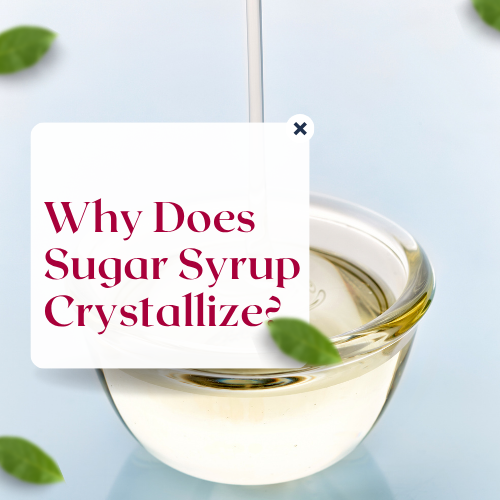
There is nothing quite as satisfying as pouring a glistening stream of warm sugar syrup over a fresh tray of freshly baked Middle Eastern desserts. But there is also nothing more heartbreaking than watching that beautifully clear syrup turn into a cloudy, crunchy, grainy mess just as it cools down!
If you’ve ever wondered why your Attar (Middle Eastern sugar syrup) transforms into a jar of jagged sugar crystals, don’t worry—you are definitely not alone. It happens to the best of home bakers!
Understanding the science behind sugar crystallization is the key to mastering traditional baking. Let’s explore why sugar syrup crystallizes and the simple secrets to making smooth, glossy Attar every single time.
The Science: Why Does Sugar Crystallize?
Sugar syrup is what scientists call a “supersaturated solution.” When you heat water and sugar together, the water molecules break down the sugar crystals. However, as the liquid cools, those sugar molecules naturally want to cling back together and return to their solid form.
All it takes is one tiny trigger to set off a chain reaction:
- Un-dissolved sugar grains sticking to the sides of your saucepan.
- Over-stirring the liquid while it is boiling.
- Lacking an acid to stabilize the sugar bonds.
4 Secrets to Perfect, Crystal-Free Attar Syrup
1. The Power of Acid (Your Secret Shield)
- The Fix: Always add a squeeze of fresh lemon juice (or a tiny pinch of citric acid) once your syrup comes to a boil. Lemon juice acts as an “inverter”—it splits sucrose into glucose and fructose, making it nearly impossible for big sugar crystals to reform.
2. Stop Stirring Once It Boils!
- The Fix: Stir gently at the very beginning only until the sugar dissolves in cold/lukewarm water. The moment the liquid reaches a boil, put the spoon away! Stirring boiling syrup splashes sugar crystals onto the hot sides of the pan, which will jump back in and ruin the whole batch.
3. Wipe Down the Sides of the Pot
- The Fix: Keep a wet pastry brush nearby. If you notice sugar crystals clinging to the inside walls of your pot while boiling, gently brush them down with warm water. This washes away any rogue crystals before they can trigger a reaction.
4. Master the Ratios & Simmer Time
- The Fix: For most Middle Eastern treats (like Knafeh, Baklava, or Basbousa), a standard 2:1 ratio (2 cups sugar to 1 cup water) works best. Let it simmer gently on medium-low heat for 8–10 minutes after adding the lemon juice. Boiling it down too hard evaporates too much water, forcing the sugar to re-crystallize as it cools.
Ready to Upgrade Your Dessert Game?
With just a lemon slice, a little patience, and zero stirring during the boil, you can say goodbye to grainy syrup forever! Your Middle Eastern pastries deserve that velvety, golden sheen.
What’s your favorite dessert to pair with warm Attar syrup? Is it Baklava, Knafeh, or classic Basbousa? Tell us in the comments below!
If you would like to learn about the recipes in detail, we recommend you check out our digital booklet of 31 recipes for Eastern and Western sweets via the following link: