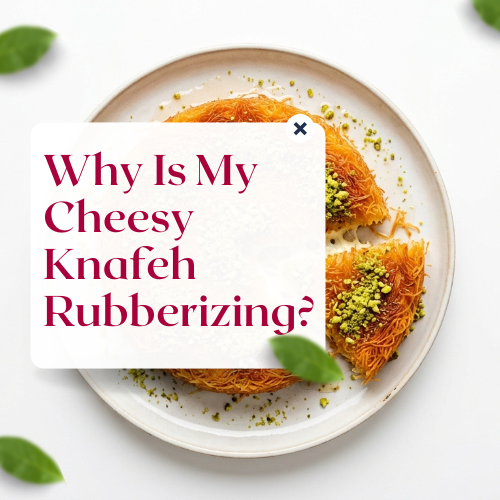
Imagine slicing into a piping-hot, golden dish of fresh Knafeh, expecting that glorious, silky cheese pull you see in food videos—only to end up with a tough, chewy layer of rubber that feels like chewing on an eraser!
If you’ve experienced this baking tragedy, don’t beat yourself up! Cheese science can be tricky, but getting that iconic stretchy, gooey, and melt-in-your-mouth texture at home is 100% achievable once you know the secret techniques.
So, why does this happen, and how can you achieve dessert perfection every single time? Let’s dive into why your Knafeh cheese turns rubbery and explore the best melting cheese substitutes for Baklava and Knafeh.
The Science: Why Does Knafeh Cheese Turn Rubbery?
To fix the problem, we first need to understand why it happens. Rubberiness in cooked cheese usually comes down to three major factors:
- Excessive Salt Content: Traditional Middle Eastern cheeses like Akkawi or Nabulsi are packed in heavy brine. Salt tightens protein structures; if not desalted properly, heating causes these proteins to contract into a rubbery mass.
- High Acid & Low Moisture: High-acid or aged cheeses lose their bound moisture quickly when exposed to high temperatures, leaving behind tough protein strands.
- Overheating & Fat Separation: Baking cheese at an excessively high temperature for too long squeezes out the water and fat, leaving rubbery protein behind.
3 Critical Steps to Prevent Chewy, Rubbery Knafeh
1. Desalt Like a Pro (The Water Soak Method)
If you are using authentic fresh Akkawi or Nabulsi cheese, soaking it once or twice isn’t enough. You must slice or shred the cheese finely and submerge it in cold water for at least 12 to 24 hours, changing the water every 2 to 3 hours. Taste a small piece before using it—it should taste mild and completely unsalted.
2. The Mozzarella + Ashta Blend Technique
Using 100% low-moisture Mozzarella might give you a great stretch initially, but as soon as it cools down even slightly, it solidifies into a firm block. To maintain a soft, luscious bite, mix low-moisture shredded Mozzarella with fresh cream (Ashta or Ricotta). The fat and moisture in the cream interrupt the tight protein bonds of the cheese, ensuring a velvety soft pull!
3. Drain Excess Moisture Before Assembling
While moisture is key, soaking cheese leaves it dripping wet. Squeeze your desalted cheese thoroughly in cheesecloth or a clean kitchen towel before spreading it onto your buttery Kataifi pastry. Trapped excess surface water boils inside the baking dish, which actually toughens the protein structure.
What’s Your Go-To Knafeh Filling Combination?
Do you stick strictly to traditional desalted Akkawi, or do you have a secret grocery store blend that gives you the ultimate melt? Have you tried adding a splash of rose water or orange blossom water to your cheese mix?
Drop a comment below and share your home baking secrets with our community!
If you would like to learn about the recipes in detail, we recommend you check out our digital booklet of 31 recipes for Eastern and Western sweets via the following link: