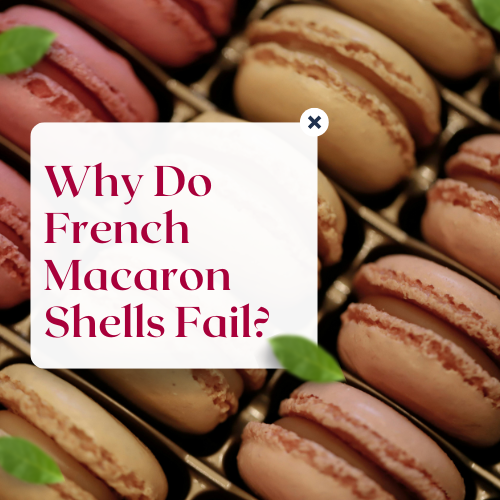
Ah, the French macaron! Delicate, smooth-topped, with a crisp outer shell, a chewy interior, and those ruffled, picture-perfect “feet” (pieds). They look like small works of art in pastry shop windows. But for home bakers, baking them can feel less like cooking and more like high-stakes alchemy.
One tiny misstep with egg white whipping, macronage folding, or oven humidity, and your dreamy macarons transform into hollow domes, cracked tops, or sticky puddles stuck to your parchment paper!
If your recent batch didn’t go as planned, don’t throw away your almond flour! Macaron failures are actually super informative once you know how to read the signs. Let’s break down why French macaron shells fail and guide you through an interactive troubleshooting roadmap to fix every common issue.
The Interactive Macaron Diagnostic Guide: What Went Wrong?
Find your exact macaron batch issue below to uncover the culprit and learn how to fix it next time!
Issue 1: Cracked Tops (No Smooth Shell)
- The Culprit: Trapped air expanding inside the batter with nowhere to go, or baking before a outer skin formed.
- The Fix:
- After piping your rounds, tap your baking sheet firmly on the counter 3 to 4 times to pop hidden air bubbles.
- Never skip resting! Let piped macarons sit at room temperature for 20 to 60 minutes until a dry skin forms. When you gently touch a shell with your finger, batter shouldn’t stick.
Issue 2: Hollow Shells (Empty Space Under the Top)
- The Culprit: Over-whipping the meringue or baking at an inconsistent oven temperature.
- The Fix:
- Stop whipping your egg whites once you reach stiff, glossy peaks that hold their shape on the whisk without clumping or turning dry and grainy.
- Use an independent oven thermometer. If your oven runs too hot or cools off mid-bake, the interior structure collapses while the exterior sets too quickly.
Issue 3: No “Feet” or Flat Macarons
- The Culprit: Under-mixed batter, wet/humid kitchen air, or lack of proper resting.
- The Fix:
- Master the Macaronage stage: Fold almond flour and powdered sugar into your meringue until it reaches “lava consistency”—it should flow off your spatula in a continuous ribbon and sink back into the batter within 30 seconds.
- Ensure your piped batter rests long enough to form a dry skin; this skin forces heat to lift the batter upward from the bottom, creating those signature ruffled feet.
Issue 4: Lop-Sided / Crooked Shells
- The Culprit: Uneven oven airflow, tilted piping, or uneven resting conditions.
- The Fix:
- Hold your piping bag completely vertical (at a 90-degree angle) directly over the baking sheet.
- Rotate your baking tray halfway through the baking cycle to combat hot spots inside your oven.
3 Golden Rules Every Macaron Baker Should Follow
- Weigh Everything in Grams: Volume measurements (cups) are far too imprecise for delicate meringue ratios. Use a digital kitchen scale.
- Age Your Egg Whites: Separate egg whites 24 hours before baking and keep them in a covered container in the fridge. Aged whites lose excess water weight while retaining protein structure, creating a far sturdier meringue.
- Use Gel or Powder Food Coloring: Liquid food coloring introduces unwanted moisture that throws off batter chemistry. Stick to concentrated gel or dry powder dyes.
What Is Your Biggest Macaron Challenge?
Have you ever faced the dreaded hollow shell, or are you currently battling cracked tops? Which flavor filling is your absolute favorite to make—vanilla bean buttercream, dark chocolate ganache, or salted caramel?
Share your macaron journey, baking fails, and success stories in the comments below!
If you would like to learn about the recipes in detail, we recommend you check out our digital booklet of 31 recipes for Eastern and Western sweets via the following link: