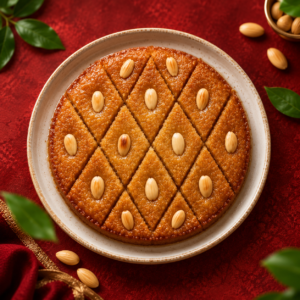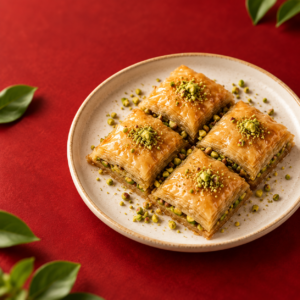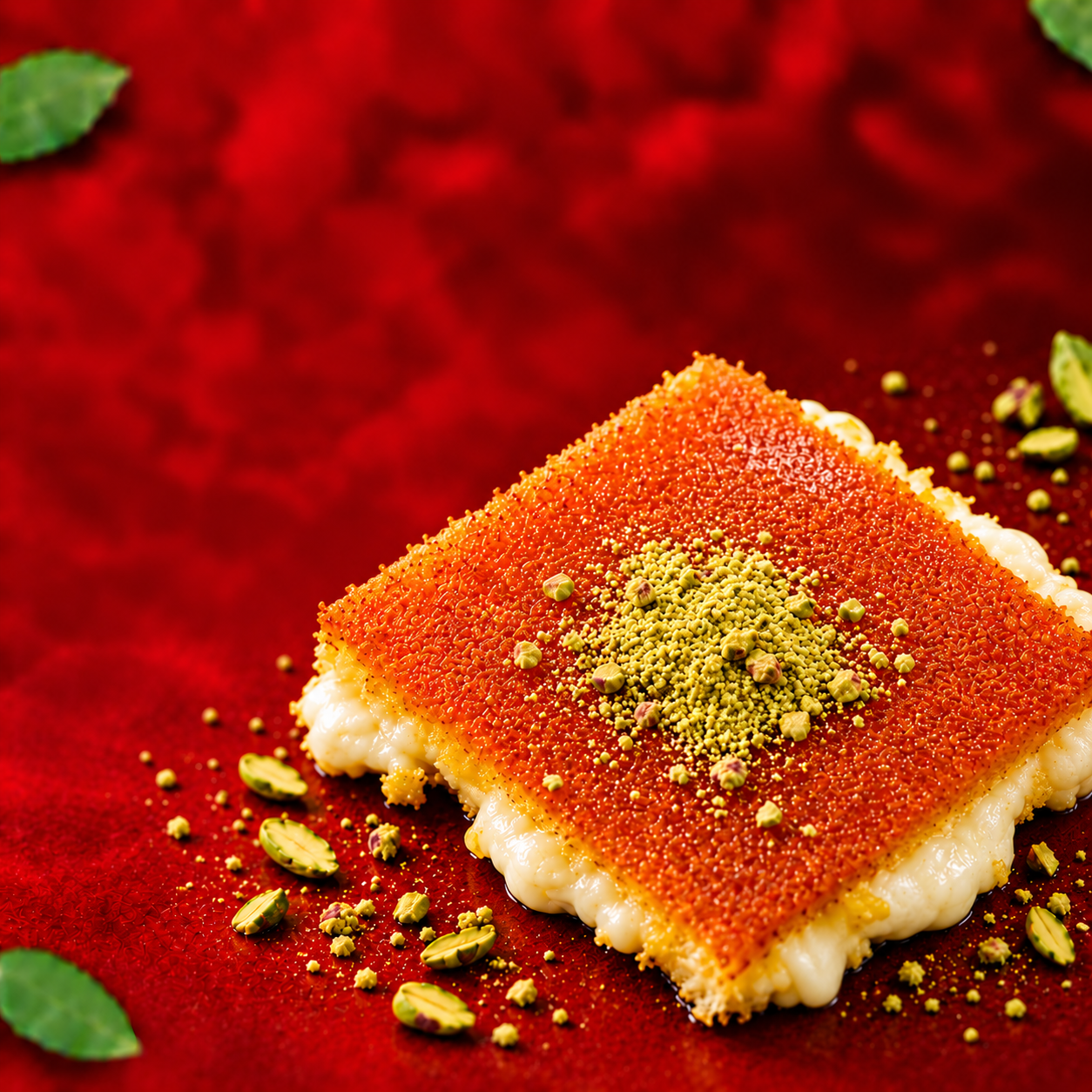
This Nabulsi knafeh recipe makes the famous knafeh of Nablus: a thin, golden crust of finely ground kataifi over a thick layer of soft, stretchy white cheese, soaked in warm orange blossom syrup. It is best served hot, straight from the pan, with crushed pistachios on top.
This fine style is called knafeh na’meh, meaning “soft” or “fine,” because the crust is ground rather than left in long strands. After the recipe, you will also find fixes for the most common problems: rubbery or salty cheese, a pale crust, and soggy knafeh.
Nabulsi Knafeh Recipe at a Glance
- Prep time: 40 minutes (plus soaking the cheese)
- Bake time: 25–30 minutes
- Pan: 30 cm (12-inch) round metal pan
- Serves: 10
Ingredients
For the knafeh
- 500 g (1 lb) kataifi dough, thawed
- 200 g (¾ cup + 2 tablespoons) ghee, melted
- ½ teaspoon orange food coloring powder (optional, for the classic color)
- 500 g (1 lb) Nabulsi or Akkawi cheese, or a mix of Akkawi and mozzarella
- 2 tablespoons crushed pistachios, to garnish
For the syrup
- 400 g (2 cups) sugar
- 250 ml (1 cup) water
- 1 teaspoon lemon juice
- 1 tablespoon orange blossom water
How to Make This Nabulsi Knafeh Recipe
- Desalt the cheese. First, slice the cheese thinly and soak it in cold water for 4–6 hours, changing the water every hour, until it tastes only lightly salty. Then drain well and pat dry.
- Make the syrup. Next, boil the sugar and water for 8–10 minutes until slightly thick. Then add the lemon juice, take the pan off the heat, and stir in the orange blossom water. Let it cool completely.
- Grind the kataifi. Then pulse the kataifi in a food processor until it looks like fine crumbs.
- Add the ghee. Rub the melted ghee and the food coloring into the crumbs with your fingers until every piece is coated.
- Press the base. After that, heat the oven to 200°C (400°F). Then press the crumbs firmly and evenly into the pan, about 1 cm (½ inch) thick.
- Add the cheese. Spread the cheese over the base in an even layer, leaving a 1 cm border around the edge.
- Bake. Bake on the lowest rack for 25–30 minutes, until the edges are deep golden and the cheese has fully melted.
- Flip and soak. Finally, turn the knafeh onto a serving plate so the golden crust is on top. Then pour the cold syrup over it, sprinkle with pistachios, and serve hot.
Nabulsi Knafeh Recipe: Common Problems and How to Fix Them
Why is my knafeh cheese rubbery?
Cause: In most cases, this happens because the cheese was overbaked, or you used only a firm, low-moisture cheese.
Fix: Take the knafeh out as soon as the cheese melts, and mix Akkawi with some mozzarella. For a full guide, read our article on rubbery knafeh cheese.
Why does my knafeh taste salty?
Cause: Nabulsi and Akkawi cheeses are stored in brine, so they are very salty straight from the pack.
Fix: Always soak the cheese and change the water often. Taste a small piece before using it; it should taste mild, not salty.
Why is the crust pale instead of golden?
Cause: The pan sat too high in the oven, or there was not enough ghee.
Fix: Bake on the lowest rack, because the base needs direct heat. Also, coat every crumb with ghee before pressing.
Why is my knafeh soggy?
Cause: You poured hot syrup over hot knafeh, or used too much syrup.
Fix: Use cold syrup on hot knafeh, and add it gradually. Our guide to the right knafeh syrup ratio explains why this matters.
Why did the cheese leak and burn at the edges?
Cause: Typically, it is because the cheese touched the sides of the pan.
Fix: Leave a small border of crust around the cheese, so the crust seals it in while it bakes.
Tips for Success With This Nabulsi Knafeh Recipe
- Use a thin metal pan. Glass and ceramic pans brown the base too slowly.
- Press the base firmly. As a result, it holds together when you flip it.
- Serve knafeh within 30 minutes, while the cheese is still soft and stretchy.
Nabulsi Knafeh Recipe Variations
- Coarse knafeh: keep the kataifi in long strands for a crunchy, shredded top. See our kunafa khishneh recipe.
- With ashta: replace half the cheese with homemade ashta for a creamier filling.
- Semolina crust: some bakeries use a fine semolina and butter crust instead of ground kataifi.
Storage Tips
Knafeh tastes best fresh. However, you can keep leftovers covered in the fridge for up to 2 days and reheat them in a hot oven for 8–10 minutes until the cheese softens again.
Knafeh and the City of Nablus
Knafeh is made across the Levant, but Nablus in Palestine is especially famous for its cheese knafeh, which local bakeries serve hot on large round trays. Nabulsi cheese, a white brined cheese from the same region, gives the dessert its name and its soft stretch. You can read more about the city on Visit Palestine.
Nabulsi Knafeh Recipe FAQ
Which cheese is best for Nabulsi knafeh?
Nabulsi cheese is traditional. Akkawi is easier to find, and a mix of Akkawi and mozzarella gives a good stretch.
Can I make knafeh without food coloring?
Yes. The color is only for appearance. Instead, bake it a few minutes longer for a natural golden crust.
Can I prepare knafeh ahead?
Yes. Press the base and add the cheese up to 4 hours ahead, keep it in the fridge, and bake it just before serving.
Next on your list? If you enjoyed this Nabulsi knafeh recipe, take a look at our digital cookbook: 31 sweet recipes from the Middle East and the West, written in the same step-by-step style.