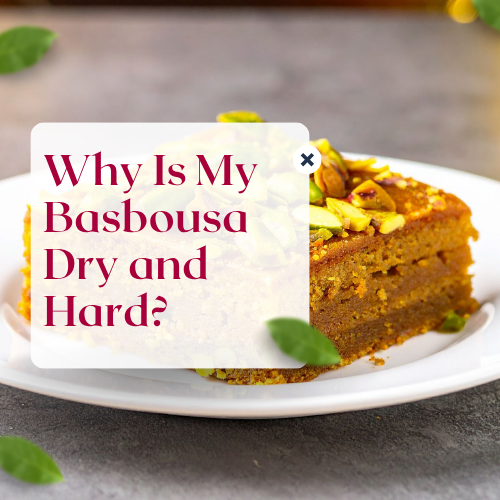
Have you ever pulled a freshly baked tray of Basbousa out of the oven, waited eagerly for it to cool, only to take a bite and realize it feels like a dry, crumbly brick?
If that sounds all too familiar, don’t worry—you are definitely not alone! Basbousa (also known as Revani or Namoora) is one of the most iconic and cherished Middle Eastern desserts. However, getting that signature melt-in-your-mouth, syrup-soaked, pillowy texture can feel like a tricky balancing act.
So, what went wrong? Let’s dive into the 5 secrets to fixing dry, hard Basbousa and turning your next batch into a sweet, tender success.
Secret 1: Mind the Semolina (Fine vs. Coarse)
The type of semolina you use can make or break your cake!
- The Secret: Always opt for medium to coarse semolina rather than fine semolina (flour-like). Coarse semolina grains absorb syrup far better and maintain that delicate, slightly grainy structure without becoming a dense block.
Secret 2: Don’t Overmix the Batter!
This is where most bakers make their biggest mistake.
- The Secret: Once you combine your liquids (ghee, yogurt, or milk) with the semolina, mix gently just until combined. Overmixing activates the gluten, which inevitably leads to a tough, rubbery, and dry cake. Treat your batter with gentle care!
Secret 3: Hot Syrup Meets Hot Cake
Pouring lukewarm or room-temperature syrup over your cake will simply cause it to pool at the top or leave the center completely dry.
- The Secret: The golden rule of Basbousa is simple: Hot Syrup + Hot Cake. As soon as your Basbousa comes out of the oven, pour the boiling hot sugar syrup (Attar) straight over it. The thermal reaction forces the coarse semolina grains to swell up and drink every drop.
Secret 4: Don’t Skimp on the Fat (Ghee is King)
Attempting to make a “light” version of Basbousa by reducing the butter or ghee will almost always end in heartbreak.
- The Secret: Fat coats the semolina grains, preventing gluten development and locking in moisture. Using pure clarified butter (ghee) gives you both authentic flavor and that irreplaceable soft texture.
Secret 5: The “Rest & Cover” Technique
Patience is the ultimate ingredient for flawless Middle Eastern baking.
- The Secret: After pouring the hot syrup over your cake, immediately cover the pan with foil or a baking tray for 10–15 minutes. Trapping the steam inside softens the crust and ensures the moisture settles evenly throughout the entire tray.
Ready to Bake the Perfect Batch?
Don’t let past baking blunders keep you away from dessert perfection. By applying these simple tips, your next cake will be perfectly moist, rich, and bursting with traditional flavor.
Have you tried any of these secrets before, or do you have a family tip of your own?
If you would like to learn about the recipes in detail, we recommend you check out our digital booklet of 31 recipes for Eastern and Western sweets via the following link: